

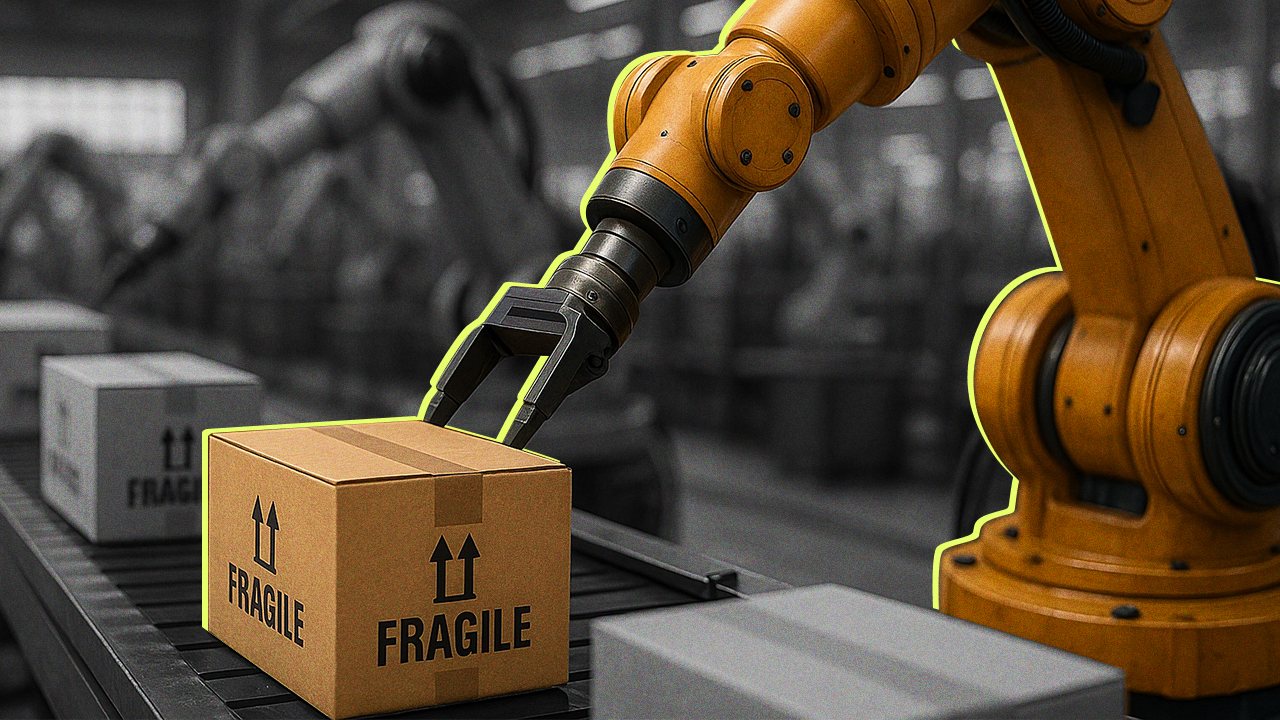

Manufacturers are more interested in the output and the business impact of AI, not necessarily the features and functionality.
"If you can’t build it, buy it" has now become the prevailing strategy in manufacturing and supply chain, as M&A is being leveraged to introduce AI and new technologies into legacy companies. Established AI players are expanding their manufacturing capabilities via strategic acquisitions and shipping features fast.
Robert Kramer, VP and Principal, Analyst of Enterprise Data Technology, ERP and SCM at Moor Insights & Strategy, a top-ranked global high-tech research and advisory firm, weighs in on the acquisition and broader M&A trends in the industry. He raises important questions about whether manufacturing giants are truly prepared to adapt to AI and the latest technologies.
Build, buy, or partner: When it comes to AI adoption, Kramer identifies three primary strategies for manufacturers: build, buy, or partner. Given the urgency to modernize, companies are choosing more often to buy or partner rather than build in-house solutions. "Companies are at a time right now where they feel they don’t have the long runway to wait to build new solutions," Kramer explains. While some manufacturers still opt to build their own tech, the pace of technological developments and the need for quick integration are pushing many toward acquisitions or partnerships.
Not seeing the picture: No matter the strategic acquisition put in place, Kramer says most manufacturers don't see the immediate appeal of AI. "Manufacturers are more interested in the output and the business impact of AI, not necessarily the features and functionality." Without a clear picture of what AI will do to the business, manufacturers are bringing a ‘heels in the dirt’ mentality to the process of adopting AI.
Companies are at a time right now where they feel they don’t have the long runway to wait to build new solutions.
No crystal ball: Uncertainty looms over whether significant investment in manufacturing AI will ultimately pay off. Kramer remains optimistic, suggesting that the benefits will indeed materialize but only if foundational elements are in place. "The data has to be good for AI to actually work," he stresses, implying manufacturers can’t move forward with better tech unless their own data gives them the foundation to do so.
Legacy ERP: For Kramer, AI’s effectiveness in manufacturing depends on a series of interconnected factors. "It's the data, it's the processes, it's the workflows—the steps for quality control," he explains. Different types of manufacturers, such as those in aerospace, automotive, or chemicals, handle quality control in distinct ways. Many legacy systems, especially ERP systems, are not equipped to handle sophisticated quality control processes, a gap that new AI-enabled solutions can fill. "Quality control is probably not the highest component in ERP systems," Kramer notes, "so this adds value to the companies that might be lacking ERP systems for quality control."