Scrut Automation pricing isn't publicly listed, which makes it harder to estimate what compliance automation will actually cost your team in 2026.
In this guide, I'll break down how Scrut structures its pricing, what influences the final quote, and what real-world buyers should expect to pay.
➡️ I'll also introduce you to a Scrut alternative that offers transparent, published pricing, full no-code customization, and connected GRC workflows without requiring a six-figure annual commitment.
TL;DR
- Scrut's pricing depends on your organization's number of employees, frameworks you're pursuing, and the specific modules your setup requires.
- No free plan or free trial appears to be available.
- According to AWS Marketplace, Scrut's Compliance Automation module starts at $15,000/year for organizations with up to 20 employees.
- If you're looking for a Scrut alternative, SmartSuite offers a connected GRC platform with transparent per-user pricing, a 14-day free trial, and the flexibility to manage risk, audit, compliance, and operations in one workspace.
How Does Scrut Automation Calculate Its Pricing?
Scrut doesn't publish a standard pricing page, so you won't find tier-by-tier breakdowns on its website.
Instead, you'll need to book a demo and go through a sales conversation to receive a custom quote.
That said, here's what I was able to piece together from public sources about how Scrut structures its pricing:
- Subscription-based model: Scrut charges an annual subscription that covers its core platform, including compliance automation, risk management, vendor risk management, Trust Center, and policy templates.
- Employee count matters: The size of your organization plays a direct role in where your quote lands.
However, without published pricing, you still can't compare costs until you've sat through the demo.
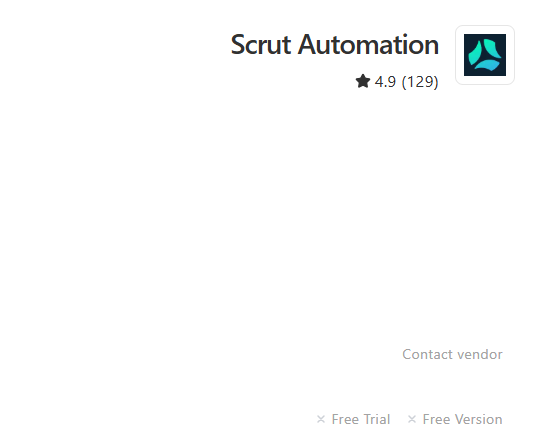
Does Scrut Automation Have a Free Plan or Free Trial?
Short answer: no.
Scrut doesn't appear to offer a free plan or a free trial based on what's publicly available.
How Much Does Scrut Automation Really Cost?
Scrut doesn't publish its pricing, so exact figures require a direct conversation with its sales team.
But here's what I found from publicly available sources:
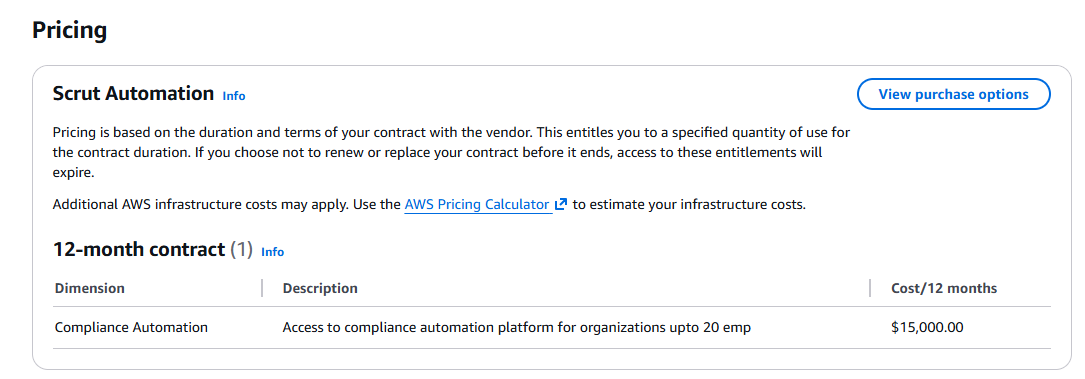
- AWS Marketplace listing: Scrut's Compliance Automation module is listed at $15,000/year for a 12-month contract covering organizations with up to 20 employees.
- Reported mid-range costs: Mid-size SaaS companies pursuing SOC 2 and ISO 27001 typically see quotes in the $18,000 to $30,000/year range, based on third-party analysis.
- Larger organizations: Teams managing five or more certifications with multiple cloud regions and dedicated security staff can expect quotes approaching $40,000 to $50,000/year or higher.
And that's just the platform subscription.
The real first-year cost usually includes audit fees, penetration testing, and internal time for remediation and policy creation
SOC 2 audit fees alone typically range from $15,000 to $40,000, while ISO 27001 adds another $15,000 or more.
So a team signing up for Scrut at $15,000/year for the platform could easily spend $40,000 to $70,000 total in the first year once audits and testing are included.
I want to be clear that these are estimates drawn from public sources.
Your actual quote from Scrut could be different depending on your specific setup, team size, and compliance needs.
Does Scrut Automation Provide Good Value for Money?
Scrut holds a 4.9 out of 5 rating on both G2 and Capterra, which is high for a GRC platform.
Most reviewers praise the platform's ease of use and the quality of its customer support team.
Here's what users are saying:
- Customer support is a consistent highlight. Nearly every positive review I came across mentions the hands-on guidance from Scrut's team, especially during onboarding and audit preparation.
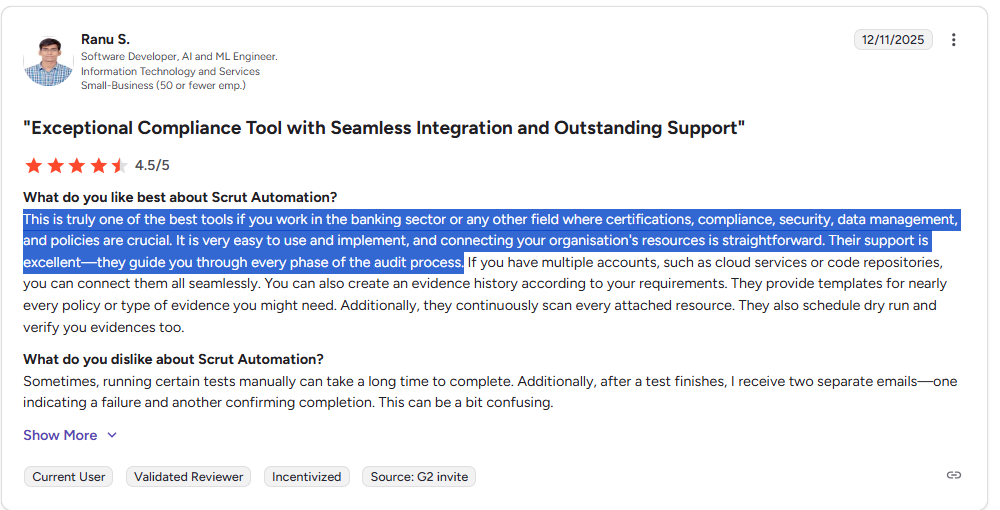
"This is truly one of the best tools if you work in the banking sector or any other field where certifications, compliance, security, data management, and policies are crucial. It is very easy to use and implement, and connecting your organisation's resources is straightforward. Their support is excellent—they guide you through every phase of the audit process." - G2 Review
- Setup and onboarding takes time. Several users flag that initial configuration can be demanding, especially when mapping controls and integrations for the first time.
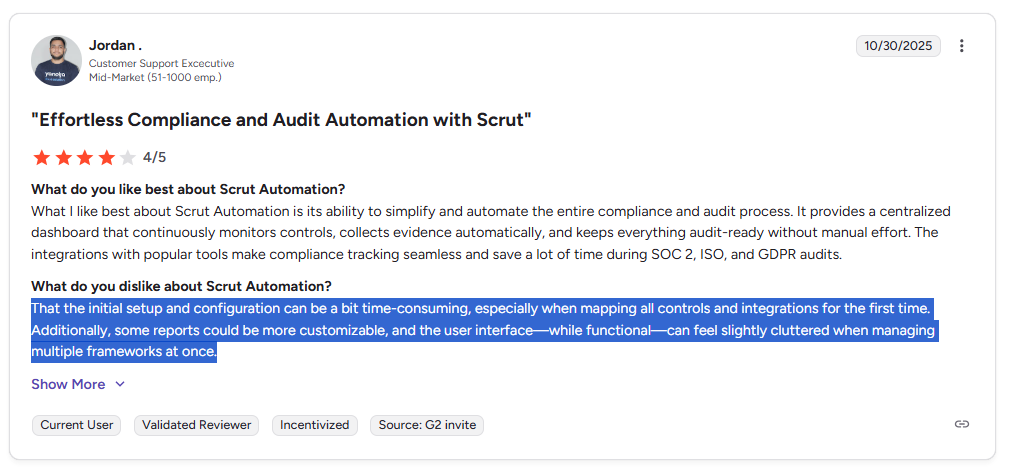
"That the initial setup and configuration can be a bit time-consuming, especially when mapping all controls and integrations for the first time. Additionally, some reports could be more customizable, and the user interface—while functional—can feel slightly cluttered when managing multiple frameworks at once." - G2 Review
- Customization hits a ceiling. Some users mention that the pre-built templates and workflows work well for standard use cases, but can feel rigid if your compliance program has unique requirements.
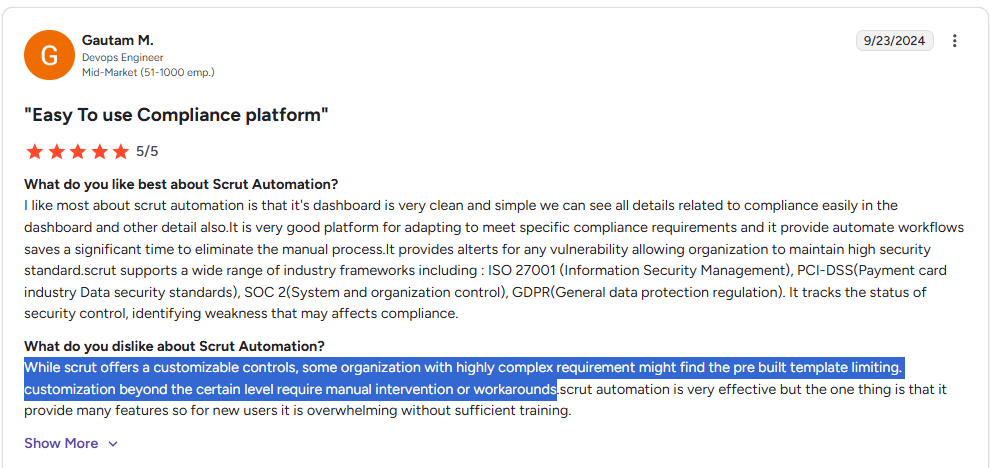
"While scrut offers a customizable controls, some organisation with highly complex requirement might find the pre built template limiting. customization beyond the certain level require manual intervention or workarounds." - G2 Review
- Pricing transparency is a sticking point. One particularly critical review paints a much harsher picture of the overall experience.
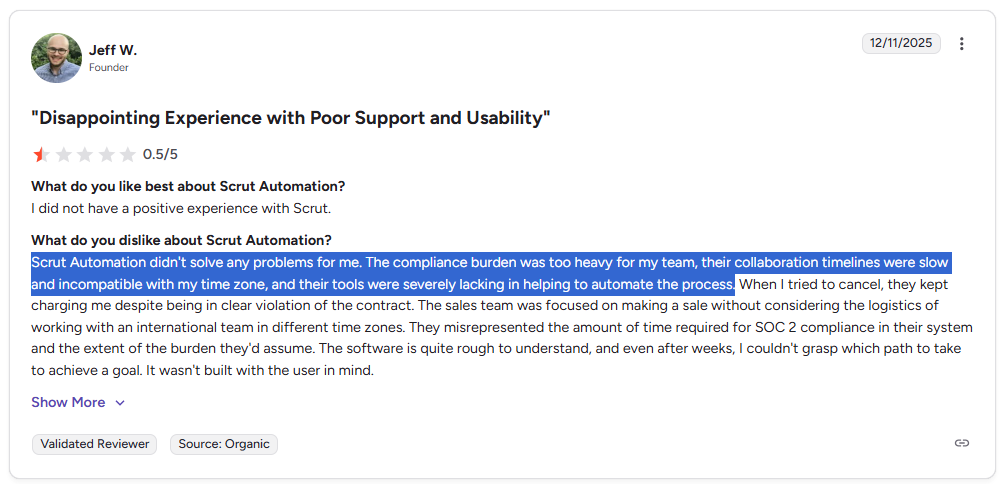
"Scrut Automation didn't solve any problems for me. The compliance burden was too heavy for my team, their collaboration timelines were slow and incompatible with my time zone, and their tools were severely lacking in helping to automate the process." - G2 Review
So, is Scrut worth it?
For fast-growing SaaS teams that need SOC 2 or ISO 27001 certification with guided support, Scrut often delivers strong value.
But for teams that want deeper customization, broader GRC scope beyond just certifications, or transparent pricing they can evaluate without a sales call, the combination of non-public pricing and limited flexibility may raise questions about long-term cost-effectiveness in 2026.
Looking for a Scrut Automation Alternative?
If Scrut's non-public pricing, limited customization, or certification-first focus gives you pause, it may be worth exploring platforms that approach GRC from a broader operational angle.
SmartSuite is an AI-native work management platform that can be shaped into a connected GRC operating system for teams that want compliance tied to real business workflows, not isolated inside a certification tool.
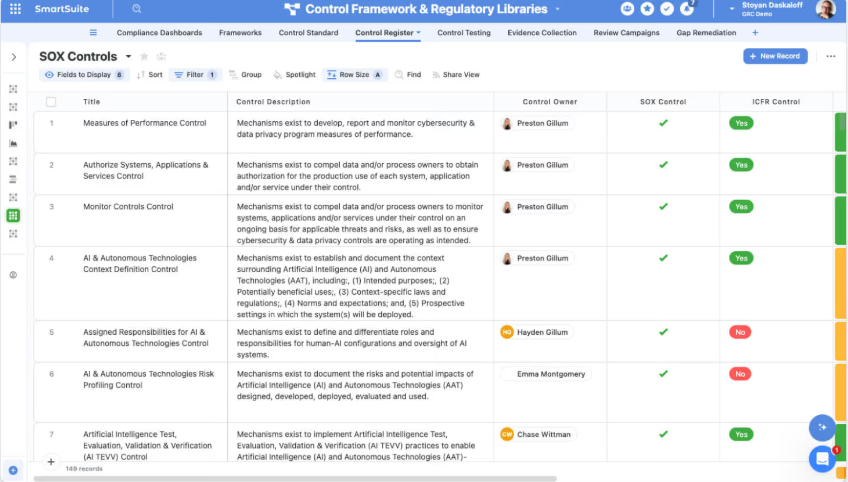
Our platform lets teams manage risk registers, control testing, audit fieldwork, incident response, vendor assessments, and remediation tasks in one workspace.
Let's look at some of its standout features. 👇
1. Connected GRC workspace
Rather than treating governance, risk, and compliance as separate tools, SmartSuite brings them together inside one connected system.
You can link risks to controls, controls to audit findings, findings to remediation tasks, and everything stays connected. That means when a control test fails, the related risk score, audit trail, and assigned remediation all update together.
Here's what's included:
- AI governance: Manage AI-related risks, policies, controls, and regulatory obligations in a structured environment that supports responsible AI oversight and documentation.
- Audit management: Plan, execute, and track internal or external audits with standardized workflows for evidence collection, testing, findings, and remediation.
- Compliance management: Monitor regulatory requirements, map controls to frameworks, track obligations, and maintain continuous compliance readiness across standards.
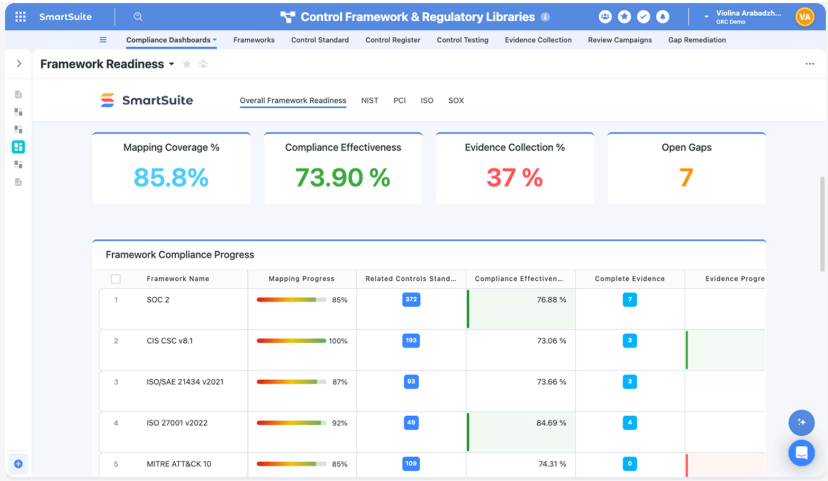
- Cyber & IT risk: Identify, assess, and mitigate cybersecurity and IT risks while linking them directly to controls, incidents, and remediation plans.
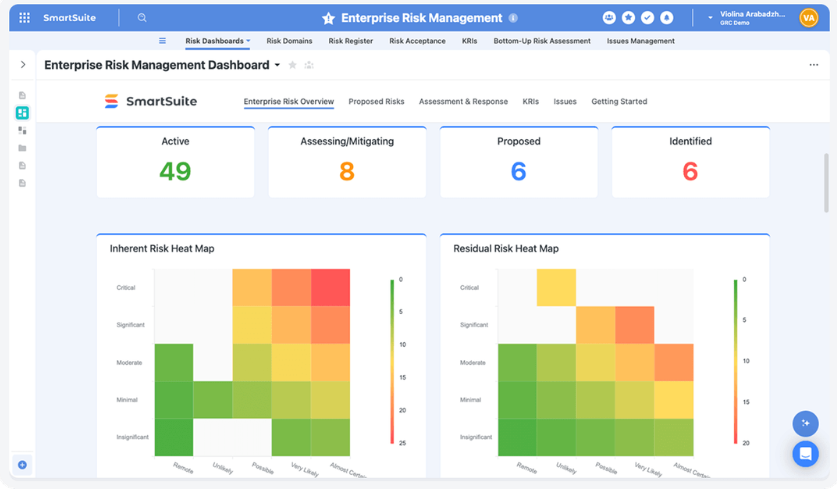
- Enterprise risk management (ERM): Centralize strategic, operational, financial, and reputational risks into a unified risk register with scoring, ownership, and monitoring.
- ESG management: Track environmental, social, and governance metrics, initiatives, and reporting requirements in one governed workspace.
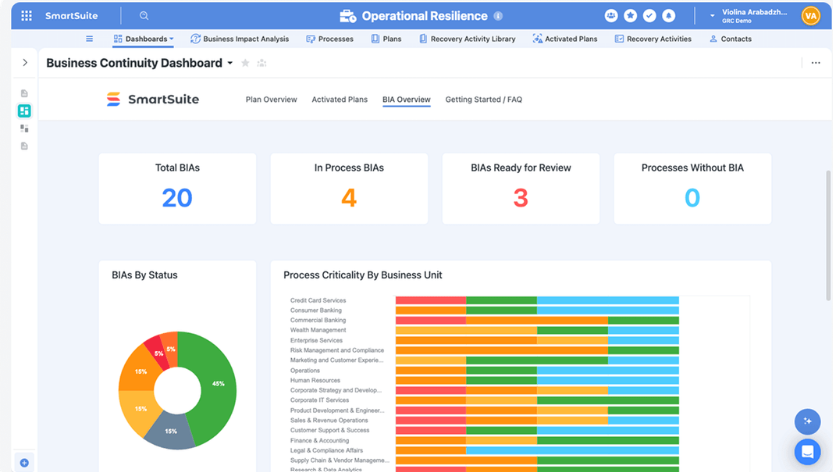
- Operational resilience: Build and maintain business continuity plans, scenario testing, and response coordination to ensure readiness during disruptions.
- Privacy management: Manage data protection obligations, privacy impact assessments, and regulatory requirements such as GDPR in a structured workflow.
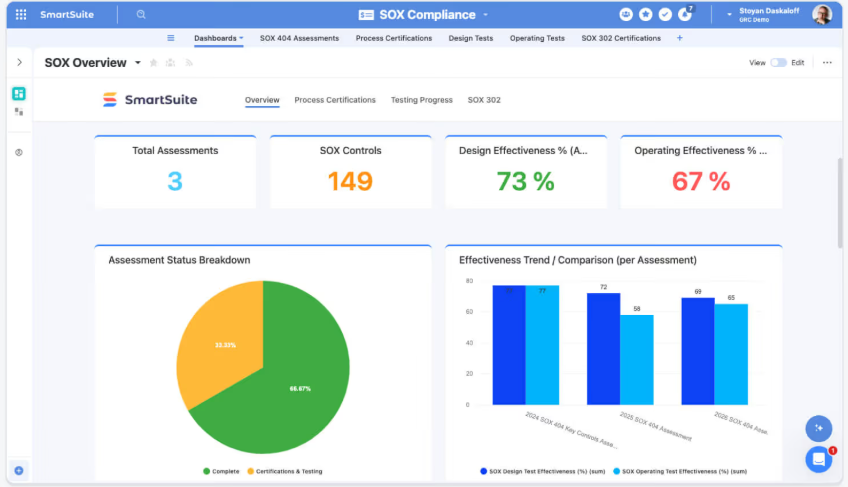
- SOX management: Standardize financial controls, testing procedures, documentation, and reporting needed for Sarbanes-Oxley compliance.
- Third-party risk management: You’ll be able to assess, monitor, and manage vendor and partner risk through structured due diligence, ongoing reviews, and remediation tracking.
2. No-code customization for GRC teams
SmartSuite lets teams design and adapt GRC workflows visually, without writing code or waiting for IT.
Using our visual builder, SmartSuite Studio, you can create tables, define fields, build linked records, set up conditional logic, and configure role-specific interfaces
Key no-code customization capabilities include:
- Visual builder: Create tables, fields, linked records, layouts, and conditional logic using a drag-and-drop interface in SmartSuite Studio.

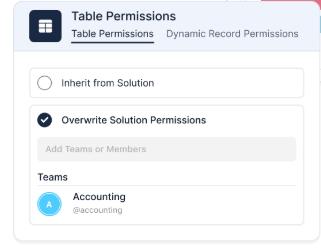
- Role-specific interfaces: Build tailored dashboards, pages, and record layouts so each team sees only what they need to act on.
- Reusable workflow patterns: Start from templates or existing solutions, then customize them to match your organization’s processes.
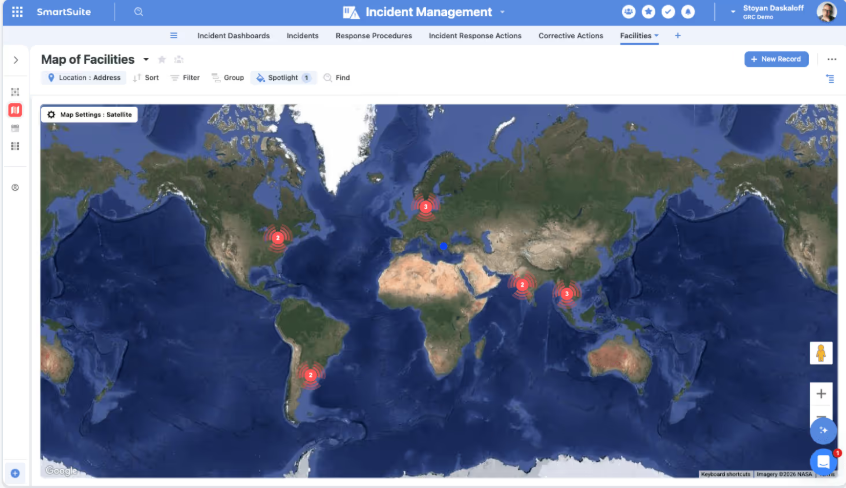
- Multiple work views: Switch between Grid, Kanban, Calendar, Timeline, Chart, or Map views to visualize workflows in the way that fits the task.
- Connected workflows across teams: Link multiple processes and solutions together while maintaining permissions and structure.
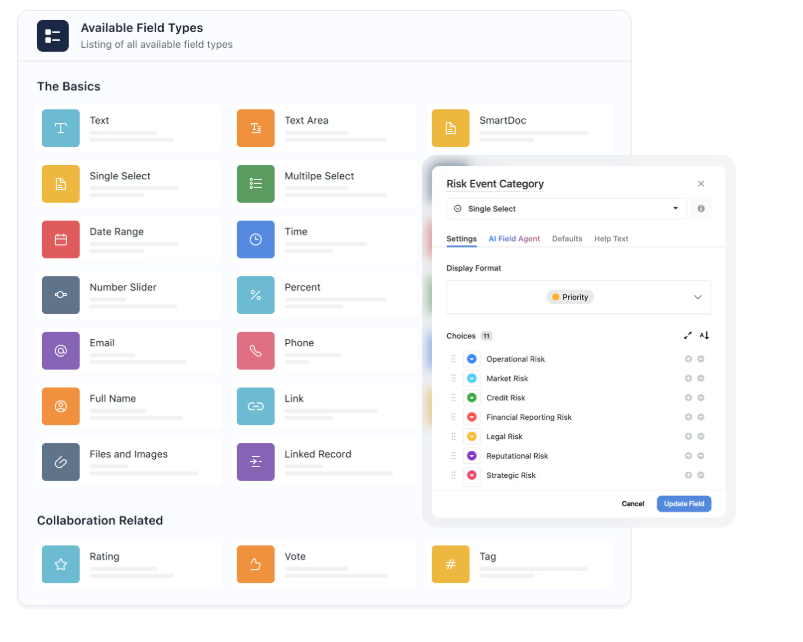
- Flexible data architecture: Model workflows with relational tables, linked records, and over 40 field types to support complex risk, audit, or compliance programs.
3. AI that works inside your GRC workflows
SmartSuite doesn't bolt AI on as a separate feature. It's embedded directly into workflows, records, and automations.
Here's what that looks like in practice:
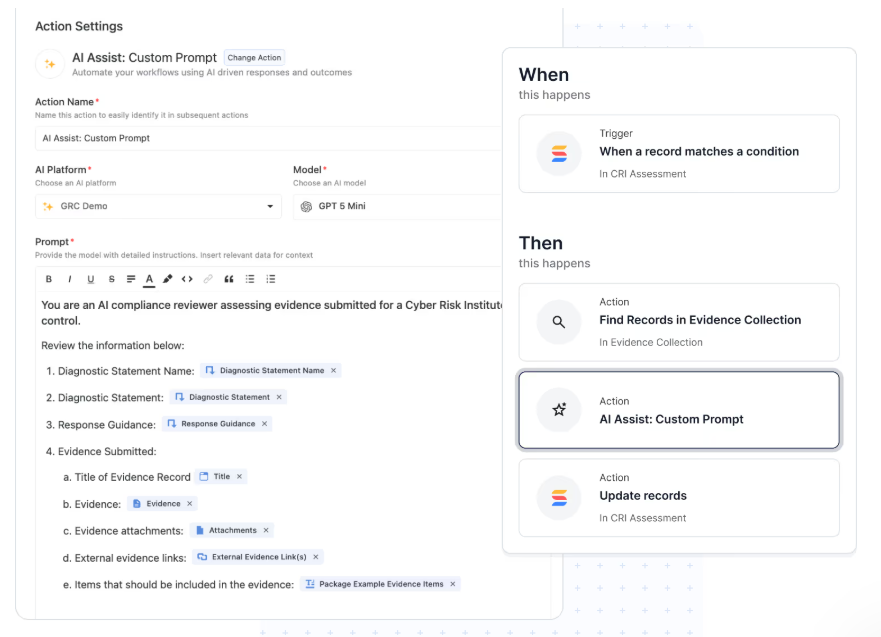
- AI Assist inside automations: Add AI-powered steps that enrich data, generate summaries, or structure incoming information as records move through workflows.
- SmartDoc AI content generation: Create, rewrite, translate, or summarize policies, audit notes, vendor assessments, and incident reports directly inside records.
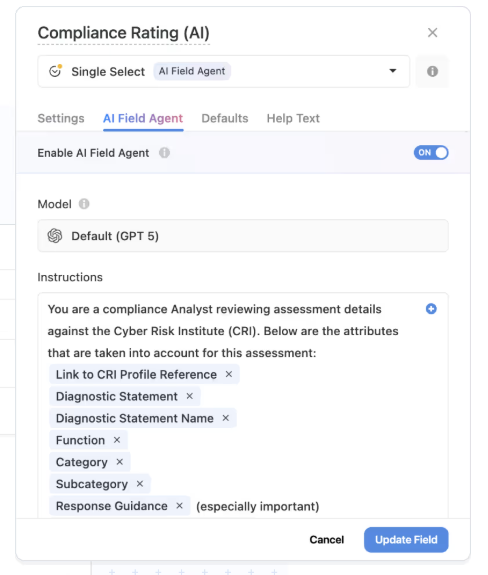
- AI Field Agent for data intelligence: Monitor records for patterns, missing context, or anomalies, and recommend updates like risk scores, priorities, or classifications.
- Third-party risk intelligence: Summarize vendor questionnaires, highlight potential risks in responses, and map findings to required controls and frameworks.
- Operational resilience & continuity insights: Summarize incidents, recovery actions, and lessons learned while surfacing gaps between plans and real-world responses.
- Human-in-the-loop governance: AI prepares suggestions, but teams review and approve decisions, maintaining accountability and auditability.
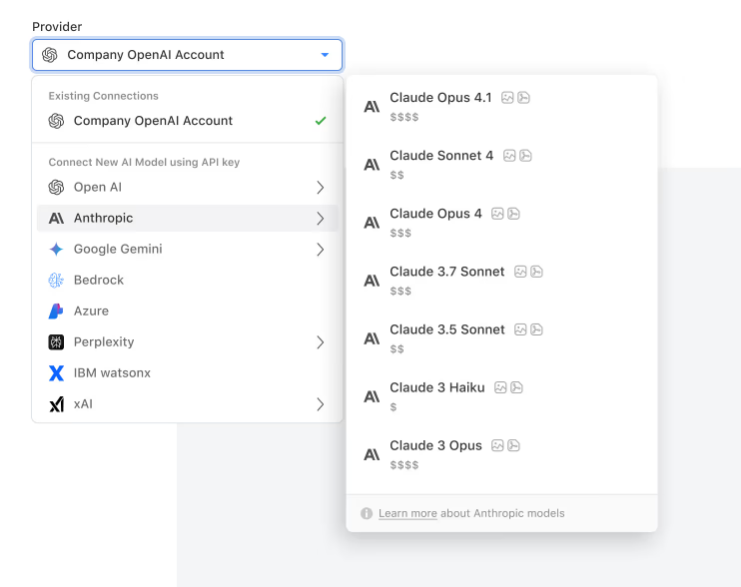
- Bring-your-own-LLM flexibility: Connect models like OpenAI, Anthropic, Gemini, Bedrock, Azure, Perplexity, or IBM WatsonX while maintaining enterprise governance.
- Permission-aware AI actions: Every AI-generated change respects role-based permissions and is logged for full transparency.
4. Real-time dashboards and GRC reporting
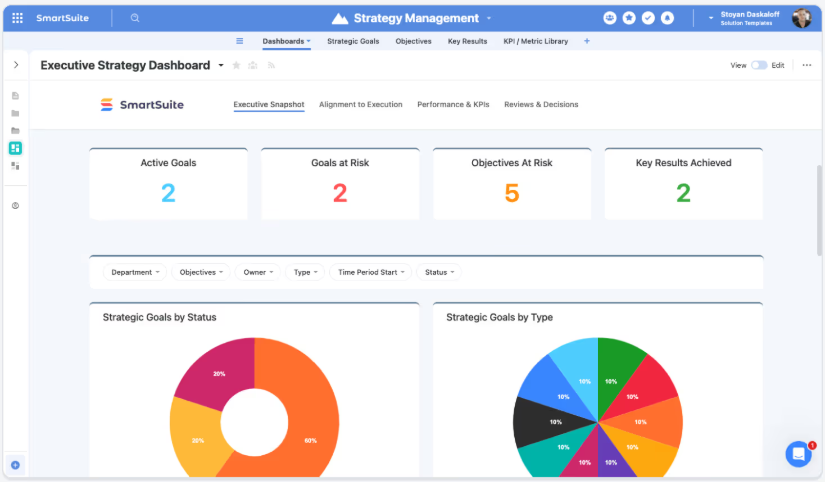
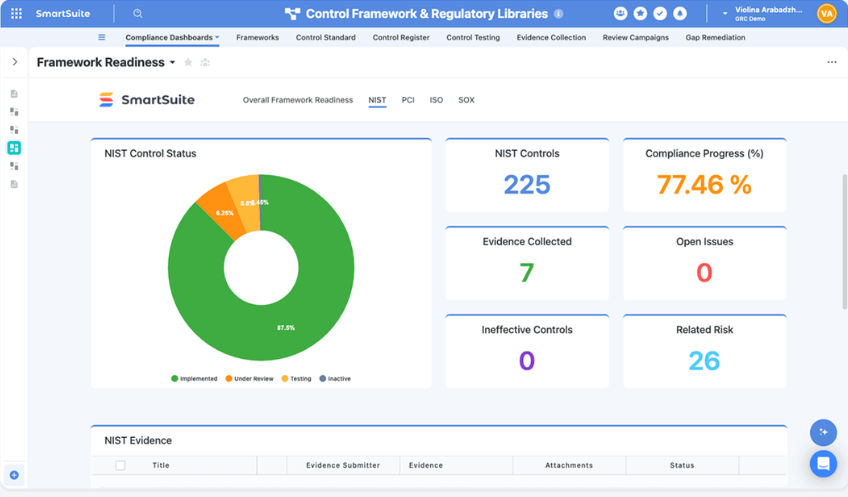
SmartSuite builds reporting directly into risk, audit, and compliance workflows. You don't need a separate BI tool or manual exports to understand your posture.
Dashboards update automatically as work changes, giving you a live view of risk exposure, audit progress, incidents, and compliance readiness.
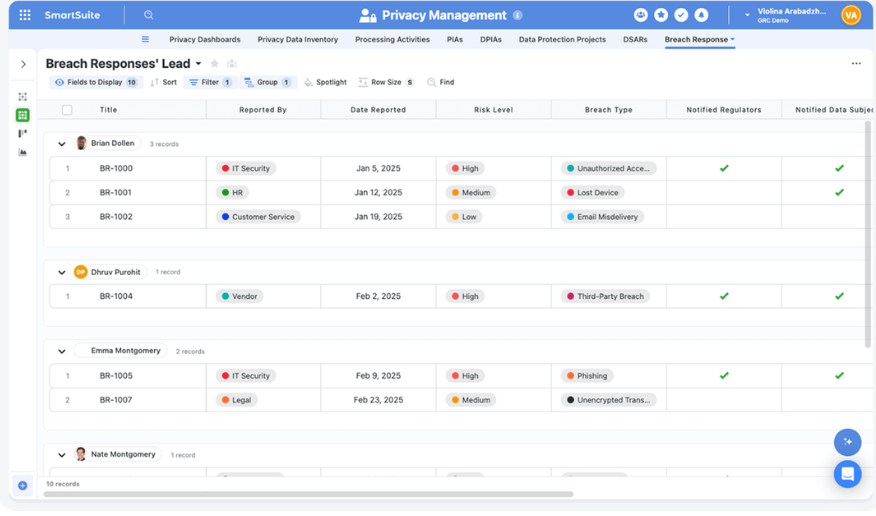
You can combine data from risk, vendor management, cybersecurity, and operational workflows into one view.
And because reporting is permission-aware, executives, managers, auditors, and contributors each see what's relevant to their role.
5. Workflow automation engine
SmartSuite's automation engine lets teams build simple or multi-step workflows with a visual builder. No code required.
You set triggers (record created, status changed, date reached), conditions (only if priority is high, only if assigned to a specific team), and actions (send notification, update field, create record in another solution).
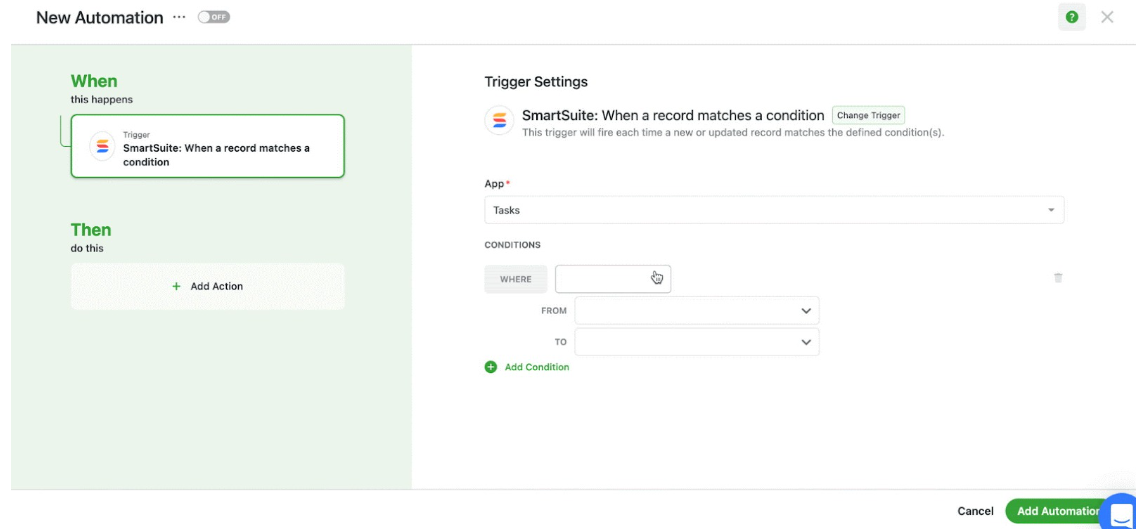
Every automation run gets logged with timestamps, triggers, and results for full traceability. That means your auditors can see exactly what happened, when, and why.
How Is SmartSuite's Pricing Different From Scrut Automation's?
Scrut requires a sales call just to learn what you'll pay. SmartSuite publishes everything upfront.
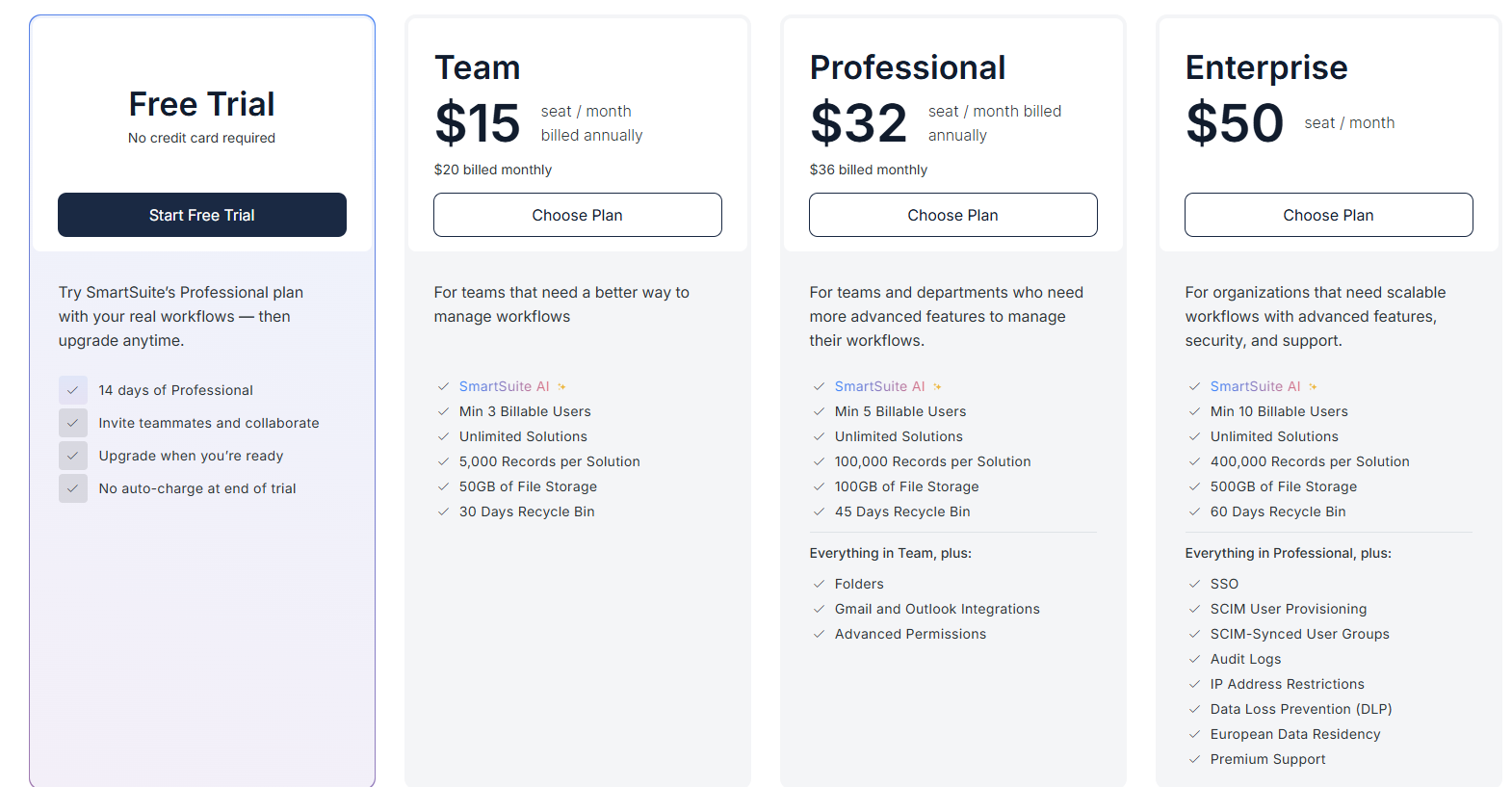
SmartSuite offers a 14-day free trial with no credit card required, so you can test real workflows before committing.
From there, SmartSuite has two transparent pricing models depending on your organization's size and complexity:
- User-based pricing, designed for small to mid-sized organizations that want full access to the entire platform under one license:
- Team: $15/user/month (minimum 3 users) includes unlimited solutions, 5,000 records per solution, and 50GB storage, and access to all core features, such as SmartSuite AI, reporting and dashboards, pre-built templates, advanced customization options, real-time collaboration, etc.
- Professional: $32/user/month (minimum 5 users), includes everything in Team and adds 100,000 records per solution, 100GB of storage, Gmail & Outlook integrations, folders, and advanced access controls.
- Enterprise: $50/user/month (minimum 10 users), includes everything in Professional and adds 400,000 records per solution, 500GB of storage, SSO, SCIM provisioning, audit logs, DLP, IP restrictions, and premium support.
Each licensed user can access all SmartSuite solutions (ITSM, ITAM, GRC, projects, operations, etc.) without paying separately for service management, asset management, or reporting modules.
2. Solution-based custom-tailored pricing, built for regulated industries and large enterprises where per-user licensing across the entire platform isn’t practical. With it you can:
- License only the specific solutions you need (e.g. ITSM, GRC).
- Structure access by department, region, or regulatory requirement.
- Easily scale for thousands of users without compromising security.

To put this in perspective: a 10-person compliance team on SmartSuite's Team plan would pay $1,440/year.
On Scrut, that same team's starting point is $15,000/year according to AWS Marketplace.
How Is SmartSuite Different From Scrut Automation?
Both SmartSuite and Scrut can help you manage compliance, but they approach the problem differently.
Scrut is a purpose-built compliance automation platform.
The platform connects directly to cloud infrastructure, automates evidence collection, and runs continuous control monitoring against 60+ frameworks, including SOC 2, ISO 27001, and HIPAA.
SmartSuite takes a broader, workflow-first approach by connecting compliance, risk, audit, and operational processes into one governed system that you can customize without code.
Scrut can be the better choice if your priority is automating certification workflows with deep cloud integrations and built-in auditor collaboration.
However, if your compliance requirements extend beyond certification, or if Scrut feels limiting, SmartSuite offers a different path forward.
Our platform connects risks, audits, incidents, vendors, and remediation work into one configurable workspace, so growing teams can build a GRC program that evolves with them rather than around a single certification cycle.
Get started with SmartSuite for free today
If you're evaluating Scrut Automation pricing and wondering whether there's a more flexible, transparent option for your GRC needs, SmartSuite is worth exploring.
Here's what's in it for your team:
- 14-day free trial with all features unlocked and no credit card required.
- No-code workflow builder to design GRC processes that match how your team actually works.
- Built-in AI capabilities for risk insights, automation, and governance assistance.
- Real-time dashboards tied to live compliance and risk data.
- Pre-built solution templates for GRC, risk management, audit, and operations.
Start your free trial to test the water, or if you'd like to talk to our experts, you can schedule a demo.
⚠️ Disclaimer: This article was last updated on 03/25/2026, and if there's any misinterpretation of the information, please contact us, and we will fact-check it.
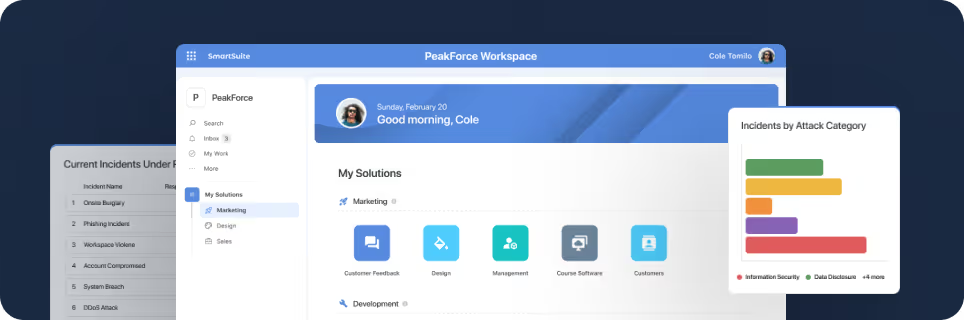
SmartSuite provides work platform for standardizing workflows in the following areas:
- Governance, Risk & Compliance
- IT & Service Ops
- Project / Portfolio Management
- Business Operations