

I'll break down the best Scytale alternatives in 2026, based on tools I've tested across GRC workflows, covering what each one does well, where Scytale hits its limits, and which option makes sense depending on how your team works.
TL;DR
- SmartSuite is the best Scytale alternative in 2026 for organizations that want to manage governance, risk, audit, and compliance in one connected platform instead of relying on a certification-first tool that doesn't extend into broader operations.
- Vanta and Drata are the closest Scytale-style options, best for teams that mainly need automated evidence collection and continuous monitoring across multiple frameworks.
- LogicGate and Optro are better suited for larger enterprises that want deeply configurable GRC workflows, risk quantification, and audit management at scale.
Why look for Scytale alternatives?
The goal of this article is not to highlight why you should run away from Scytale and go to another solution.
In fact, I particularly liked how the platform pairs dedicated compliance consultants with software automation, its support for over 60 frameworks, and the bundled audit and penetration testing services that make first-time SOC 2 or ISO 27001 certification feel much less intimidating.
That said, once you move beyond your initial certification, there are issues that might come up:
#1: Integrations can be unreliable
Scytale's automated evidence collection is one of its core selling points. But a number of users report that the integrations don't always work as expected, especially when your infrastructure doesn't match Scytale's expected setup exactly.
This creates gaps in audit readiness that defeat the purpose of automating evidence in the first place.
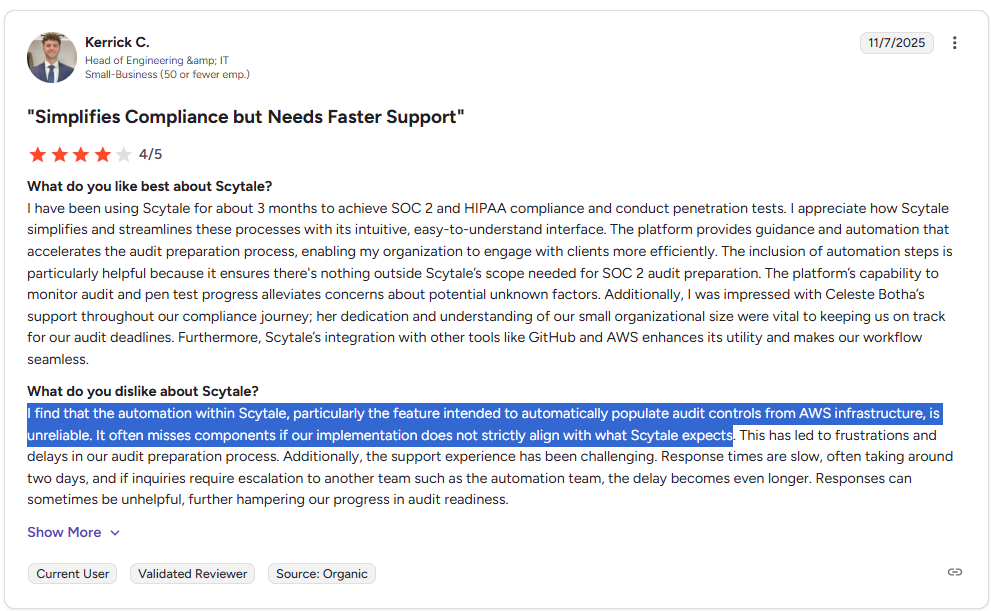
"I find that the automation within Scytale, particularly the feature intended to automatically populate audit controls from AWS infrastructure, is unreliable. It often misses components if our implementation does not strictly align with what Scytale expects." — G2 Review
#2: Opaque pricing with alleged annual increases
Scytale doesn't publish pricing on its website. Every plan requires a demo call.
That's already a friction point for teams trying to compare options, but what frustrates users more is the annual price increases that feel arbitrary.
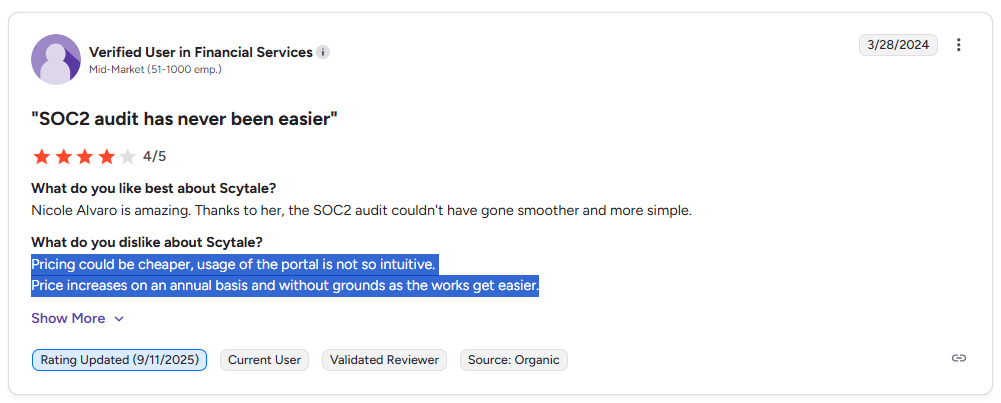
"Pricing could be cheaper, usage of the portal is not so intuitive. Price increases on an annual basis and without grounds as the works get easier." — G2 Review
#3: Missing features and UI friction
Several users point out that basic functionality they expected to be standard is either missing or clunky.
Things like previewing uploaded evidence, customizing reports, and navigating between audits and controls require more manual effort than you'd expect from a platform built around automation.
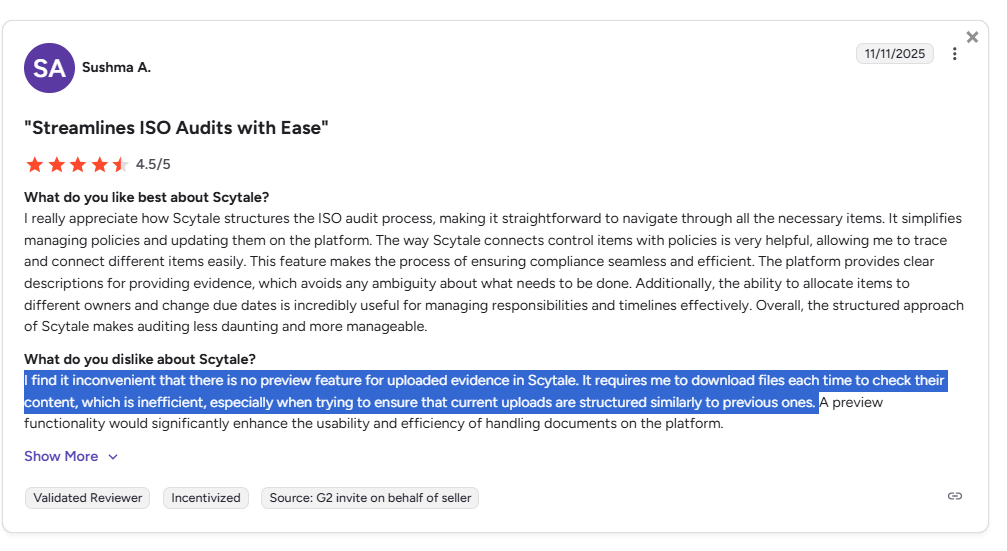
"I find it inconvenient that there is no preview feature for uploaded evidence in Scytale. It requires me to download files each time to check their content, which is inefficient, especially when trying to ensure that current uploads are structured similarly to previous ones." — G2 Review
What are the best alternatives to Scytale in 2026?
The best alternatives to Scytale are SmartSuite, Vanta, and Drata.
Here's my shortlist of the 10 best Scytale alternatives on the market:
#1: SmartSuite
SmartSuite is the best Scytale alternative in 2026 for organizations that want to manage all GRC workflows in one connected platform with real-time risk visibility and complete traceability.
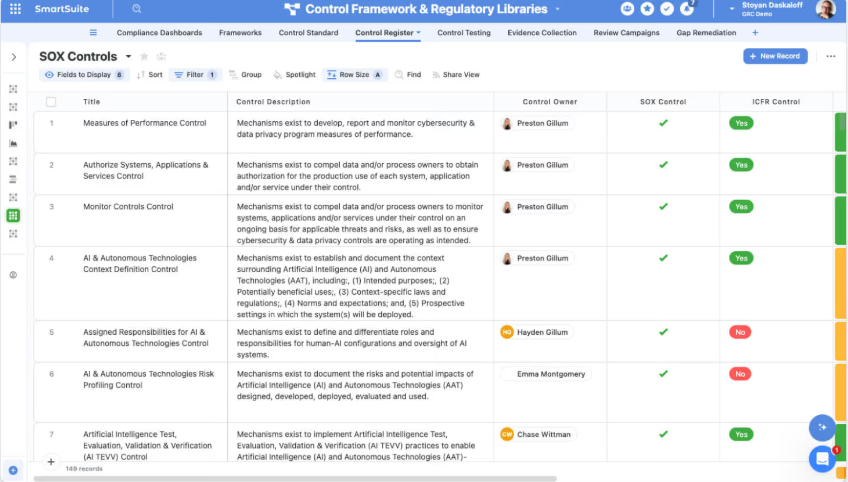
It's an AI-native work platform that helps teams handle governance, risk, and compliance while keeping those workflows connected to the rest of the business.
Rather than focusing only on certifications, our platform lets organizations tie risks, controls, audits, incidents, and remediation tasks to everyday operations.
We designed the platform so that compliance doesn't live in isolation. Instead, it stays connected to real work across teams.
Let's go over the capabilities that make SmartSuite the best option for teams looking to switch from Scytale: 👇
Unified GRC and resilience workspace
Certification-first tools treat compliance as a standalone function. You get certified, and that's where the tool's value mostly ends.
But I think GRC should work differently.
Risks, controls, audits, policies, incidents, and vendor management should all connect in one system, so your team can see the full picture without jumping between tools.
SmartSuite's workspace does exactly that.
It ties together enterprise risk management, cyber and IT risk oversight, internal audit planning, compliance and control monitoring, operational resilience coordination, third-party risk workflows, SOX and regulatory support, AI governance tracking, and ESG reporting.
All in a single connected environment.
So your compliance manager, your risk analyst, and your audit team are all working from the same source of truth, not three different platforms.
Here are some of the GRC capabilities you get with SmartSuite:
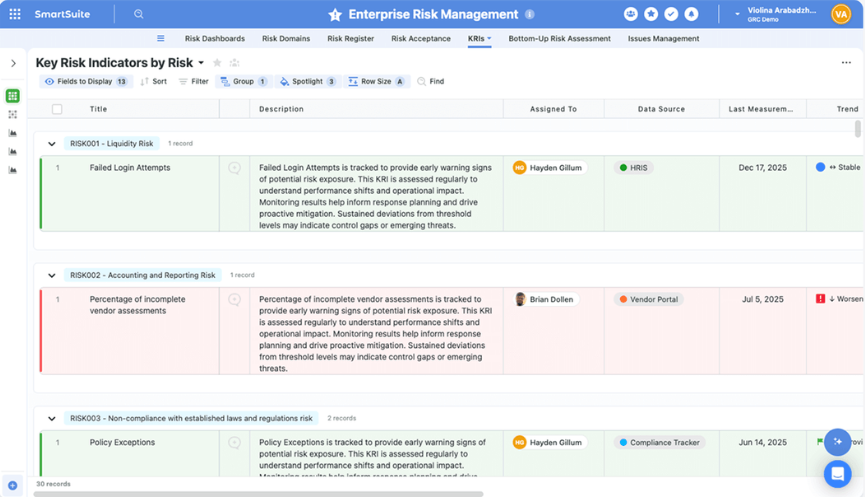
- Enterprise risk lifecycle management: Keep centralized risk registers, run structured assessments, monitor KRIs, and automate mitigation workflows from one place.
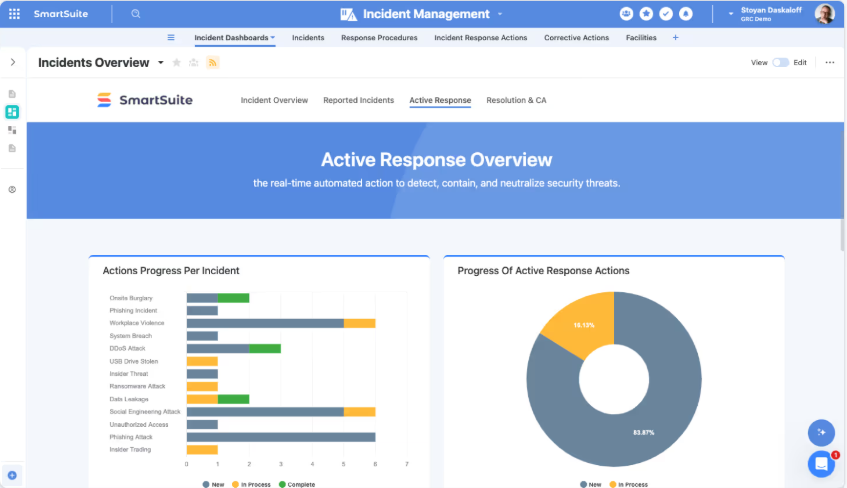
- Cyber and IT risk management: Bring together cyber risks, vulnerabilities, incidents, and controls with live visibility into your threat posture and remediation status.
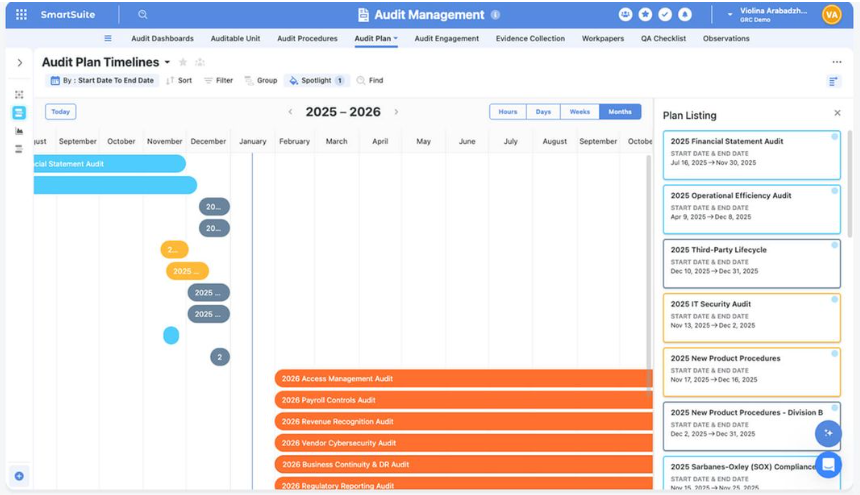
- Internal audit management: Plan audits, manage fieldwork, track findings, and follow remediation progress through real-time dashboards and linked workpapers.
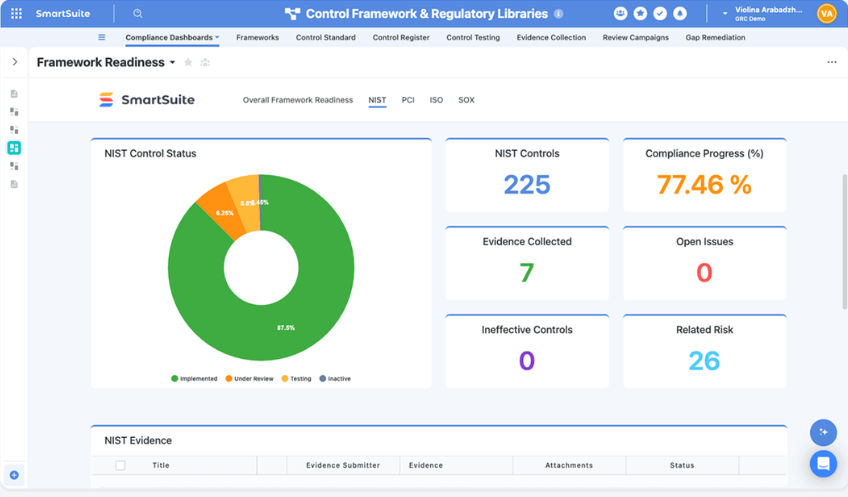
- Compliance and control oversight: Map your controls to frameworks, processes, and risks while standardizing how evidence gets collected and tested.
- Third-party risk management: Handle vendor onboarding, due diligence, continuous monitoring, and issue resolution in a single connected workflow.
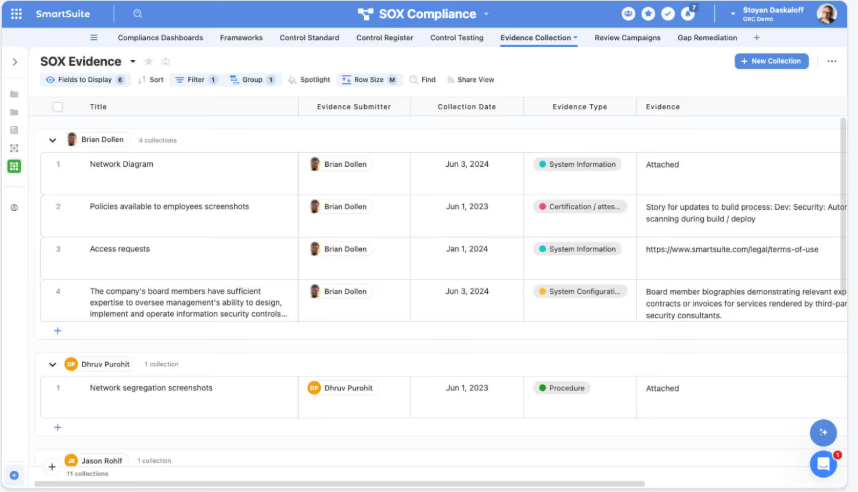
- SOX and regulatory support: Track scoping, control testing, deficiency management, and certifications with documentation that's always audit-ready.
- AI governance: Maintain inventories of AI models, run risk assessments, monitor lifecycles, and generate governance reports in one centralized space.
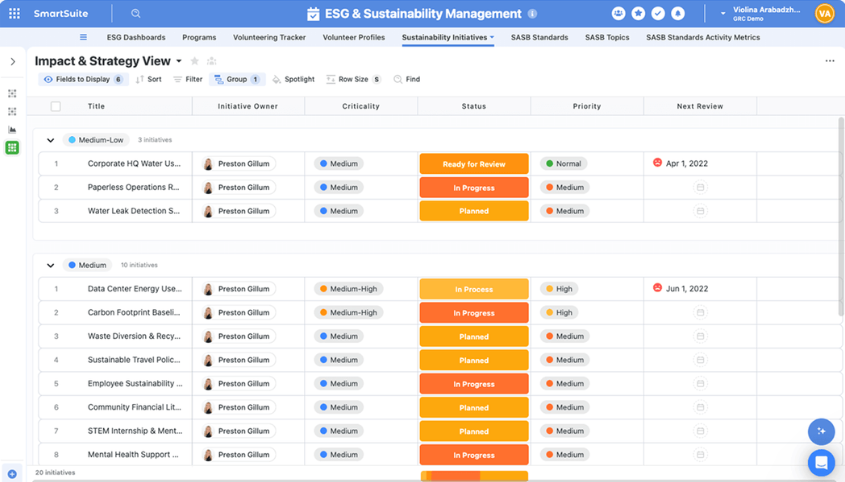
- ESG tracking: Manage ESG initiatives, disclosures, KPIs, and reporting alongside your wider risk and compliance programs.
- Operational resilience: Coordinate incident response, business continuity planning, and risk response activities across teams without switching tools.
No-code customization for GRC teams
Most compliance automation tools give you a fixed structure.
Scytale's workflows are guided and opinionated, which works well for first-time certification but can feel rigid once your compliance needs evolve.
SmartSuite takes a different approach with its visual builder, SmartSuite Studio.
Your team can model data, define workflow logic, and create role-specific interfaces without writing code or depending on consultants to make changes.
Here's what that looks like in practice:
- Visual builder: Create tables, fields, linked records, layouts, and logic using drag-and-drop in SmartSuite Studio.

- Role-specific interfaces: Build custom dashboards, pages, and record layouts so each team member sees only what's relevant to their job.
- Multiple work views: Switch between Grid, Kanban, Calendar, Timeline, Chart, and Map views to match the way your team thinks.
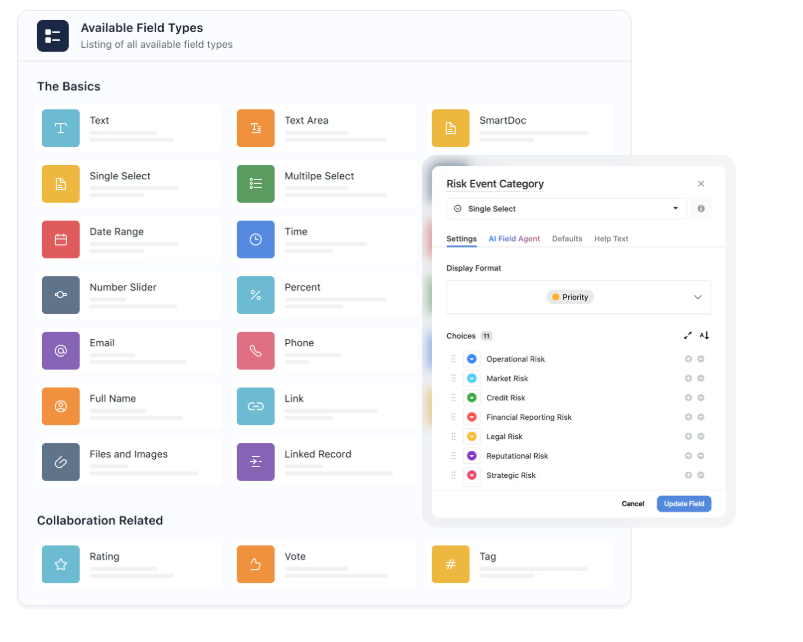
- Flexible data architecture: Model workflows with relational tables, linked records, and over 40 field types to support even the most complex compliance programs.
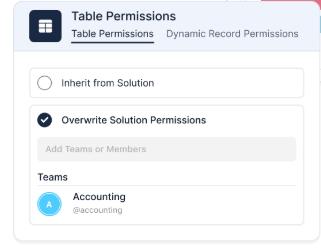
- Connected workflows across teams: Link multiple processes and solutions together while keeping permissions and structure intact.
AI that works inside your workflows
Scytale recently launched its AI GRC agent (Scy), which focuses mainly on evidence reviews and remediation suggestions.
SmartSuite embeds AI across the entire workflow lifecycle, not just the compliance layer.
AI Assist sits inside automations so you can enrich data, generate summaries, or structure incoming information as records move through your processes.
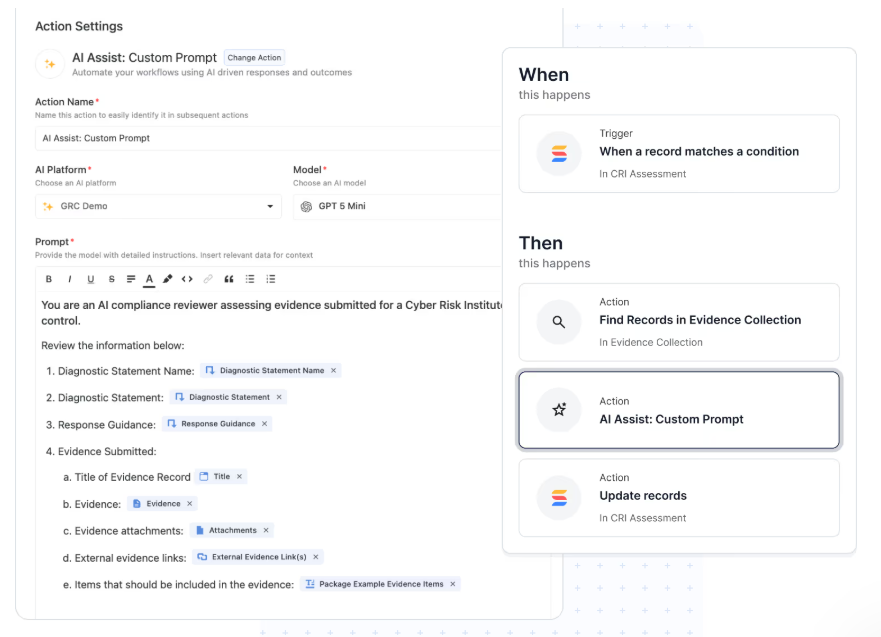
SmartDoc AI helps you create, rewrite, or translate policies, audit notes, and vendor assessments directly inside records.
And the AI Field Agent monitors records for patterns, missing context, or anomalies, then recommends updates like risk scores or priority classifications.
What I find especially useful: you can bring your own LLM.
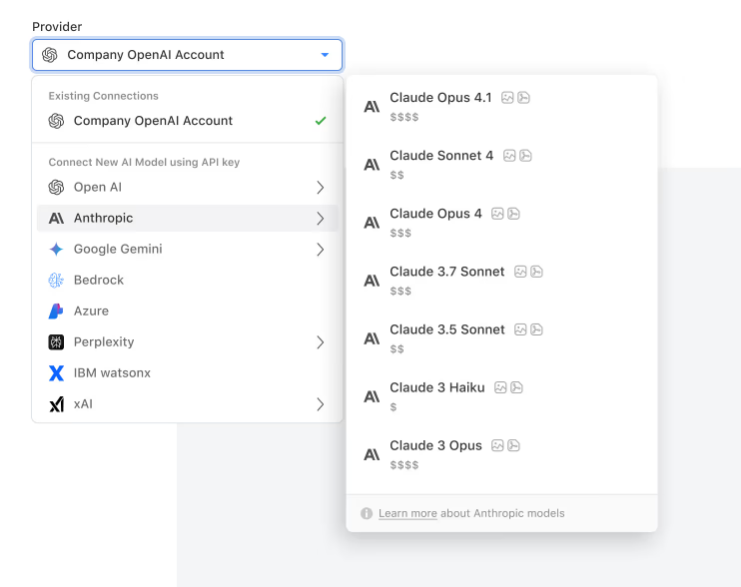
Connect models from OpenAI, Anthropic, Gemini, Bedrock, Azure, Perplexity, or IBM WatsonX while keeping enterprise governance in place.
Every AI-generated change respects role-based permissions and gets logged for full transparency.
Workflow automation that keeps compliance moving
SmartSuite's automation engine lets you build no-code workflows that handle everything from risk monitoring and audit follow-ups to incident escalation and remediation tracking.
Here’s how it looks in reality:
- No-code workflow automation: You can build simple or multi-step workflows with a visual builder to handle notifications, record updates, approvals, and task creation.
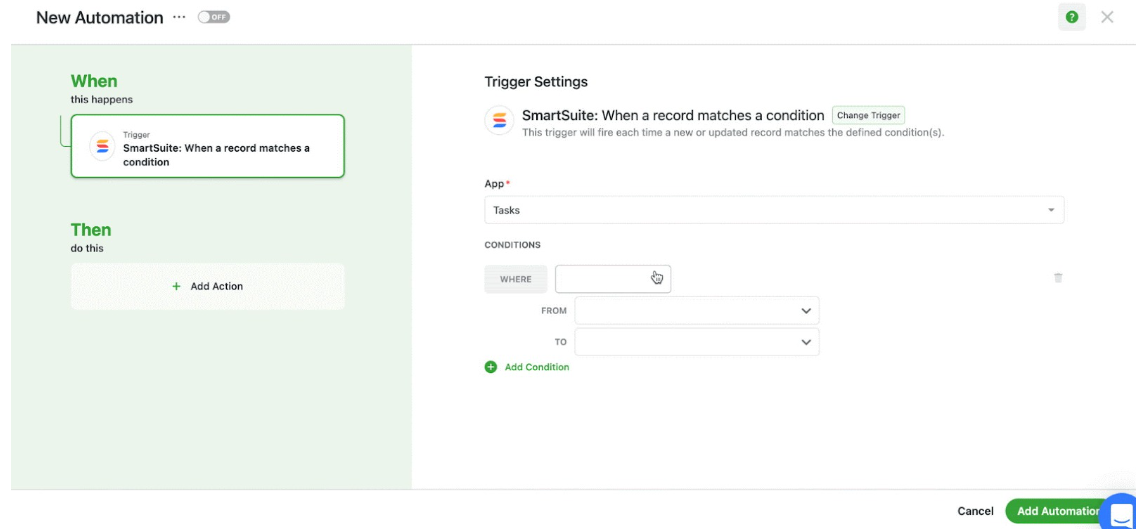
- Real-time triggers and smart filters: Launch automations based on record changes, dates, webhook events, or workflow conditions like failed control tests and high-risk ratings.
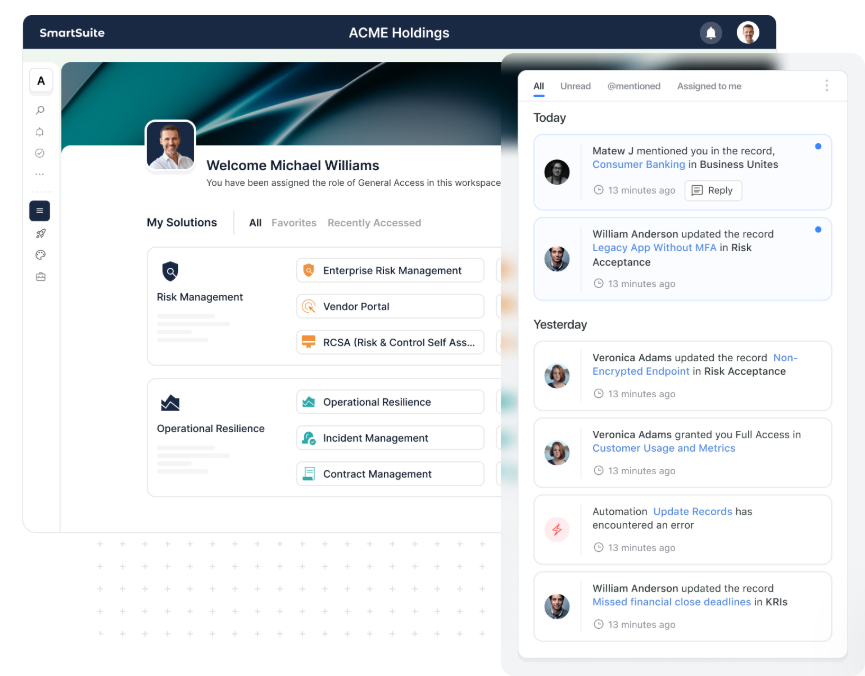
- Looping actions for large programs: Update multiple linked records at once, like applying risk score changes across controls or closing out remediation tasks automatically.
- Webhook integrations: Trigger or receive actions from external GRC, ITSM, security, or business continuity systems for end-to-end process automation.
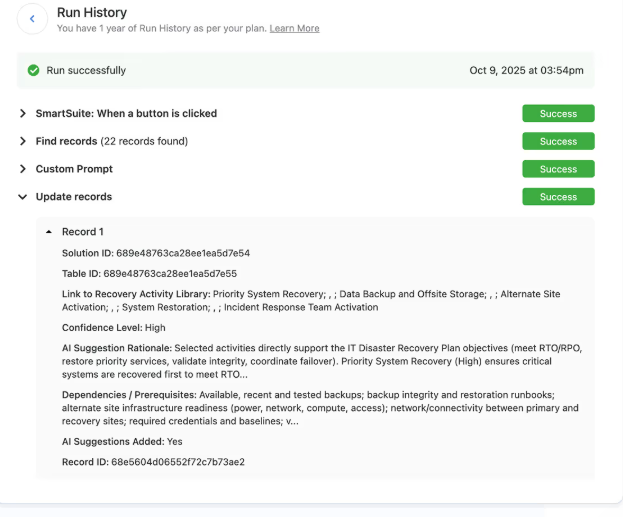
- Audit-ready automation history: Every automation run gets logged with timestamps, triggers, and results to maintain full traceability.
How does SmartSuite compare to Scytale?
Both SmartSuite and Scytale help teams stay audit-ready, but they approach GRC from different angles.
Scytale is a strong compliance automation platform that pairs software with dedicated human consultants.
It's built to get teams certified fast, and it does that well, especially for first-time SOC 2 or ISO 27001.
SmartSuite takes a broader approach.
Instead of focusing mainly on certifications, it connects compliance to the rest of your business operations, tying risks, audits, controls, incidents, vendors, and remediation into one governed workspace.
Where Scytale gives you guided workflows and expert consulting to reach certification, SmartSuite gives you the flexibility to design those workflows yourself and extend them far beyond the audit.
- Scytale is the better fit if your team wants a dedicated consultant walking you through your first certification with minimal setup.
- SmartSuite is the better fit if your compliance needs have grown past the certification stage and you want one platform where risk, audit, and operations all connect.
Pricing
SmartSuite offers a 14-day free trial, making it easy to test real workflows before subscribing.
From there, SmartSuite offers two pricing models, depending on organizational size and complexity:
- User-based pricing, designed for small to mid-sized organizations that want full access to the entire platform under one license:
- Team: $15/user/month (minimum 3 users) includes unlimited solutions, 5,000 records per solution, and 50GB storage, and access to all core features, such as SmartSuite AI, reporting and dashboards, pre-built templates, advanced customization options, real-time collaboration, etc.
- Professional: $32/user/month (minimum 5 users), includes everything in Team and adds 100,000 records per solution, 100GB of storage, Gmail & Outlook integrations, folders, and advanced access controls.
- Enterprise: $50/user/month (minimum 10 users), includes everything in Professional and adds 400,000 records per solution, 500GB of storage, SSO, SCIM provisioning, audit logs, DLP, IP restrictions, and premium support.
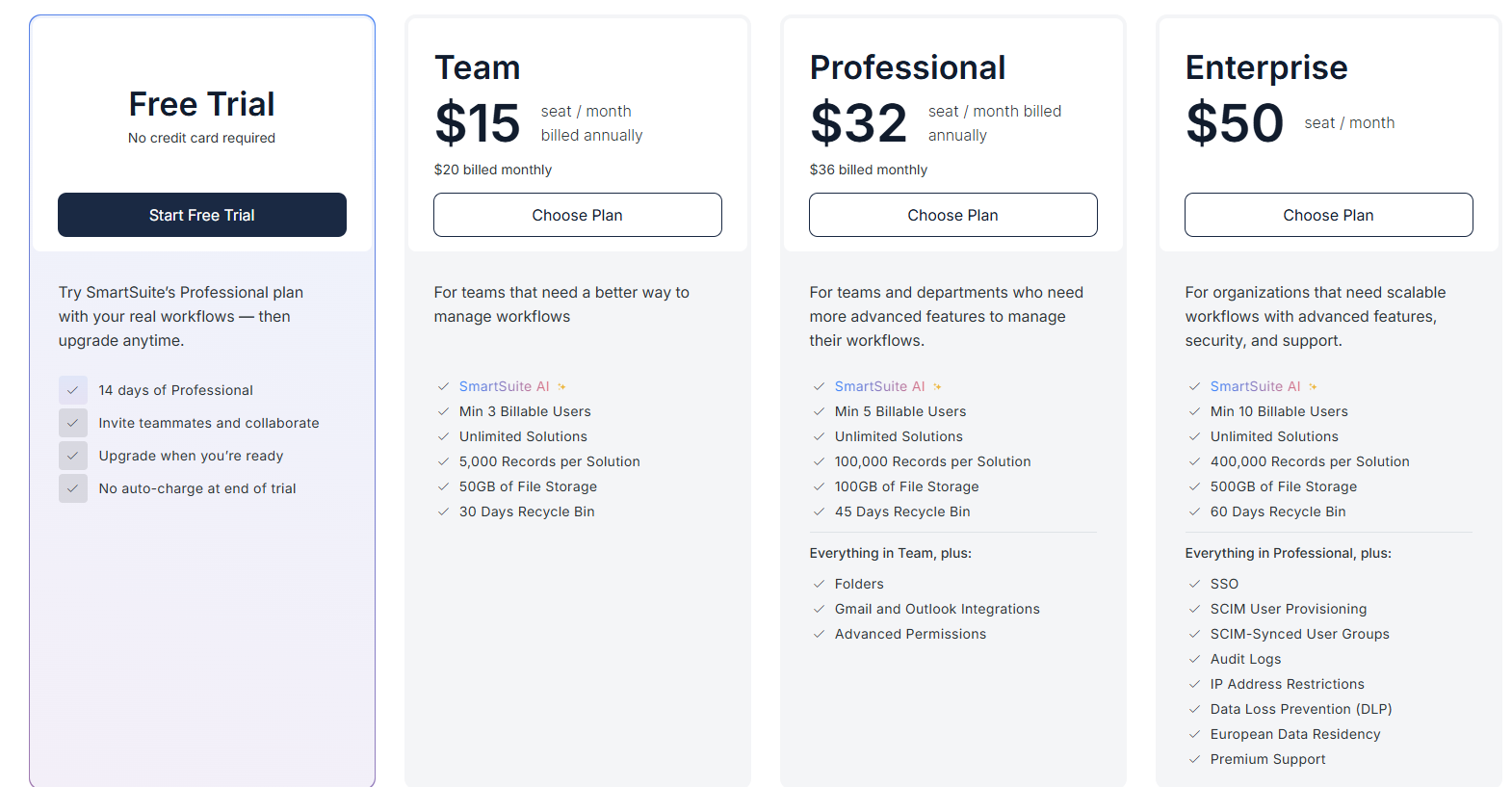
Each licensed user can access all SmartSuite solutions (ITSM, ITAM, GRC, projects, operations, etc.) without paying separately for service management, asset management, or reporting modules.
- Solution-based custom-tailored pricing, built for regulated industries and large enterprises where per-user licensing across the entire platform isn’t practical. With it you can:
- License only the specific solutions you need (e.g. ITSM, GRC).
- Structure access by department, region, or regulatory requirement.
- Easily scale for thousands of users without compromising security.

Pros & Cons
✅ Highly flexible no-code platform that lets teams design GRC workflows, data models, and interfaces without relying on rigid templates.
✅ Connected risk, audit, compliance, and operational workflows in one system instead of siloed certification tools.
✅ AI embedded directly into workflows for summaries, risk insights, automation, and governance assistance.
✅ Real-time dashboards and reporting that stay tied to live GRC data without exporting to separate BI tools.
✅ Powerful automation engine that handles risk monitoring, audit follow-ups, and remediation processes.
✅ Enterprise-grade governance features like granular permissions, audit logs, and secure role-based visibility.
❌ No mid-tier between Team and Professional plans.
#2: Vanta
Best for: Mid-market companies that want to automate compliance and build trust fast through continuous monitoring.
Similar to: Drata.
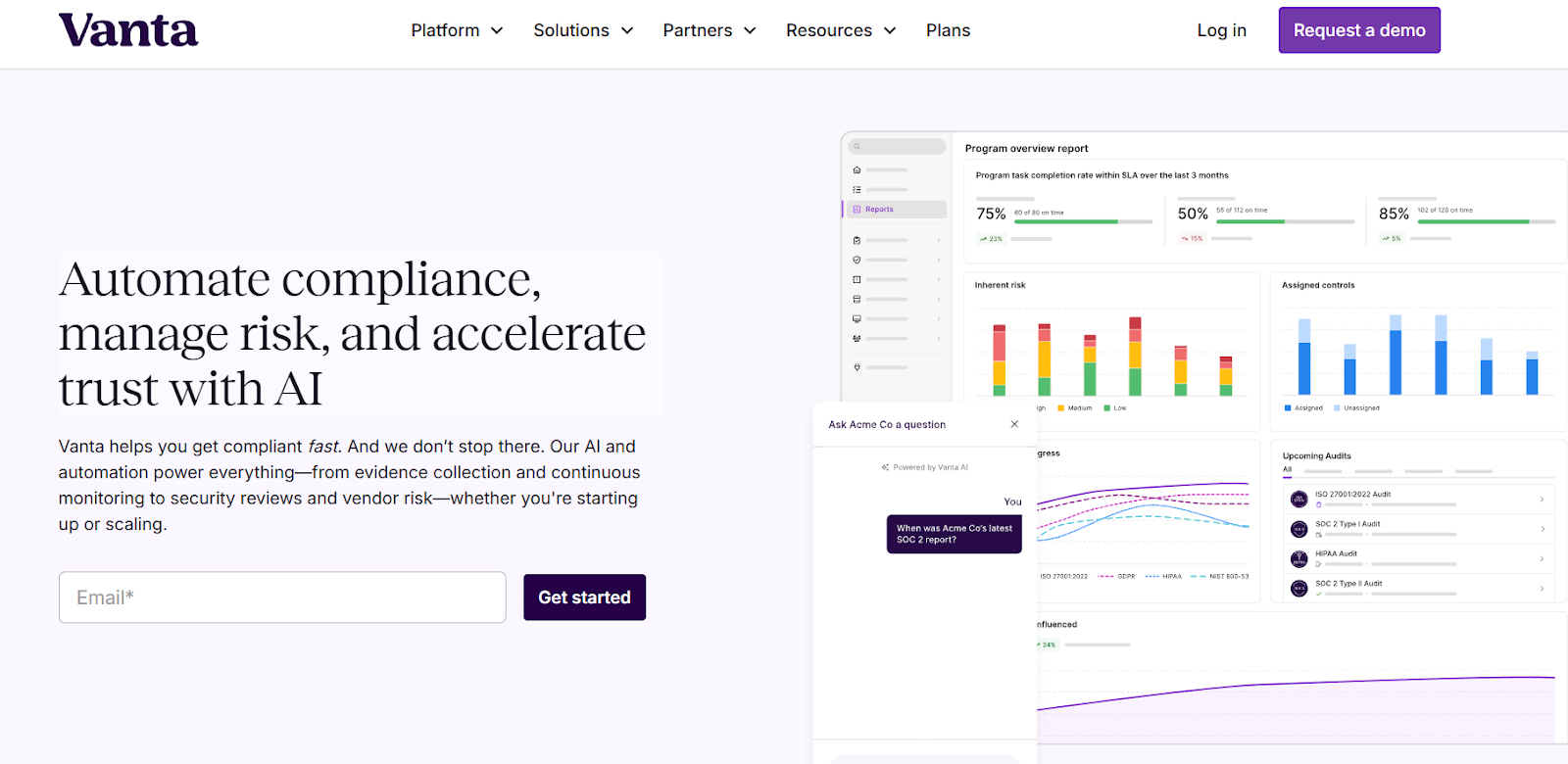
Vanta brings compliance operations together with automated control monitoring and continuous evidence gathering across your entire tech stack.
The real-time visibility it provides makes it a solid Scytale alternative for organizations that want a scalable compliance workflow without the bundled consulting model.
Features
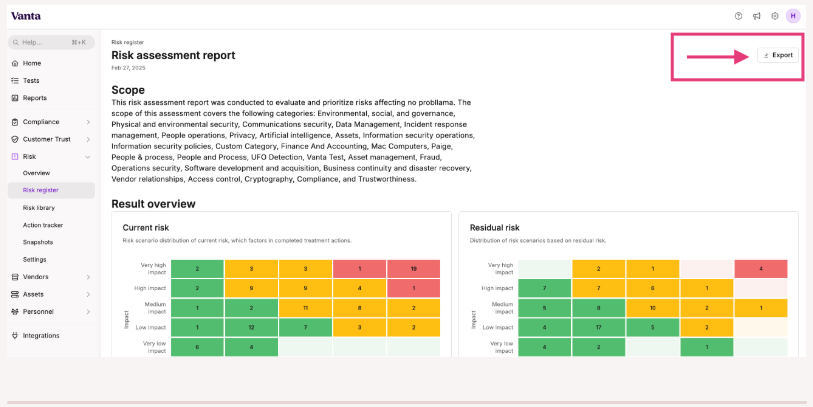
- Continuous control testing: The platform runs tests against your controls around the clock, pulls evidence automatically, and lets you cross-map requirements across over 35 pre-built frameworks or your own custom ones.
- Workspace segmentation: Business units can separate their own controls, risks, and workflows within the same account, so distributed teams can customize their compliance while staying centrally governed.
- Issue tracking and remediation: Teams can log issues, assign owners, collaborate on fixes, and track remediation to closure all within the platform.
- Trust Center: A customer-facing portal that showcases your security posture and compliance certifications to prospects and partners.
Pricing
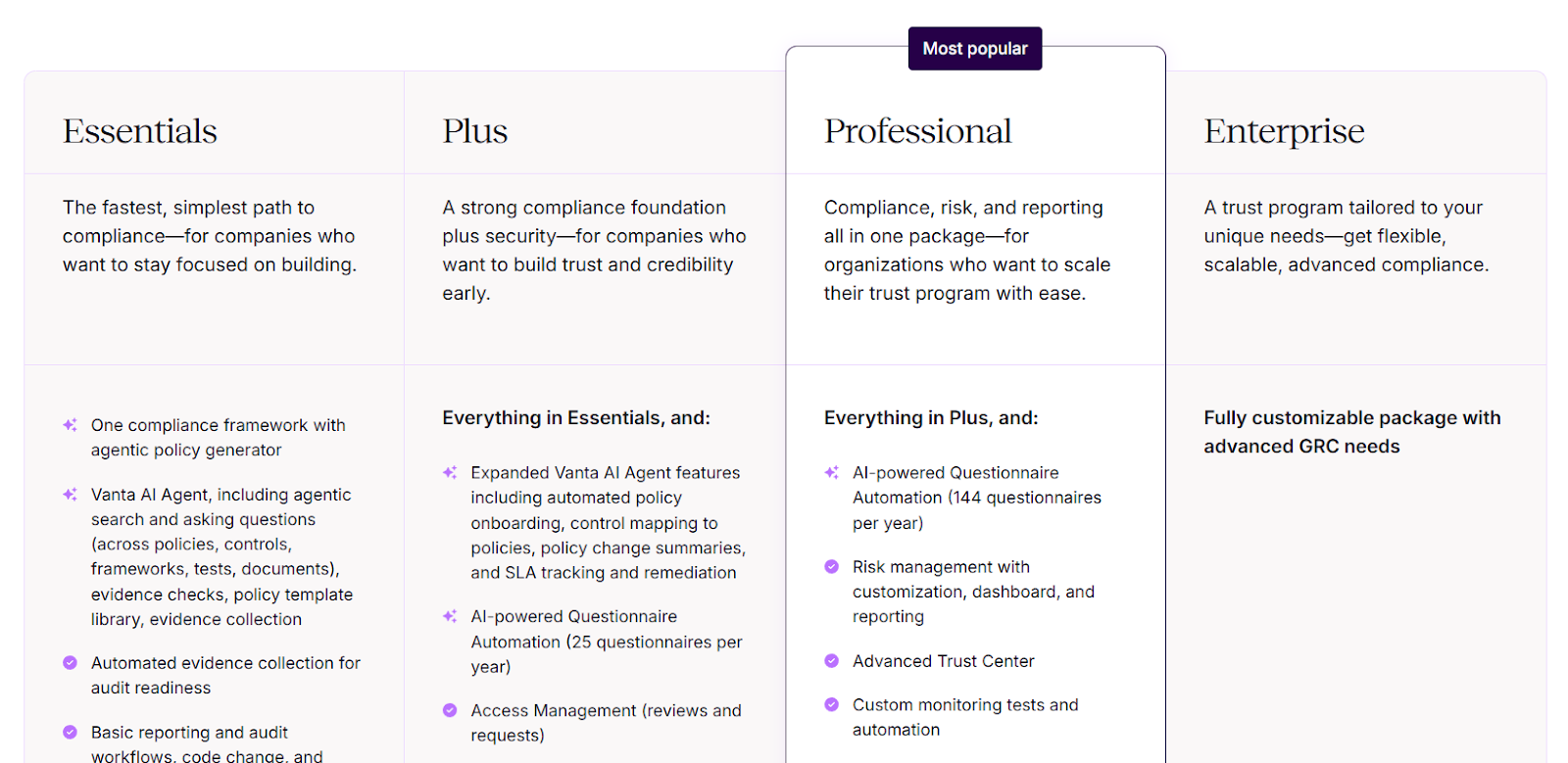
Vanta doesn't publish fixed pricing on its website, but it offers four defined packages:
- Essentials: Includes one compliance framework, automated evidence collection, Vanta AI Agent for policy generation and evidence checks, continuous monitoring, basic reporting, and a standard Trust Center.
- Plus: Includes everything in Essentials and adds expanded AI features for policy onboarding and control mapping, SLA tracking, Access Management, and 25 AI-powered questionnaire automations per year.
- Professional: Includes everything in Plus and adds full Risk Management with dashboards, an Advanced Trust Center, custom monitoring tests, automated access management, six customizable reports, and 144 AI-powered questionnaire automations per year.
- Enterprise: A fully customizable package for organizations with complex multi-framework requirements.
➡️ For the full breakdown, read our complete guide to Vanta's pricing.
Pros & Cons
✅ Powerful Trust Center that helps showcase your security posture to customers and partners.
✅ Clean, easy-to-use interface that both technical and non-technical users can navigate.
✅ A wide range of integrations when compared to other tools on the market.
❌ Pricing is on the higher side, especially as companies grow or need add-ons.
❌ A reported steep learning curve starting from onboarding.
#3: Drata
Best for: Tech-led compliance teams that need to automate controls, manage multiple frameworks, and scale their GRC program with deep real-time visibility.
Similar to: Vanta.
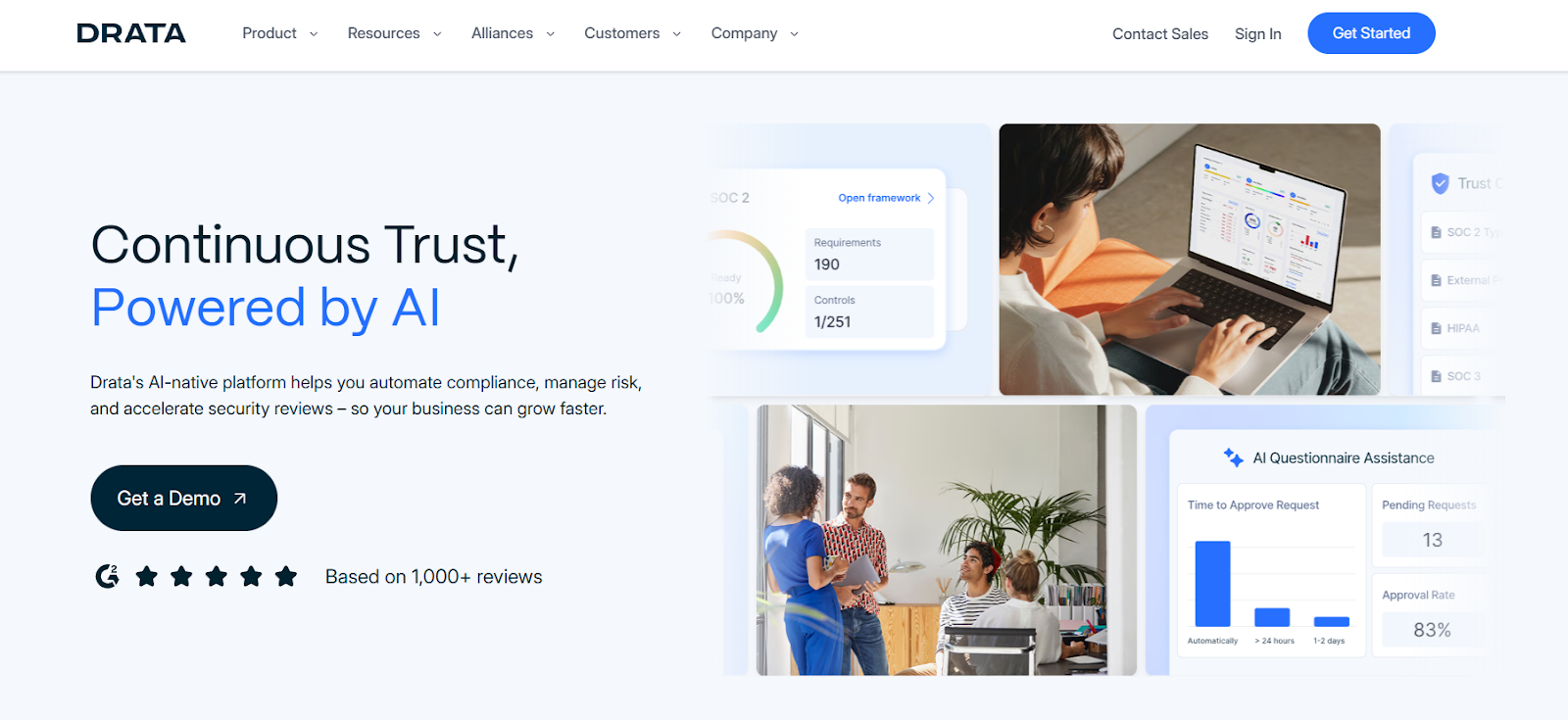
Drata is a cloud-native compliance and GRC automation platform that helps teams stay audit-ready year-round through continuous control monitoring, automated evidence collection, and live dashboards.
It positions itself as a modern upgrade from manual or checklist-based compliance workflows, and it's a reasonable Scytale alternative for teams that want strong automation without the bundled consulting.
Features
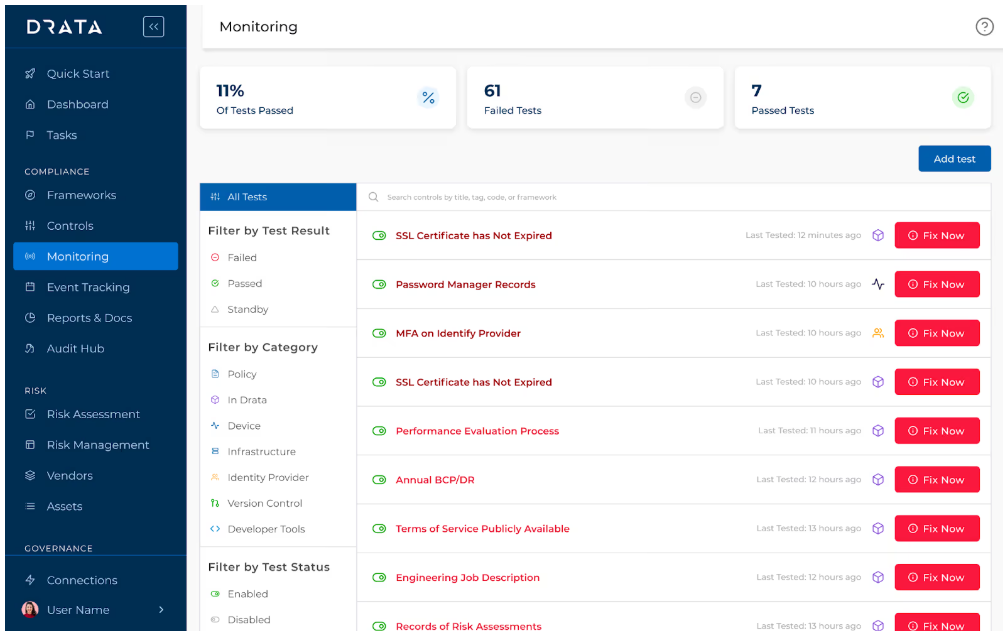
- Smart control mapping: Drata supports frameworks like SOC 2, ISO 27001, HIPAA, GDPR, and more, letting you map a single control to multiple standards so you cut down on duplicate work.
- Real-time compliance dashboards: You can instantly see your compliance posture, risk gaps, upcoming tasks, and audit readiness from one central view.
- Automated access reviews: The platform automates user access checks across all connected systems, surfaces gaps quickly, and maps evidence to controls for ongoing compliance.
Pricing
Drata doesn't publish its pricing structure. You can request a demo to get more details about its modules and costs, or look into our in-depth Drata pricing guide.
Pros & Cons
✅ Clean, intuitive UI that both technical and non-technical users can navigate easily.
✅ Helpful policy templates and recommendations that reduce setup time and guide teams through implementation.
❌ Enterprise-grade pricing, making it out of reach for smaller teams.
❌ Limited customization of GRC templates.
#4: Secureframe
Best for: Small to mid-sized teams looking for fast compliance automation with broad framework coverage and strong integrations.
Similar to: Sprinto.
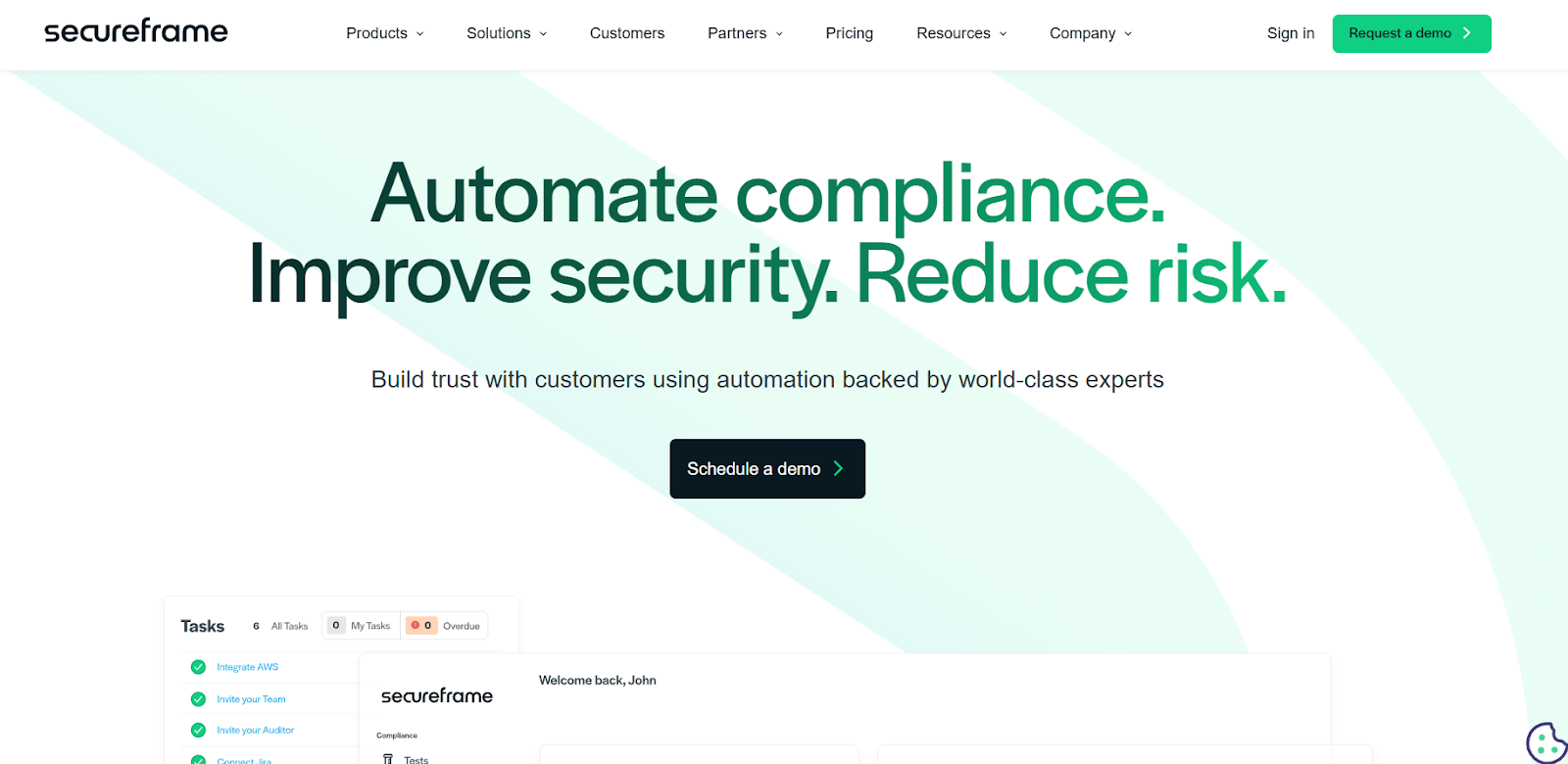
Secureframe is a compliance automation platform that helps teams get audit-ready by automating evidence collection, continuous monitoring, and vendor risk tasks.
It's a lighter-weight alternative to both Scytale and enterprise GRC tools, built for companies that want to stay compliant while focusing on growth.
Features
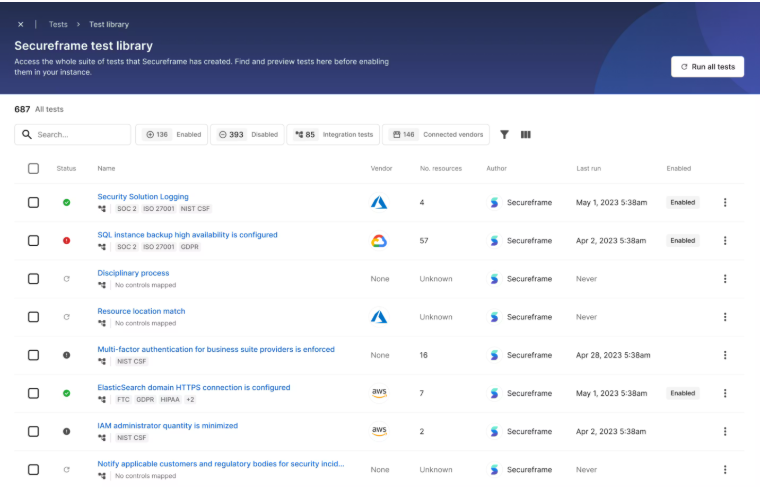
- AI-powered compliance automation: The platform generates policies, suggests control mappings, validates evidence, automates remediation, scores risks, and accelerates vendor and questionnaire reviews end-to-end.
- Secureframe Federal: A specialized module that centralizes SSP management, POA&M tracking, and SPRS scoring for organizations pursuing CMMC or FedRAMP compliance.
- Personnel management: A centralized, automated way to onboard, track, and manage employee compliance so every team member stays aligned with regulatory requirements.
Pricing
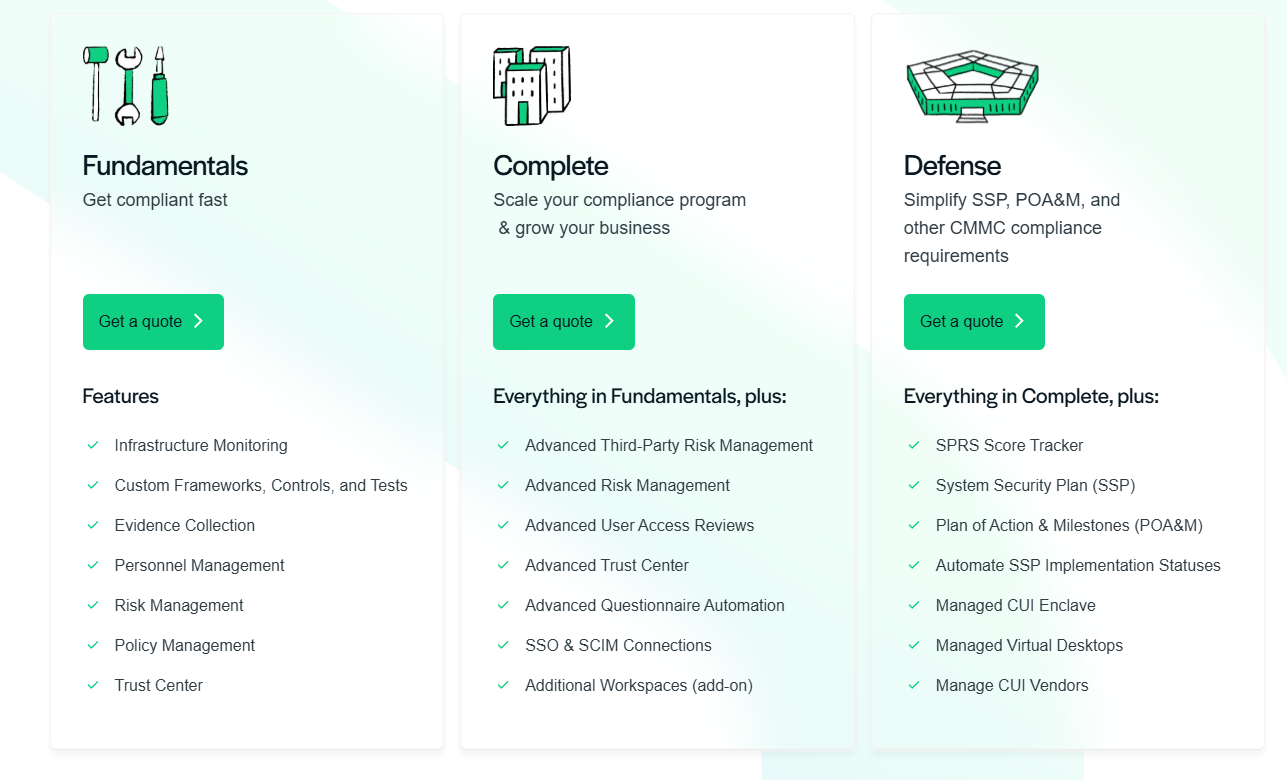
Secureframe doesn't publish fixed pricing, but its website outlines three tiered packages:
- Fundamentals: Automated evidence collection, infrastructure monitoring, personnel and policy management, risk management, and a built-in Trust Center.
- Complete: Everything in Fundamentals and adds advanced questionnaire automation, an upgraded Trust Center, enhanced risk management, third-party risk workflows, and SSO support.
- Defense: Includes everything in Complete, plus SSP and POA&M management, SPRS score tracking, managed CUI enclave and virtual desktops, and vendor oversight for controlled environments.
➡️ For more details, check our in-depth Secureframe pricing guide.
Pros & Cons
✅ Broad framework coverage across SOC 2, ISO 27001, HIPAA, PCI, GDPR, NIST, and more.
✅ An extensive integration ecosystem with over 200 apps and systems.
✅ Centralized dashboard provides real-time visibility into compliance posture, risks, and audit progress.
❌ Limited workflow flexibility for teams that want deeper customization.
#5: Sprinto
Best for: Cloud-native startups and mid-market teams that want fast, automated SOC 2 or ISO compliance with minimal engineering lift.
Similar to: Secureframe.
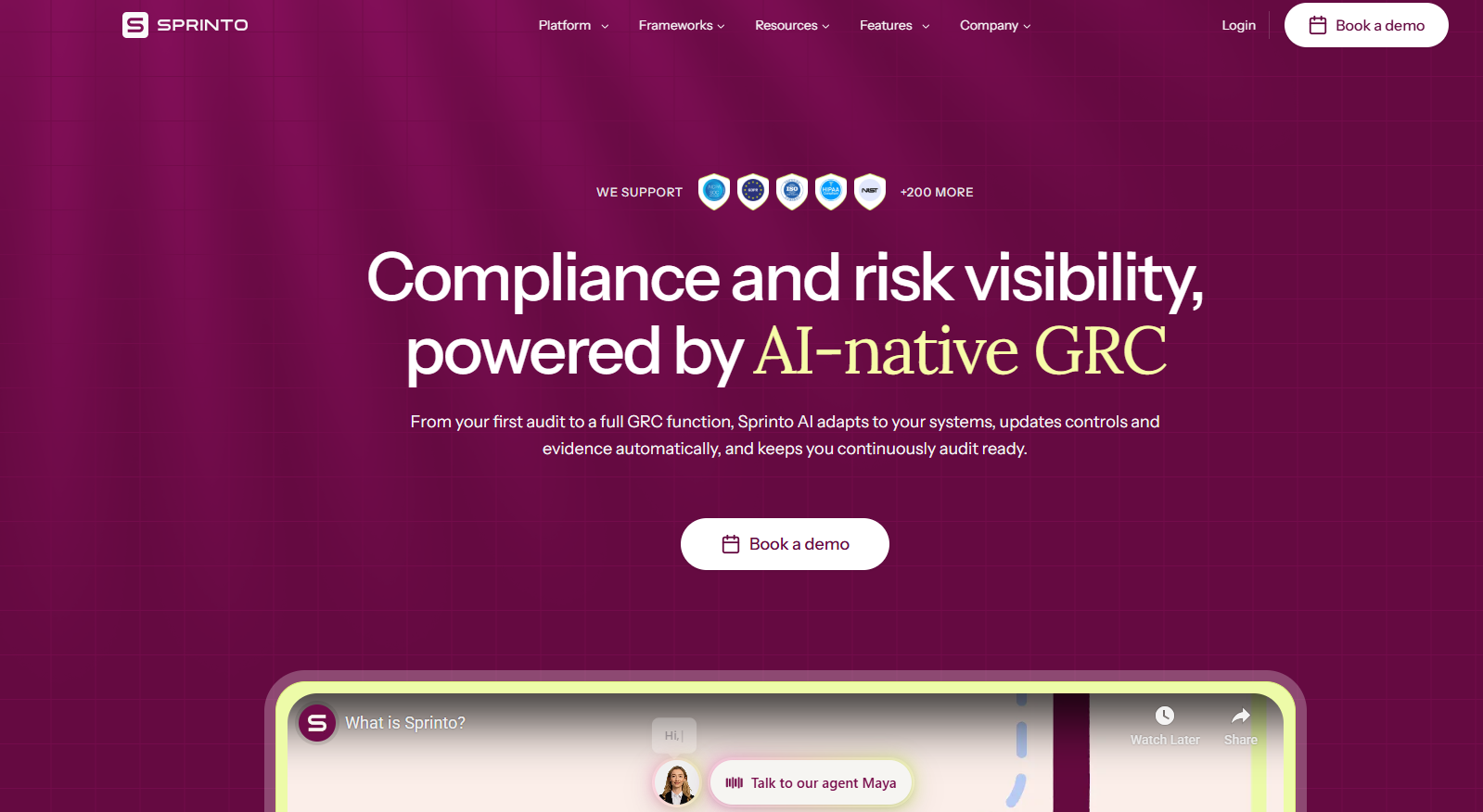
Sprinto is a cloud-first compliance automation platform built to help fast-growing teams achieve SOC 2, ISO 27001, GDPR, HIPAA, and PCI readiness with minimal manual work.
Its strength lies in real-time control monitoring across your cloud stack and guided workflows that make audits significantly faster.
Features
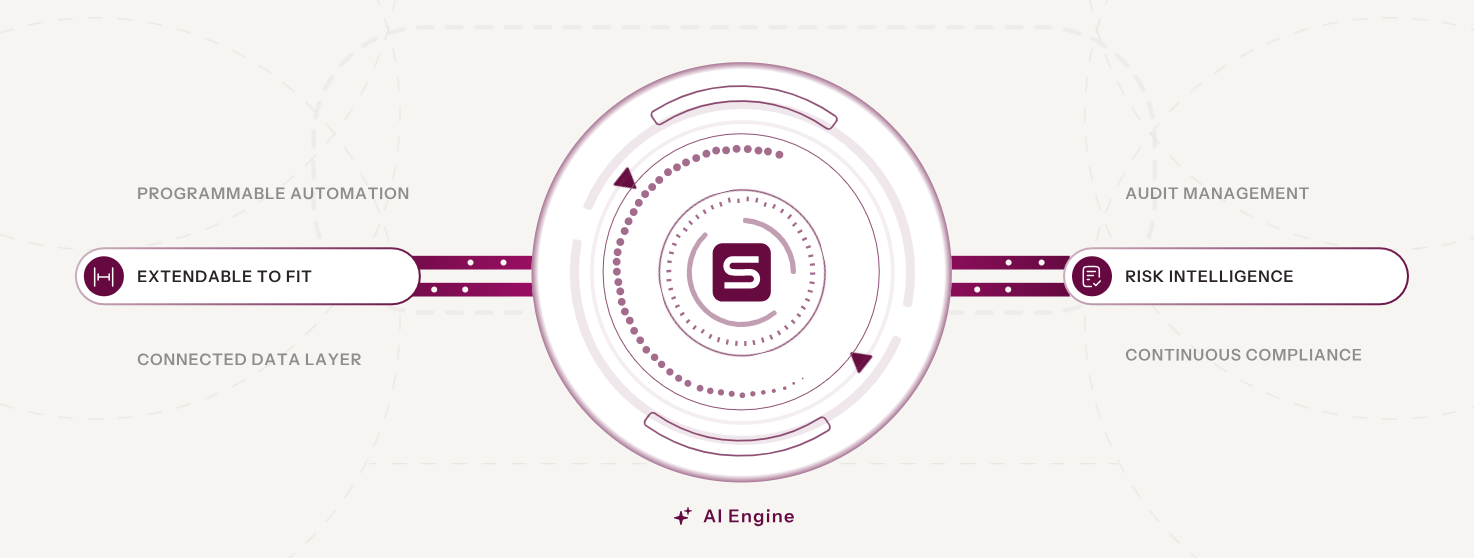
- Automated employee lifecycle management: Sprinto syncs with HR and identity tools to automatically assign compliance tasks like training and policy acknowledgements, and ensures access is granted or revoked on time.
- Real-time vulnerability management: Replaces periodic checks with always-on monitoring that integrates with your scanners, ranks risks, and triggers time-bound remediation.
- Change management: Helps reduce the risk in code changes by tagging assets, tracking updates through your ticketing system, and enforcing approval rules.
Pricing
Sprinto doesn't publish pricing details. You'll need to book a demo to get more information.
Pros & Cons
✅ User-friendly and intuitive UI, especially for first-time compliance teams scaling ISO or SOC programs.
✅ Strong automation across audits and frameworks with continuous risk monitoring.
❌ Integrations can be buggy, requiring back-and-forth with support.
#6: Hyperproof
Best for: Organizations seeking a modern, flexible compliance and GRC solution that supports multiple frameworks and scales risk and audit management.
Similar to: Onspring.
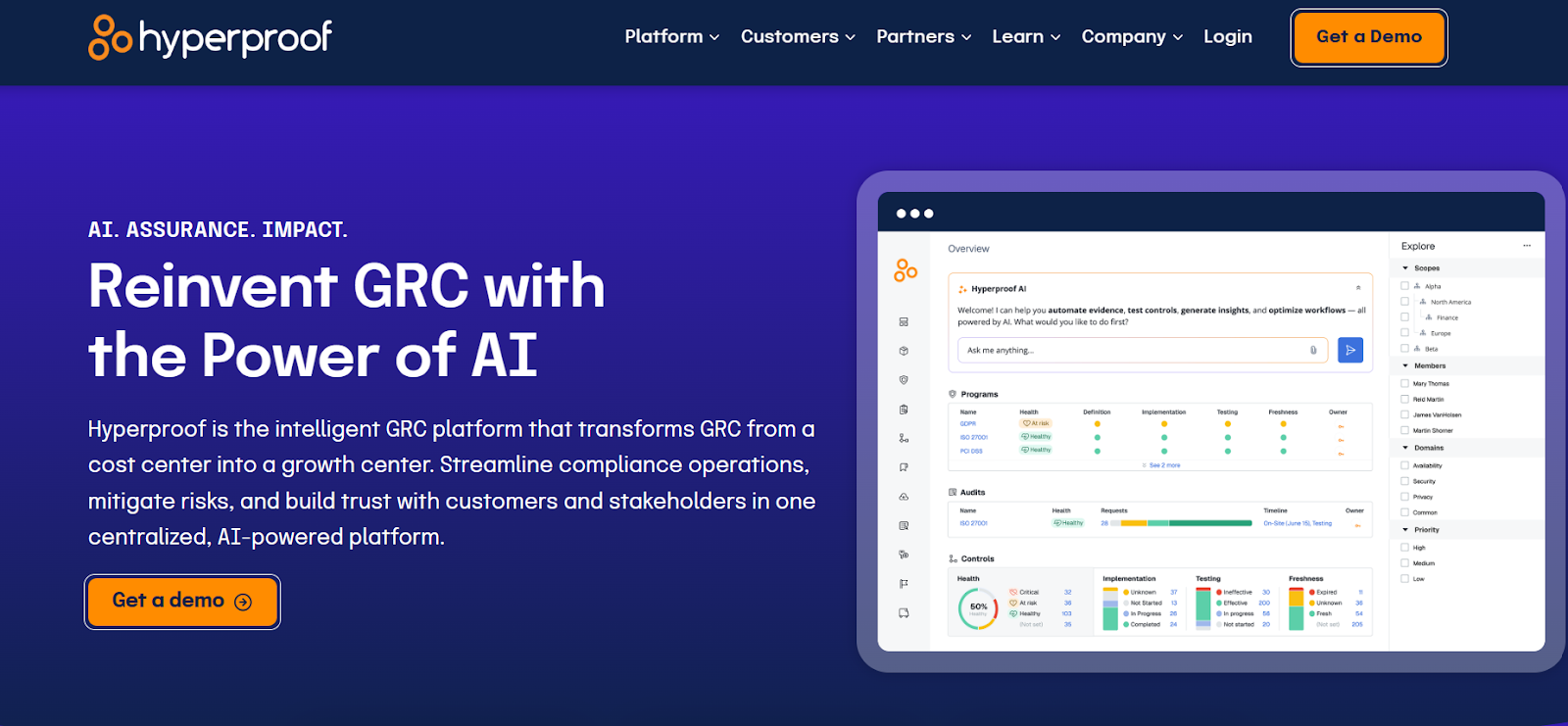
Hyperproof is a unified compliance-operations platform designed to reduce the burden of managing multiple regulations, audits, risks, and controls.
It pairs ease of use with enterprise-capable features: a clean interface, strong integrations, and a modern workflow engine that supports risk, audit, vendor, and control workflows.
Features
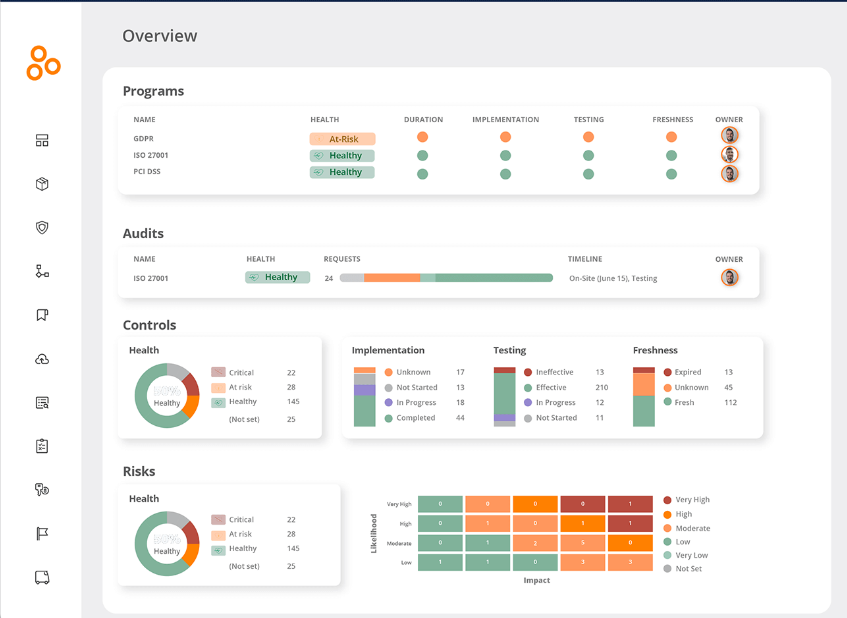
- Cross-framework control mapping: Hyperproof makes it easier to map a single control to multiple regulations like ISO, SOC 2, and NIST so you avoid duplication.
- Real-time posture dashboards: The platform shows which controls are failing, tasks overdue, risks rising, and audit readiness at a glance.
- Automated evidence collection: Automates parts of the evidence and proof gathering process to reduce manual audit prep.
Pricing
Hyperproof doesn't disclose its pricing publicly. You can book a personalized demo to get a custom quote.
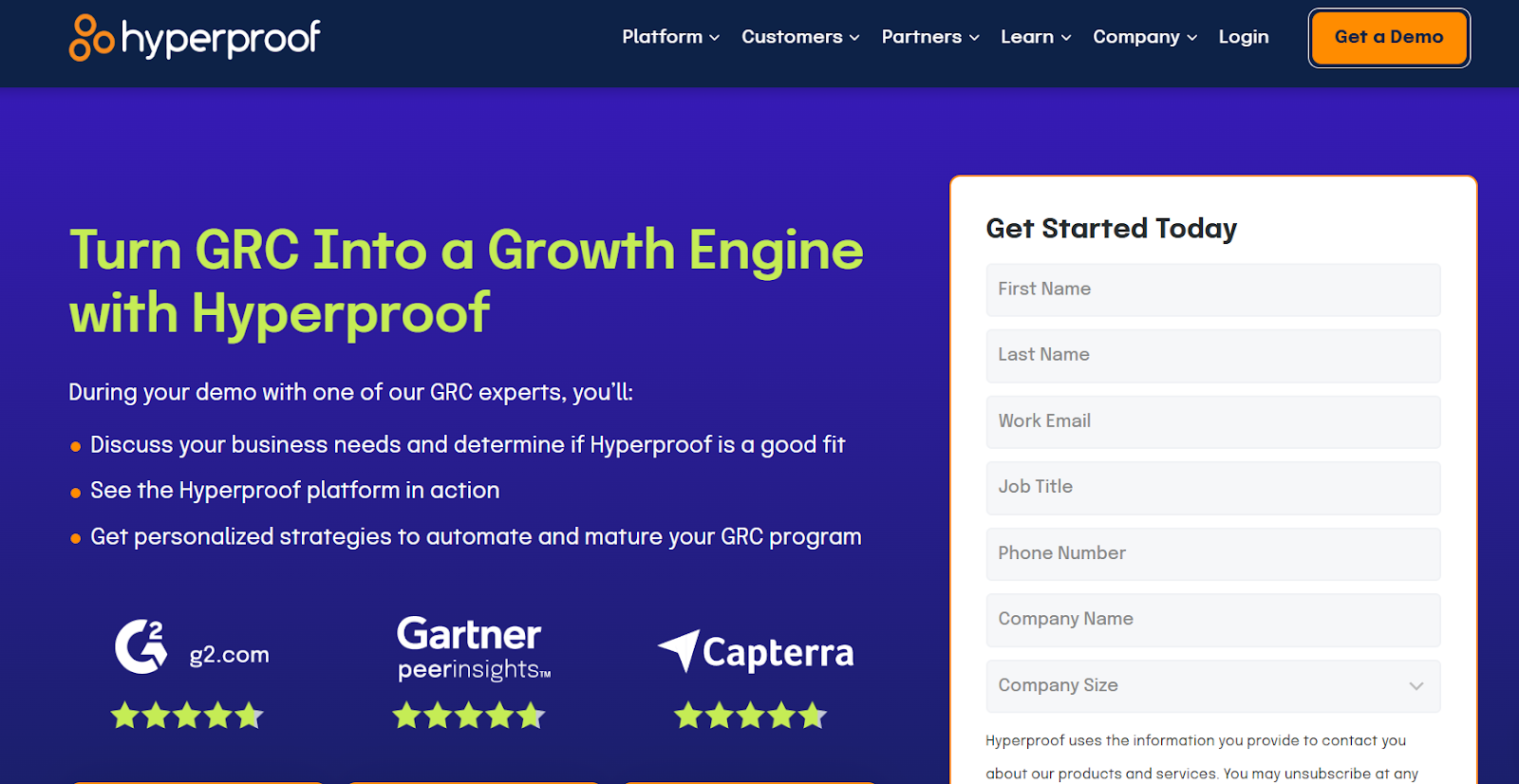
However, if you want a clearer breakdown of what Hyperproof actually costs, you can check out our Hyperproof pricing guide for a deeper look before booking a demo.
Pros & Cons
✅ Clean, intuitive interface that compliance teams can adopt quickly.
✅ Built-in task assignment and workflow tools that help decentralize compliance ownership across teams.
❌ Limited dashboard customization.
❌ Can get expensive for the full GRC solution.
#7: Thoropass
Best for: Startups and mid-market companies that want bundled audit services and compliance automation under one roof.
Similar to: Scytale, Secureframe.
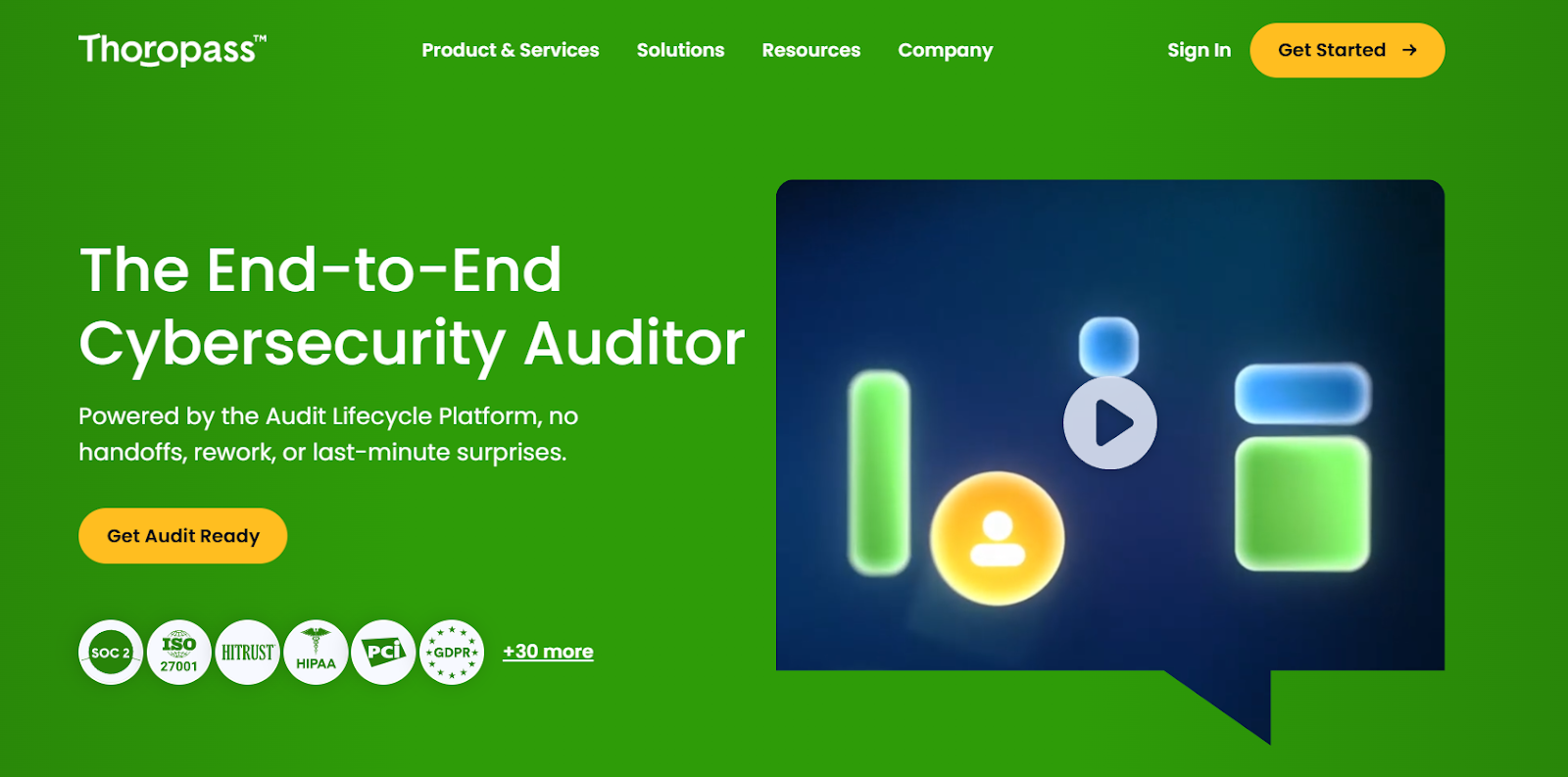
Thoropass blends compliance automation with in-house audit services, giving companies a single place to manage controls, collect evidence, and complete certifications without juggling external auditors.
If Scytale's bundled consulting model appeals to you but the platform itself feels limiting, Thoropass takes a similar approach with its own audit team built in.
Features
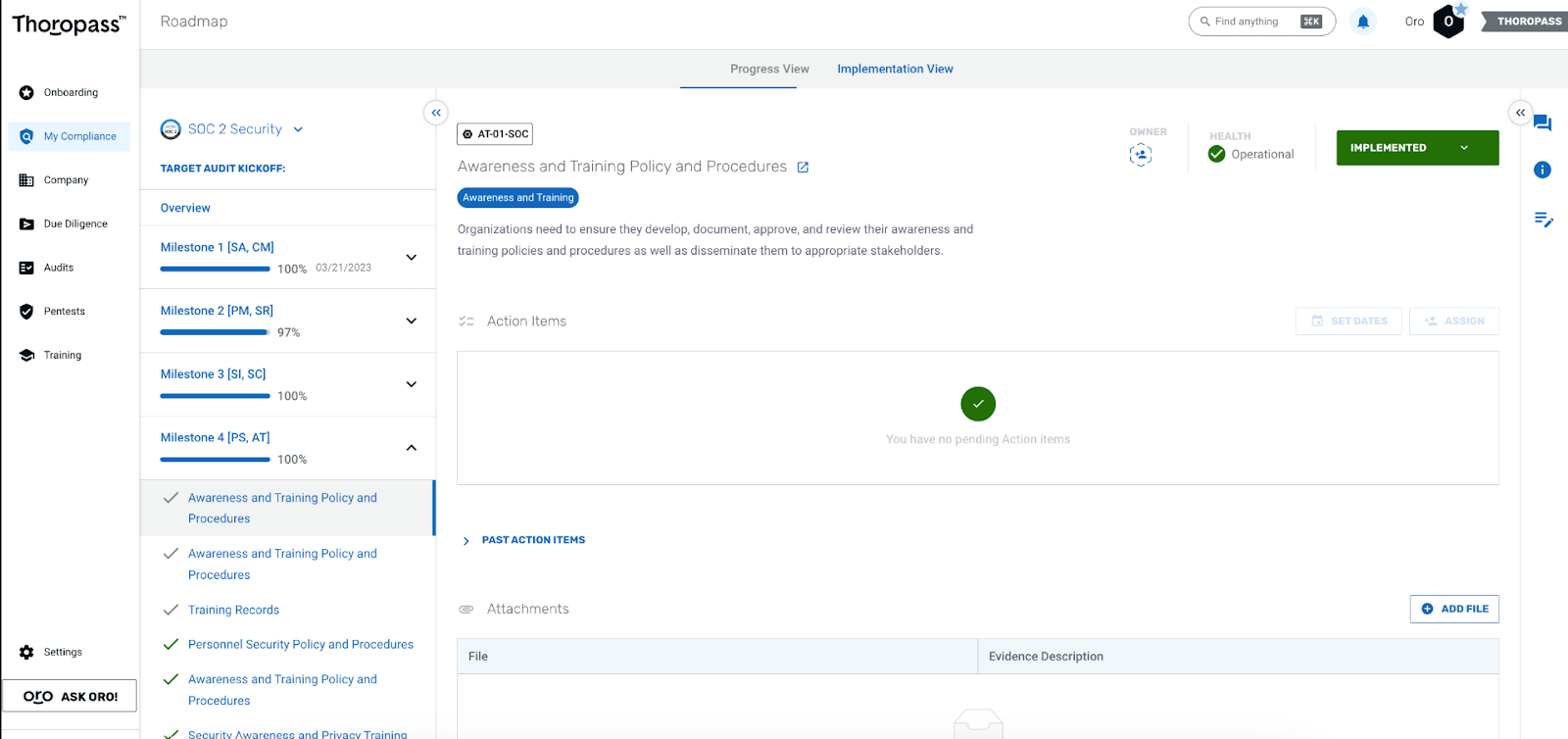
- Built-in audit services: Thoropass pairs its platform with in-house auditors so you can prep, test, and complete SOC 2, ISO 27001, and other certifications in one unified flow.
- Audit-ready penetration testing: The platform provides built-in, CREST-accredited penetration testing that identifies real vulnerabilities and delivers clear remediation guidance.
- First Pass AI: AI-driven evidence validation that automatically verifies evidence for completeness, accuracy, and timeliness before auditors see it.
Pricing
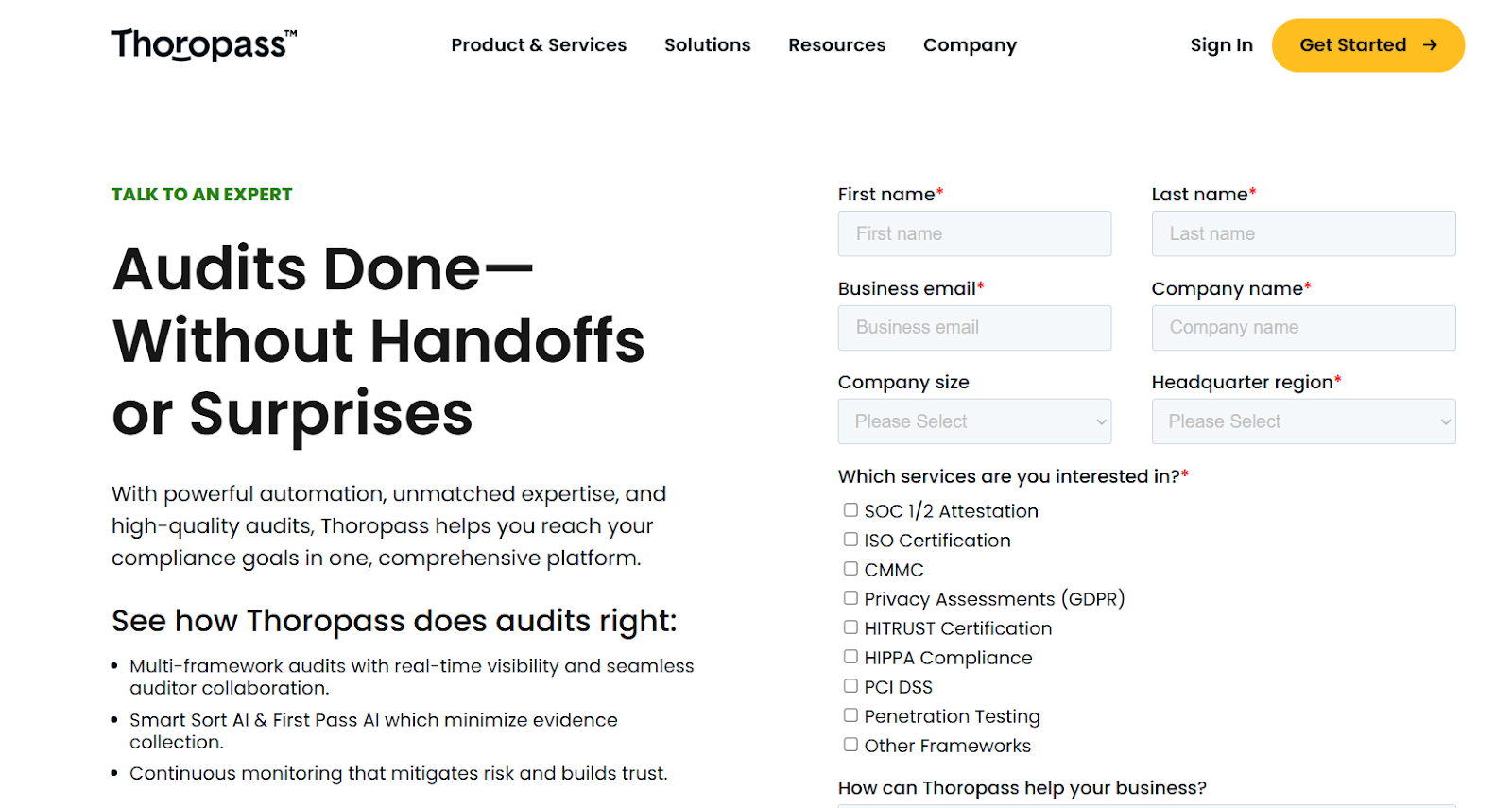
Thoropass doesn't publish its prices. You can book a demo to discuss options with their team.
Pros & Cons
✅ Smooth SOC 2 and ISO 27001 readiness workflow with centralized documentation, task tracking, and progress visibility.
✅ Reliable audit process with clear guidance and helpful collaboration tools for working with auditors.
❌ Can allegedly get expensive.
#8: LogicGate
Best for: Enterprises looking for integrated governance, risk, and compliance management with real-time risk insights and automation.
Similar to: SAP GRC, Pathlock.
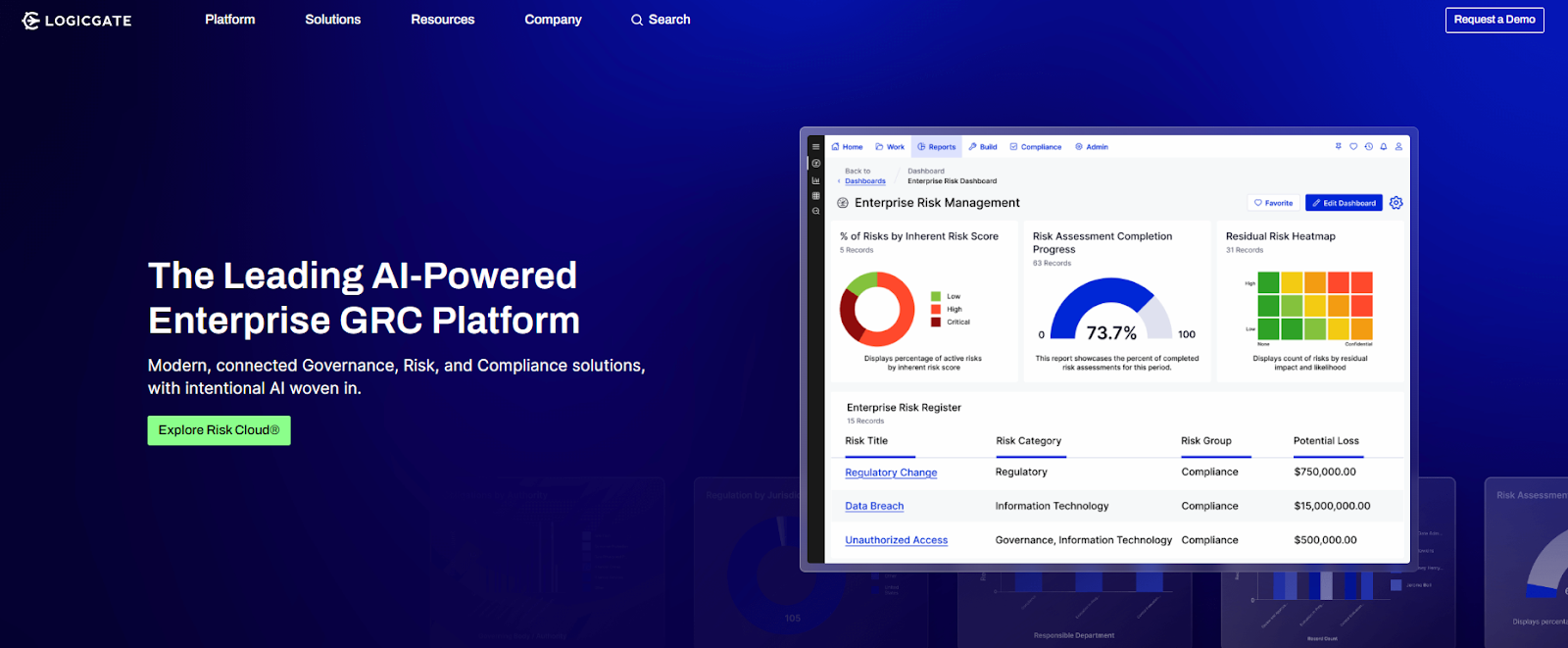
LogicGate brings GRC processes into a unified framework that helps teams automate workflows, quantify risks, and collaborate using data-driven insights.
The platform is designed to scale with business needs while reducing manual effort through its AI-powered tools and no-code workflow builder.
Features
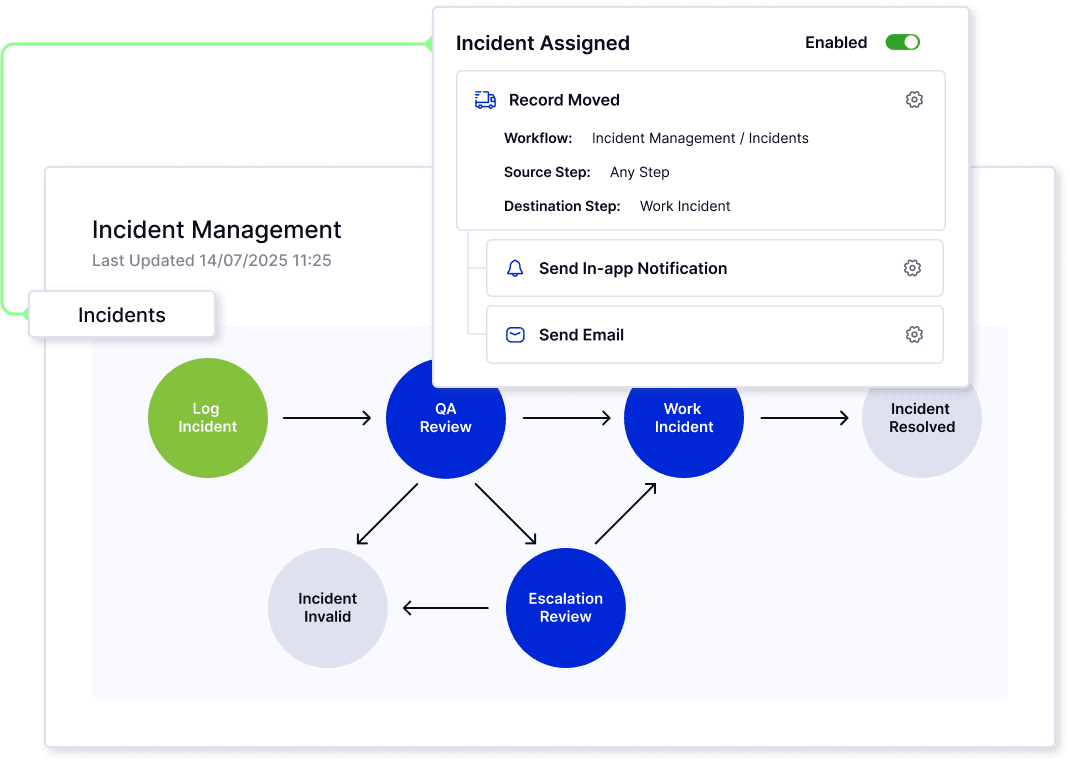
- Real-time risk quantification: LogicGate lets you prioritize risks by financial impact and business criticality using models like Monte Carlo and Open FAIR.
- Centralized risk repository: Provides visibility across governance, compliance, and third-party risks in one place.
- Automated compliance reporting: Comes with prebuilt templates and audit trails that help teams stay on top of regulatory requirements.
Pricing
LogicGate does not publicly disclose its pricing. You'd have to book a personalized demo with their team to get a quote.
For context and typical pricing ranges, you can refer to our full LogicGate pricing review.
Pros & Cons
✅ Highly customizable platform with a no-code environment that adapts to complex GRC needs.
✅ Automated control follow-up tasks that increase efficiency across risk programs.
❌ Some users find the calculation functionality complicated.
❌ Reporting features have limitations in customization and visual depth.
#9: Optro (Formerly AuditBoard)
Best for: Mid-to-large enterprises and internal audit teams looking for a connected GRC platform with strong audit, risk, and compliance workflows.
Similar to: Hyperproof.
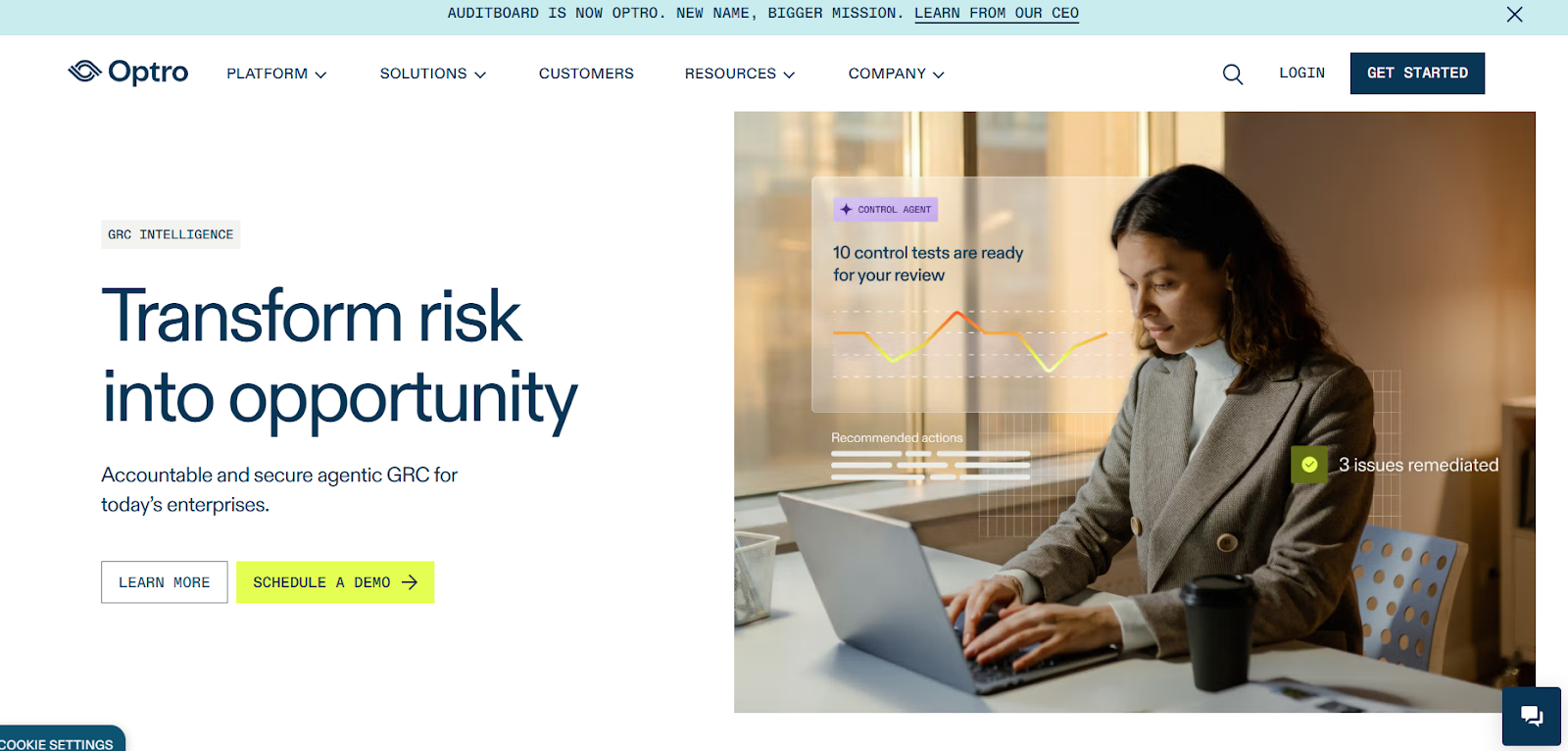
Optro delivers a unified platform built to collapse silos between internal audit, enterprise risk, compliance, and ESG.
With its connected risk model, the platform helps teams automate audit lifecycles, map controls to risk frameworks, and surface insights using AI-powered workflows.
Features
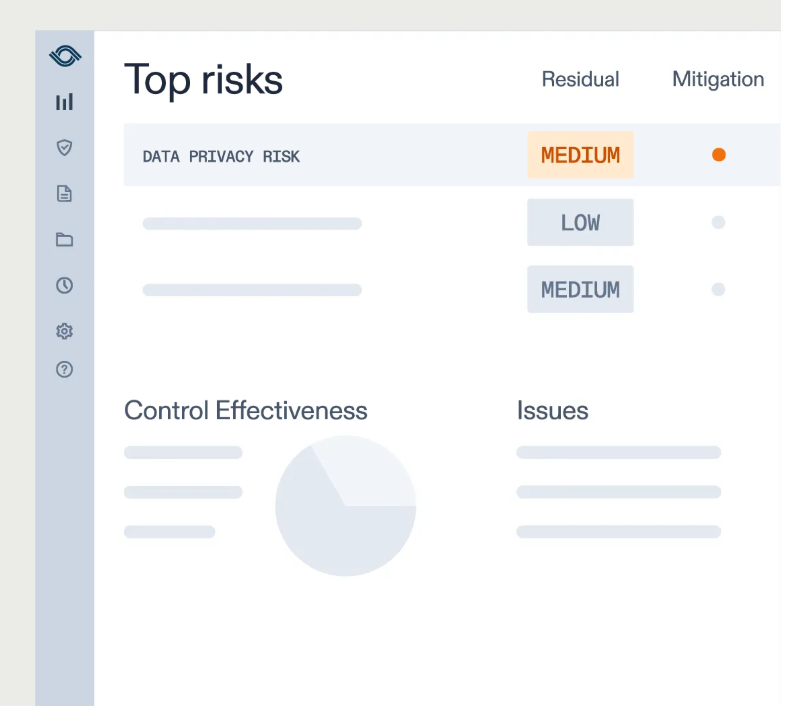
- Unified audit, risk, and compliance: AuditBoard connects SOX, risk assessments, audits, issues, and controls in one system so teams work from a shared source of truth.
- Framework mapping and automation: The platform supports SOX, ISO, NIST, SOC, and custom frameworks, automatically mapping controls across them to reduce duplication.
- AI-powered workflows: AI capabilities help generate summaries, assess evidence, automate repetitive tasks, and surface insights to speed up audit and risk work.
Pricing
Optro uses non-public, quote-based pricing. You'll need to book a demo for exact numbers, or check our in-depth AuditBoard pricing review.
Pros & Cons
✅ Strong audit and SOX management capabilities that enterprises depend on.
✅ A broad integration ecosystem.
❌ Dashboards and reporting feel limited for analytics-heavy teams.
10. Apptega
Best for: Companies managing continuous cybersecurity compliance across multiple frameworks that want structured roadmaps, centralized risk tracking, and real-time scoring.
Similar to: LogicGate, SmartSuite.
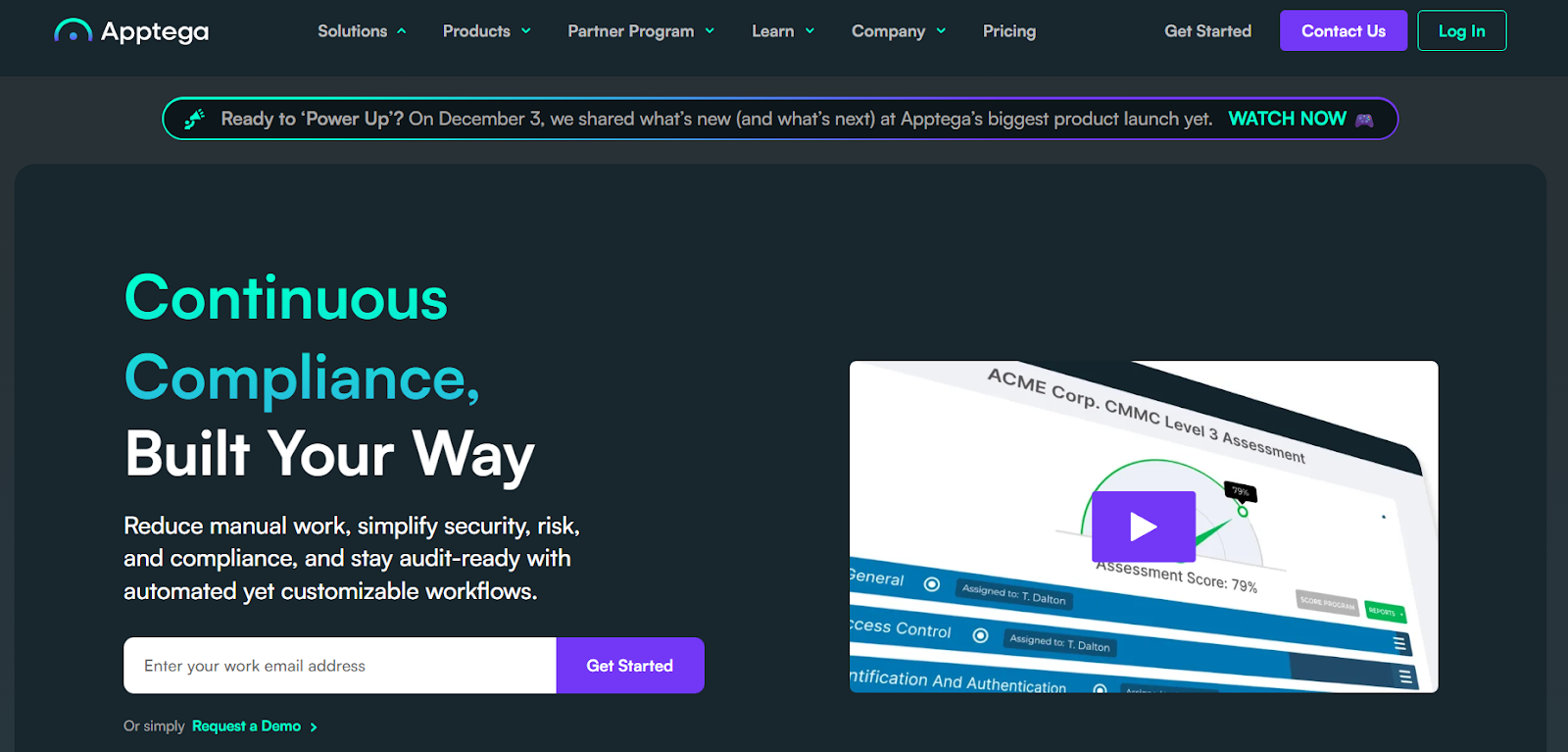
Apptega's GRC platform simplifies compliance management by consolidating security measures and regulatory requirements into one unified system.
The solution handles evidence collection, task automation, risk scoring, and cross-framework alignment to reduce manual effort and improve visibility.
Features
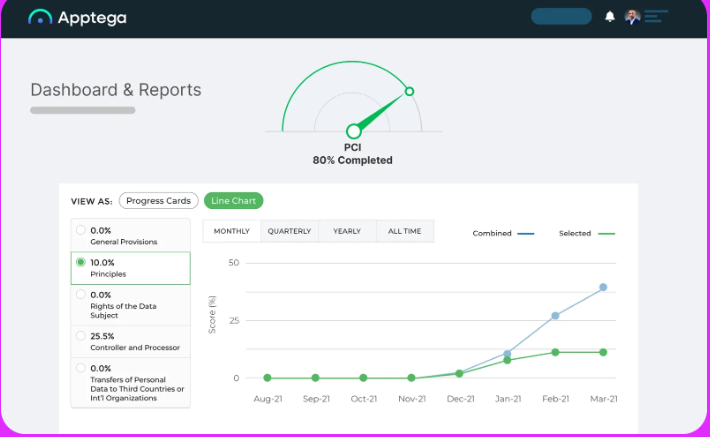
- Assessment Manager: Questionnaire-based templates for over 30 frameworks (like NIST, SOC 2, and PCI DSS) to identify risks and unmet controls.
- Risk Manager: Scoring, ranking, and reporting on risks with insights to improve security posture.
- Audit Manager: Accelerated evidence sharing, control validation, and audit preparation workflows.
Pricing
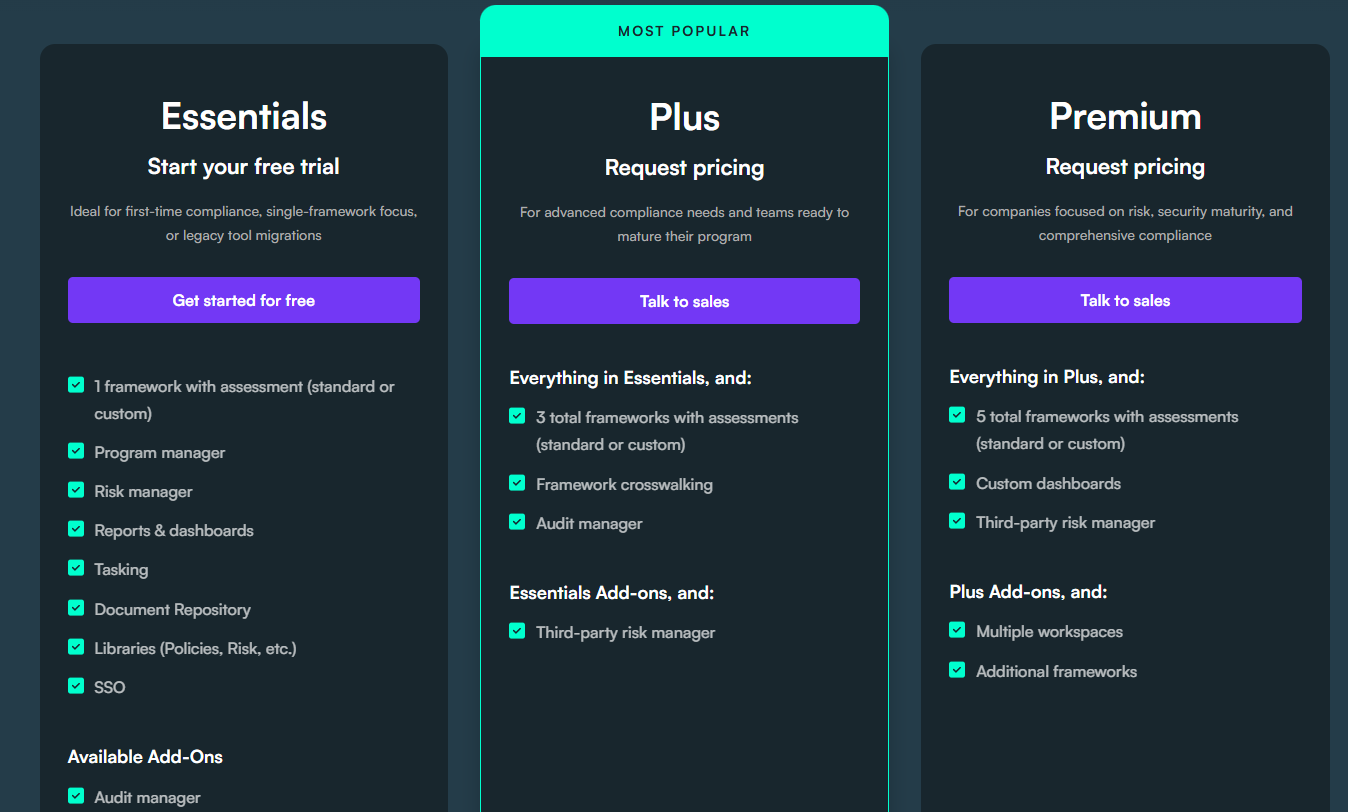
Apptega doesn't disclose its pricing publicly, but it does offer a free trial of its Starter plan so you can test the platform before committing.
Pros & Cons
✅ Simplifies cybersecurity and compliance management with built-in frameworks like NIST, CMMC, and ISO.
✅ Real-time scoring and visual reporting help security leaders communicate risk posture clearly.
✅ Excellent customer service and a dedicated onboarding team that helps newcomers get started.
❌ Limited reporting customization, according to user reviews.
❌ There’s a steep learning curve for complex setups.
Which Scytale alternative actually fits how your team works?
Scytale does a lot right for first-time compliance, but many teams outgrow it once they need broader risk management, flexible workflows, and operational visibility beyond the certification itself.
Most Scytale alternatives still revolve around the same idea: automate evidence collection, monitor controls, and get you through the audit.
However, they struggle once your compliance needs evolve past that initial checkpoint.
SmartSuite is different.
Instead of treating compliance as a standalone function, SmartSuite connects risks, audits, controls, incidents, vendors, and remediation tasks into one governed workspace tied to your actual business operations:
- Your GRC team gets a no-code platform they can customize without IT dependency.
- Your leadership gets real-time dashboards built on live data.
- And your auditors get complete traceability without chasing information across disconnected tools.
So, if your current compliance tool got you certified but can't take you further, SmartSuite is worth a look.
Start a free SmartSuite trial or book a demo to see how your team can manage governance, risk, and compliance in one place.
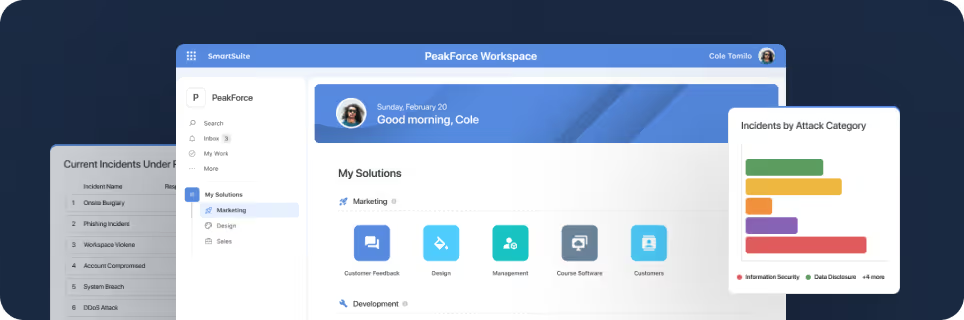
SmartSuite provides work platform for standardizing workflows in the following areas:
- Governance, Risk & Compliance
- IT & Service Ops
- Project / Portfolio Management
- Business Operations