



Dashboards — One Live View of Everything That Matters
Assemble metrics, charts, embedded Views, and interactive widgets from any Table in your workspace—giving every team real-time visibility, executives one source of truth, and external stakeholders a governed window into progress.
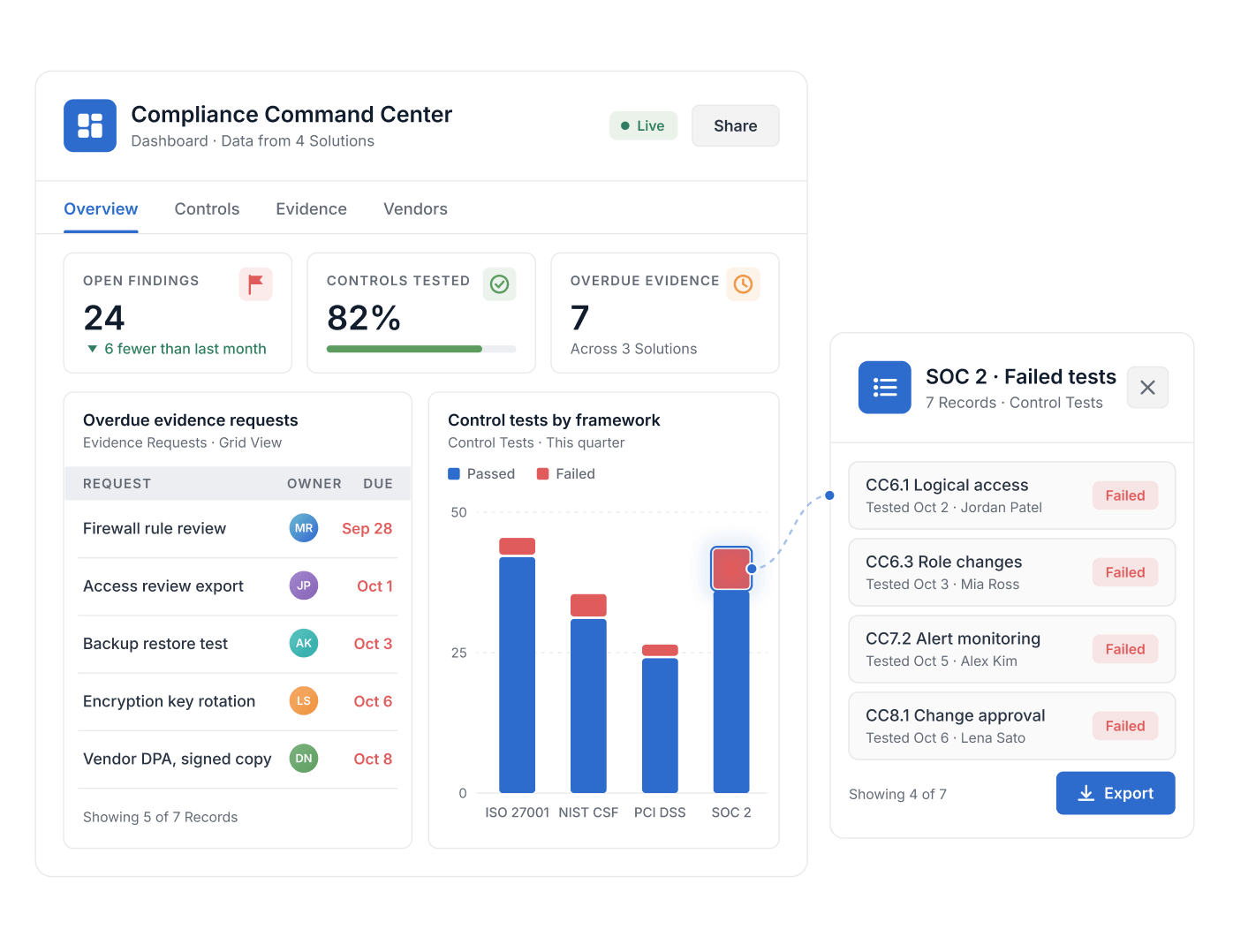
- Dashboards are a view type on every plan and pull data from any table in the workspace.
- View widgets embed Grid, Card, Kanban, Calendar, Timeline, Gantt and Pivot table views beside chart, metric, text and page-display widgets.
- Embed widgets place Google Docs, Sheets, Slides and Meet, Figma, YouTube, Vimeo, Zoom and any webpage on a dashboard.
- Record and field-level permissions apply to dashboard data.
- A dashboard can be shared read-only with people outside the workspace by link or embed code, with an optional passcode, on every plan.
What Are Dashboards?
A Dashboard is a special type of SmartSuite View that pulls data from any Table across the workspace and is assembled from configurable panels called widgets. It helps GRC, IT, project, and business operations teams visualize metrics, monitor workflows, and share live reports—from a simple in-Solution report page to a full multi-tab portal. Dashboards are included on all current SmartSuite plans and build on the same governed foundation as Views.
Widget Library
Build Every Report From a Library of 34 Widgets
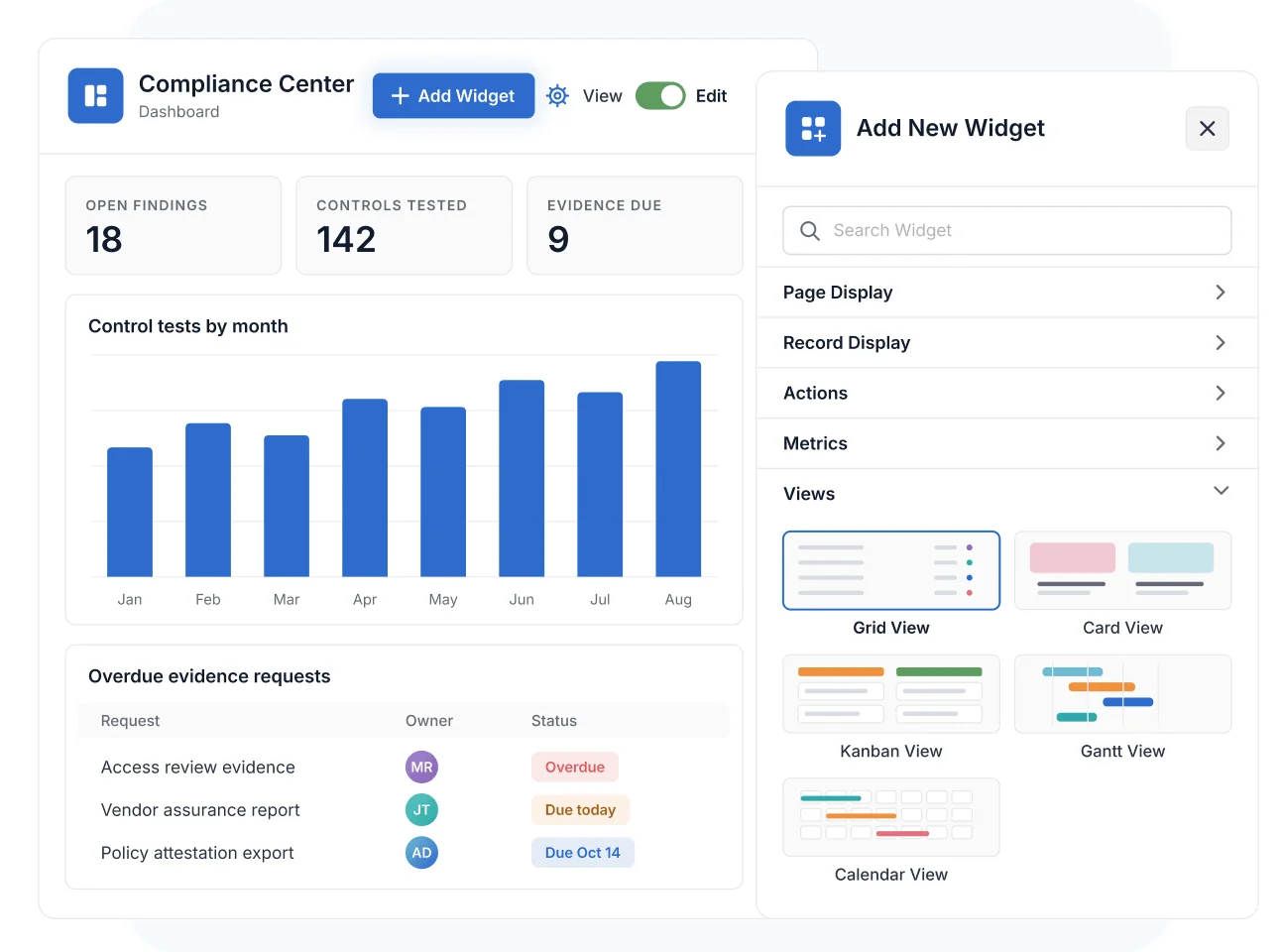
Dashboards are assembled from widgets—metric cards and comparison metrics, native charts and pivot tables, embedded Grid, Kanban, Calendar, Gantt, and Card views, record selectors and detail panels, action buttons, and page-design elements like heroes, banners, headings, and dividers. Embed widgets bring outside content onto the page, from Google Sheets and Figma files to video and one-click meeting launchers.
Add widgets from the toolbar or insert one between existing panels, then arrange the page in Edit mode—no code required.
Cross-Solution Data
Report Across Every Table in the Workspace
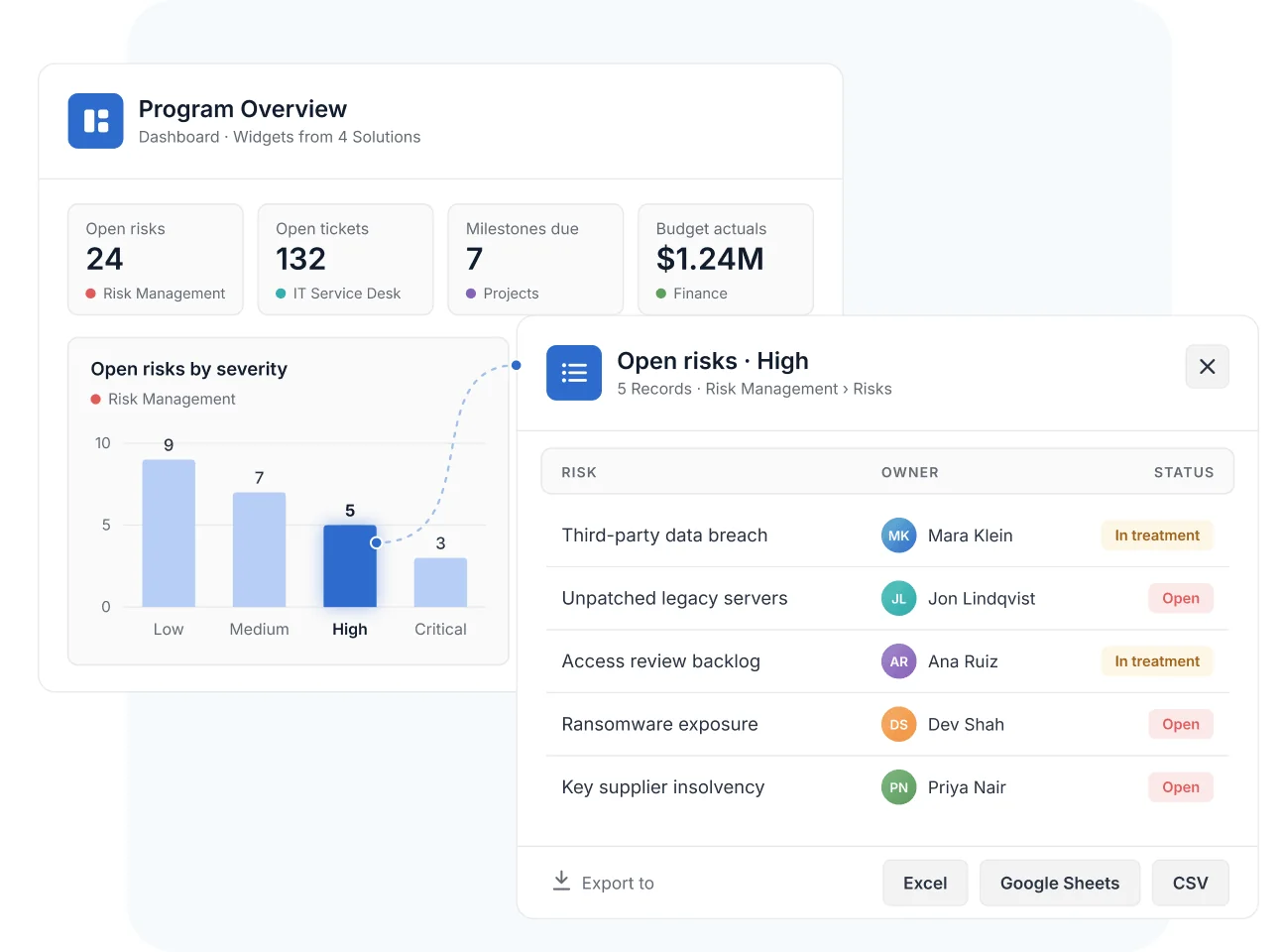
Unlike a single-table View, a Dashboard pulls from any Table in any Solution—so risk scores, ticket volumes, project milestones, and budget actuals meet on one page. Click a metric or chart to drill into the underlying Records, then export the data directly from the Dashboard.
Every widget stays live, so the page your leadership opens on Monday reflects the work your teams finished on Friday night.
Interactive Filtering
Connect Widgets Into Interactive, Personalized Pages
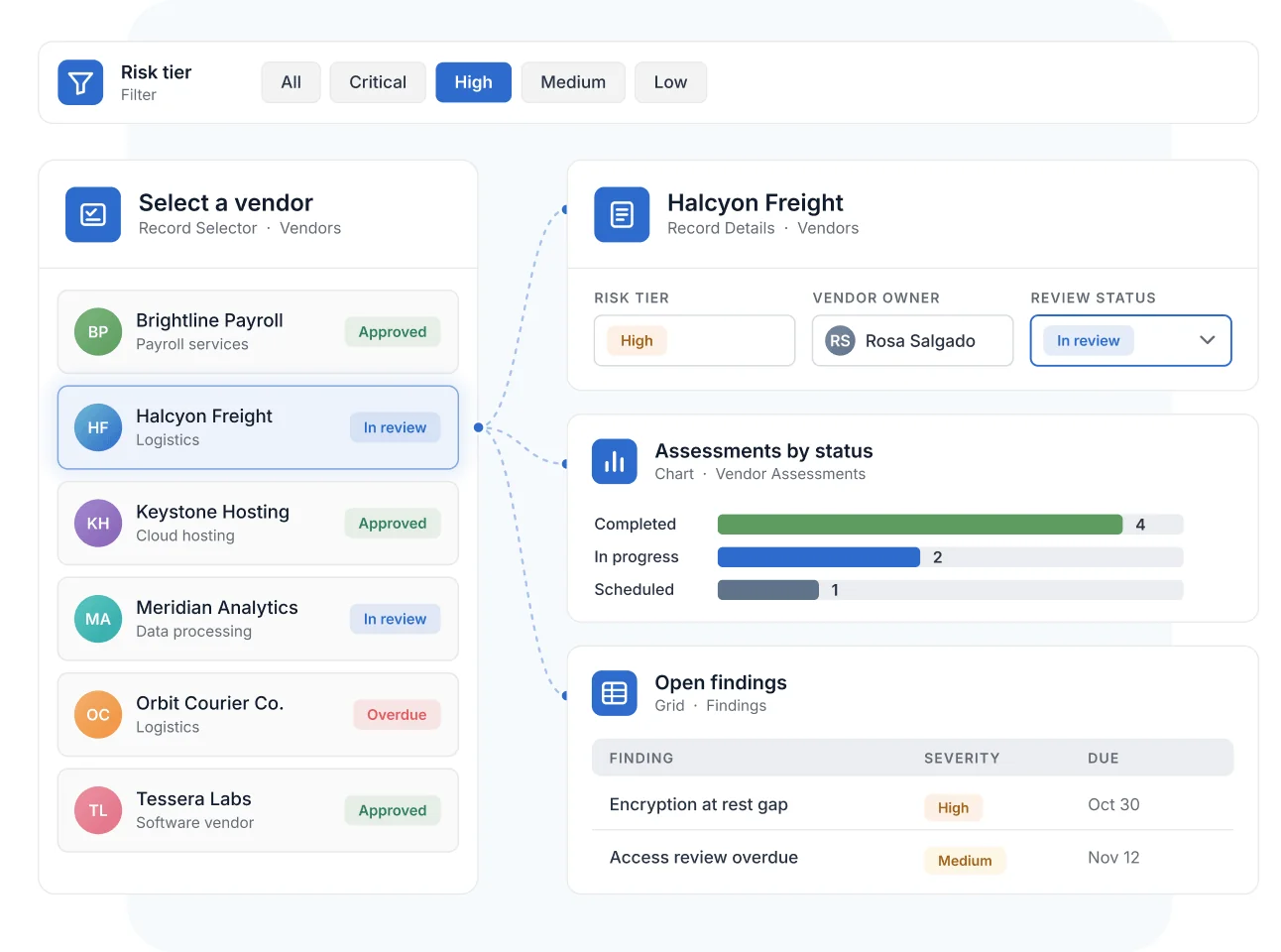
A Record Selector widget lets viewers pick a Record—a vendor, a service, a project—and every connected widget updates to match. Record Details panels surface the chosen Record's Fields for inline review or editing, and a Filter widget applies dynamic controls or preset filter tabs across connected widgets at once.
One Dashboard serves a whole team: each viewer narrows to their own portfolio without touching the underlying configuration.
Portals & Branding
Turn Dashboards Into Multi-Tab Portals
Navigation Tabs turn a single Dashboard into a multi-section portal—each tab with its own widget set, custom logo, and action buttons that open pages, launch forms, or trigger workflows. Page settings control background color and page width, and an optional footer carries your logo, tagline, links, and social icons.
The result ranges from a simple metrics page to a branded home for an entire department.
Governed Sharing
Share Dashboards Without Exposing the Workspace
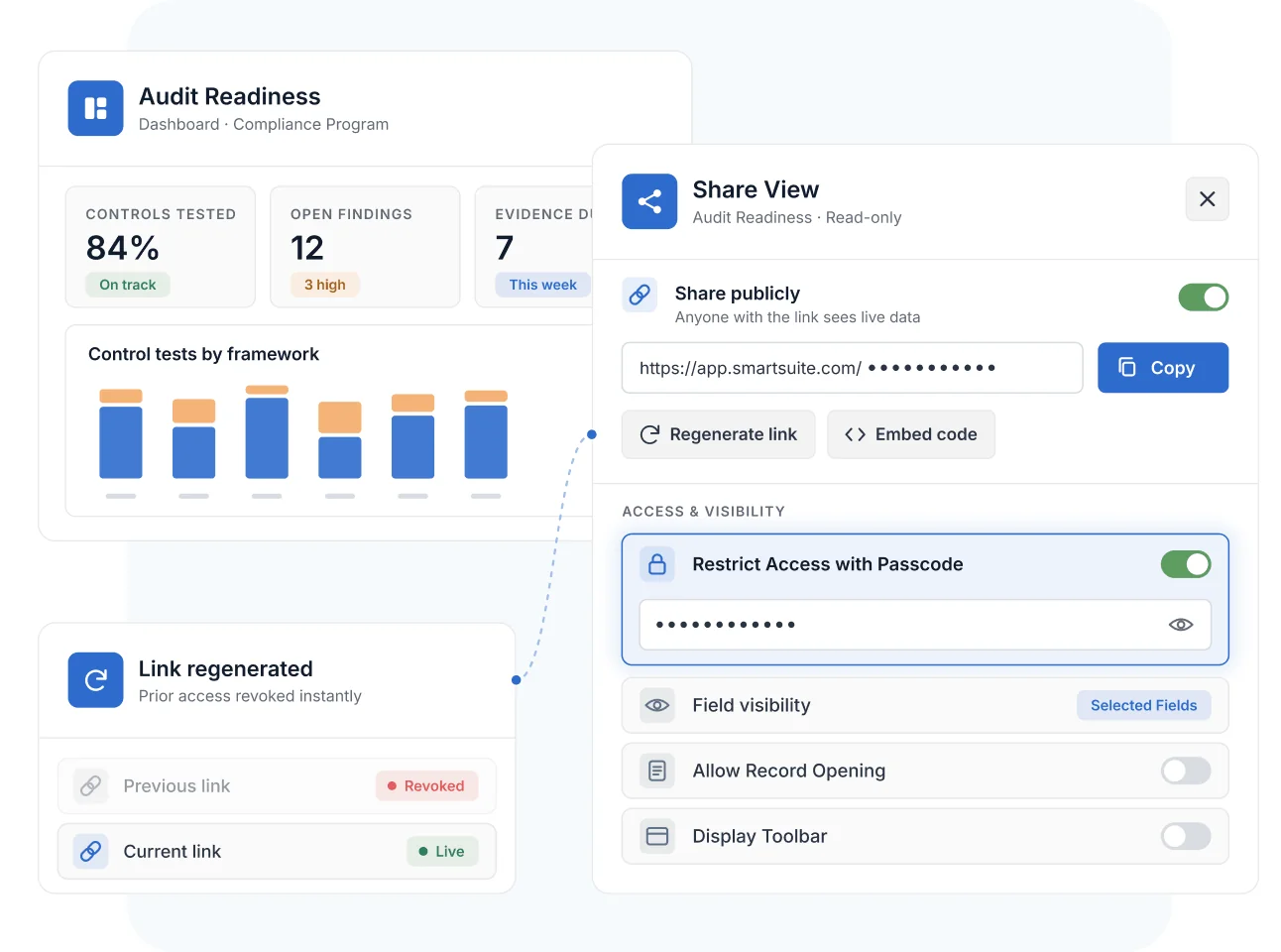
Record- and field-level permissions apply to every widget, so a Dashboard only ever shows a viewer data they are already entitled to see. For audiences outside the workspace, Administrators and Dashboard owners publish a read-only link or embed—optionally passcode-protected—with independent control over field visibility, record-detail access, and toolbar visibility.
Shared Dashboards update live, and regenerating the link revokes prior access instantly.
Dashboards
Dashboards give GRC programs the reporting layer their workflows deserve—live, permission-aware, and shareable with exactly the people who need to see progress, from analysts to auditors to the board.
Combine metric cards for open findings, charts of control-test results by framework, and an embedded Grid of overdue evidence requests—one page that tells the compliance lead where the program stands today.
Publish a read-only, passcode-protected Dashboard for external auditors showing control status and remediation progress—live data, no workspace login, and no access to anything else.
Track assessments due, charts of third parties by risk tier, and an embedded Grid of expiring contracts and certificates—one page the vendor risk team works from directly.
Give the risk committee one page of top risks, treatment progress, and incident metrics pulled from separate Solutions—and drill into any number to see the Records behind it.
Pair Dashboards with Advanced Permissions so a single program Dashboard shows each business unit only its own risks, findings, and evidence—no duplicate pages to maintain.
Build a Chart View once in the risk register, then link it into a Dashboard chart widget—analysts maintain one chart definition while the risk committee sees it in context.
A Dashboard is a special type of View that pulls data from any Table across your workspace and is assembled from configurable panels called widgets—metrics, charts, embedded views, record panels, filters, and page-design elements. It functions as a standalone page, from a simple report to a full multi-tab portal.
Yes. Dashboards are not limited to one Table—widgets can source data from any Table in any Solution the viewer can access, so cross-functional metrics like risk scores, ticket volumes, and project milestones report on one page.
Yes. Administrators and Dashboard owners can publish a Dashboard externally via Share View, generating a read-only link and embed code with optional passcode protection. You control field visibility, record-detail access, and toolbar visibility independently, and regenerating the link revokes prior access. Shared Dashboards update live without requiring a SmartSuite login.
Yes. Record- and field-level permissions apply to Dashboard data, so the same Dashboard shows appropriately filtered data to different internal viewers—no one sees data they are not otherwise entitled to see.
The widget library spans 34 widgets across categories for metrics, charts, embedded views, record display, actions and filters, page display, utilities, and third-party embeds. That includes summary cards and comparison metrics, charts and pivot tables, embedded Grid, Kanban, Calendar, Gantt, and Card views, record selectors and detail panels, button rows, filters, and embeds for tools like Google Sheets, Figma, YouTube, and Zoom.
Dashboards are included on all current SmartSuite plans. Members can create, configure, and manage Dashboards, with creation typically handled by Solution Creators and Administrators.
Both, by design. Owners toggle inline editing per widget—an embedded Kanban can allow drag-and-drop status changes or stay read-only—while viewers can drill into metrics and charts to see underlying Records and export data directly from the Dashboard.
Build Your Reporting Layer in Hours, Not Weeks
Assemble your first Dashboard from live workspace data—metrics, charts, and views your whole team can trust.