



Timeline View — Every Workstream on One Horizontal Axis
Plot Records chronologically across a zoomable time axis—seeing how schedules overlap, grouping workstreams into lanes, and rewriting dates by dragging a bar instead of editing a form.
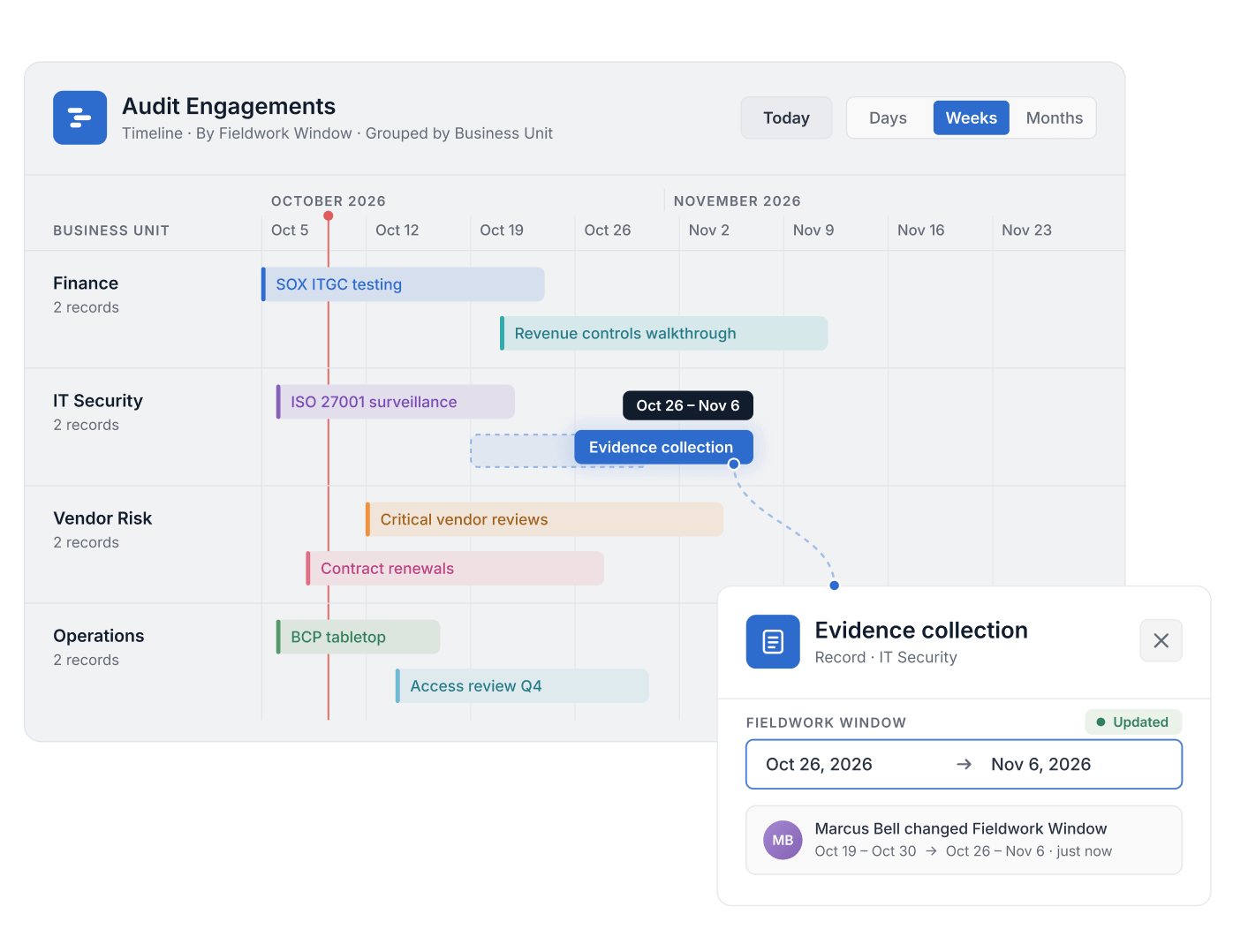
- Timeline View is available on Team, Professional and Enterprise.
- It recognizes Date, Due Date and Date Range fields, and a second Date field can be set as the end date.
- A record listing panel shows every record, including those without dates; dragging a record onto the timeline sets its dates.
- Grouping by team, campaign or sprint creates lanes, and Sort, Filter, Spotlight and Find are available.
What Is Timeline View?
Timeline View is a SmartSuite View type that plots Records chronologically as horizontal bars across a custom time period, driven by their date Fields. It helps project, GRC, IT, and business operations teams visualize workstreams and schedules—spotting overlaps, adjusting dates by drag-and-drop, and grouping work into lanes by team, sprint, or campaign. Timeline View is available on every current SmartSuite plan as part of the Views system.
Chronological Plotting
Plot Records Across Time with Any Date Fields
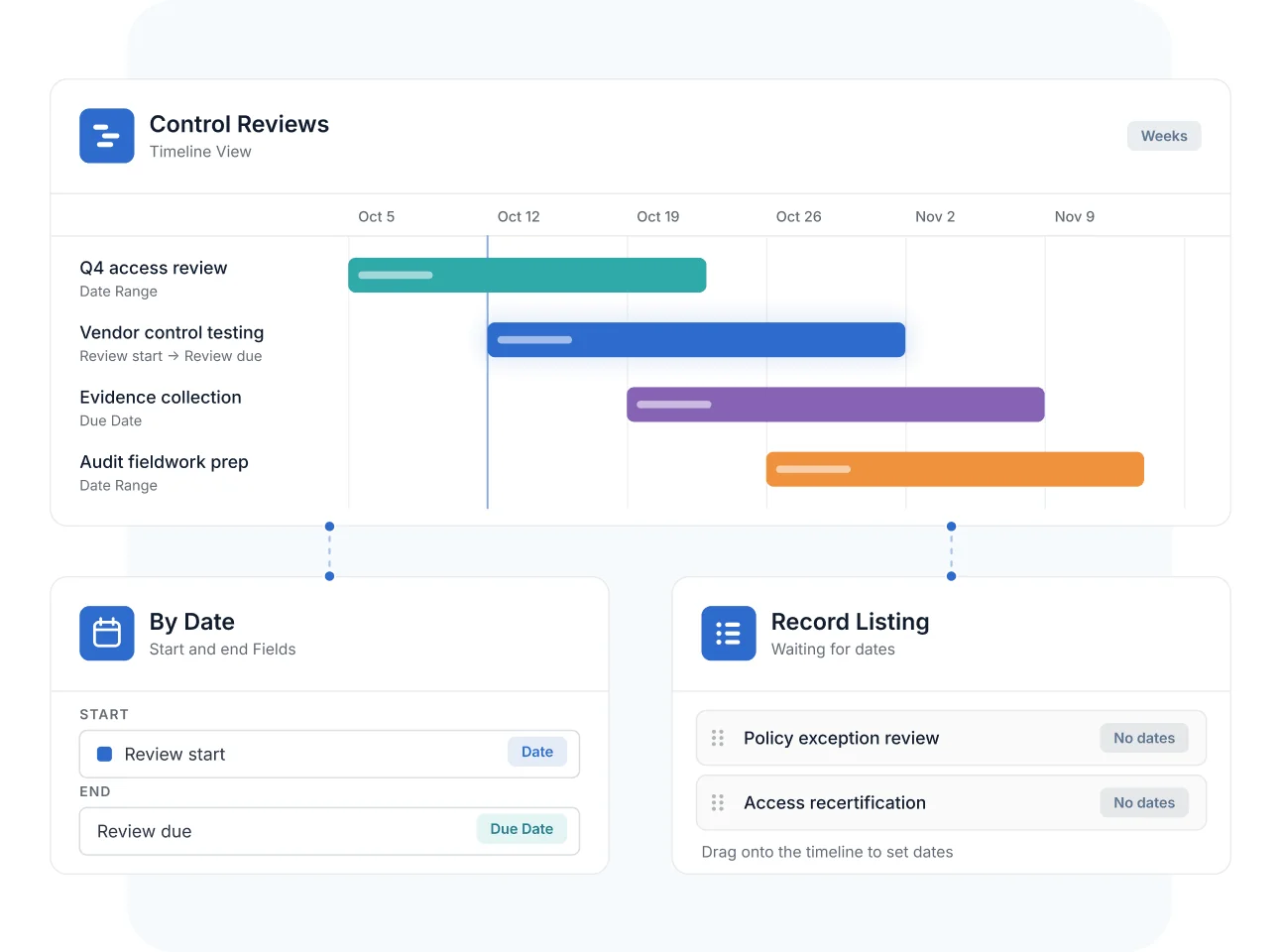
Timeline View supports Date, Due Date, and Date Range Fields. A Date Range or Due Date Field supplies both ends of a bar on its own, and a simple Date Field can be paired with a second date Field to define the end—so existing Tables plot without restructuring.
The "By Date" control sets the default date Field and its color, and any Record still missing dates waits in the Record Listing panel until you drag it onto the timeline or use "Show in Timeline."
Zoomable Scale
Navigate from Hours to Months on One Timeline
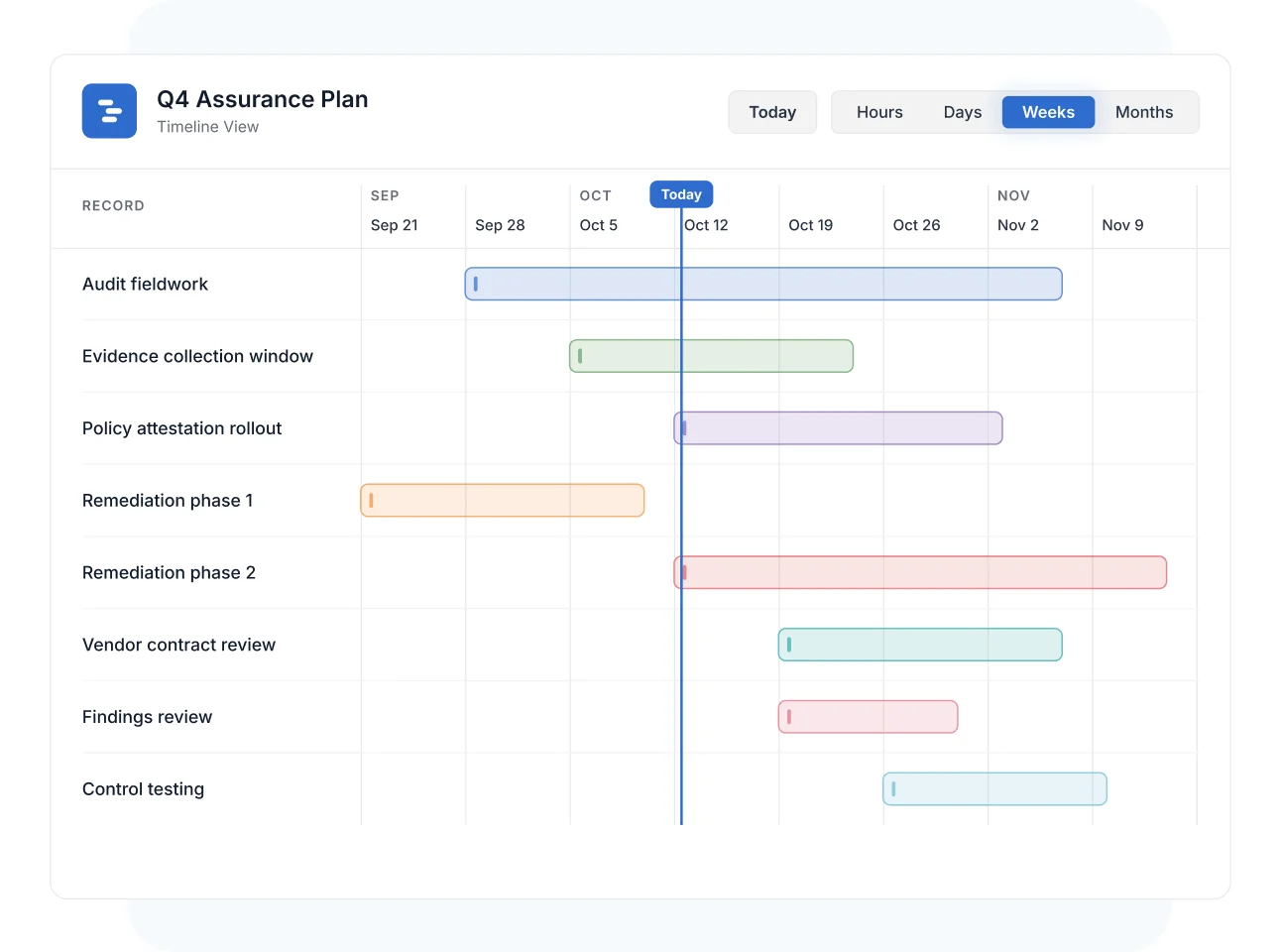
Zoom the time scale to Hours, Days, Weeks, or Months to match the horizon you're planning—an incident retrospective in hours, a quarterly roadmap in months—and jump back to today with one click. The scale you choose saves automatically with the View, so the team always opens it at the right altitude.
Drag-and-Drop Dates
Rewrite Schedules by Dragging Timeline Bars
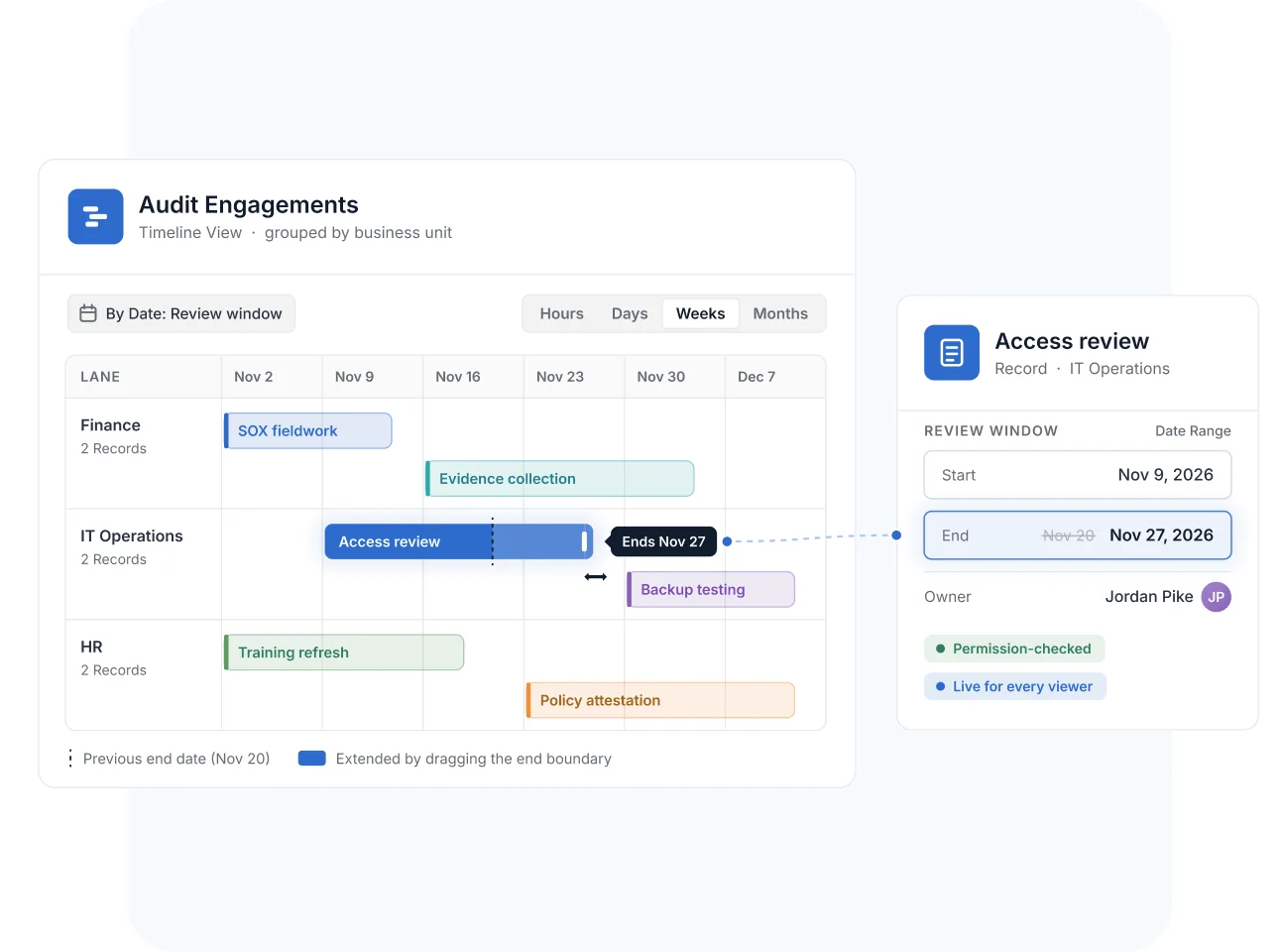
Drag a bar to shift a Record's whole schedule, or pull its start or end boundary to change duration—every move writes the new values straight back to the Record's date Fields, permission-checked and visible to everyone in real time. Clicking a bar opens the full Record for deeper edits.
Replanning a slipped phase becomes a minute of dragging instead of an afternoon of form edits.
Lanes & Spotlight
Group Workstreams into Lanes and Spotlight the Critical Ones
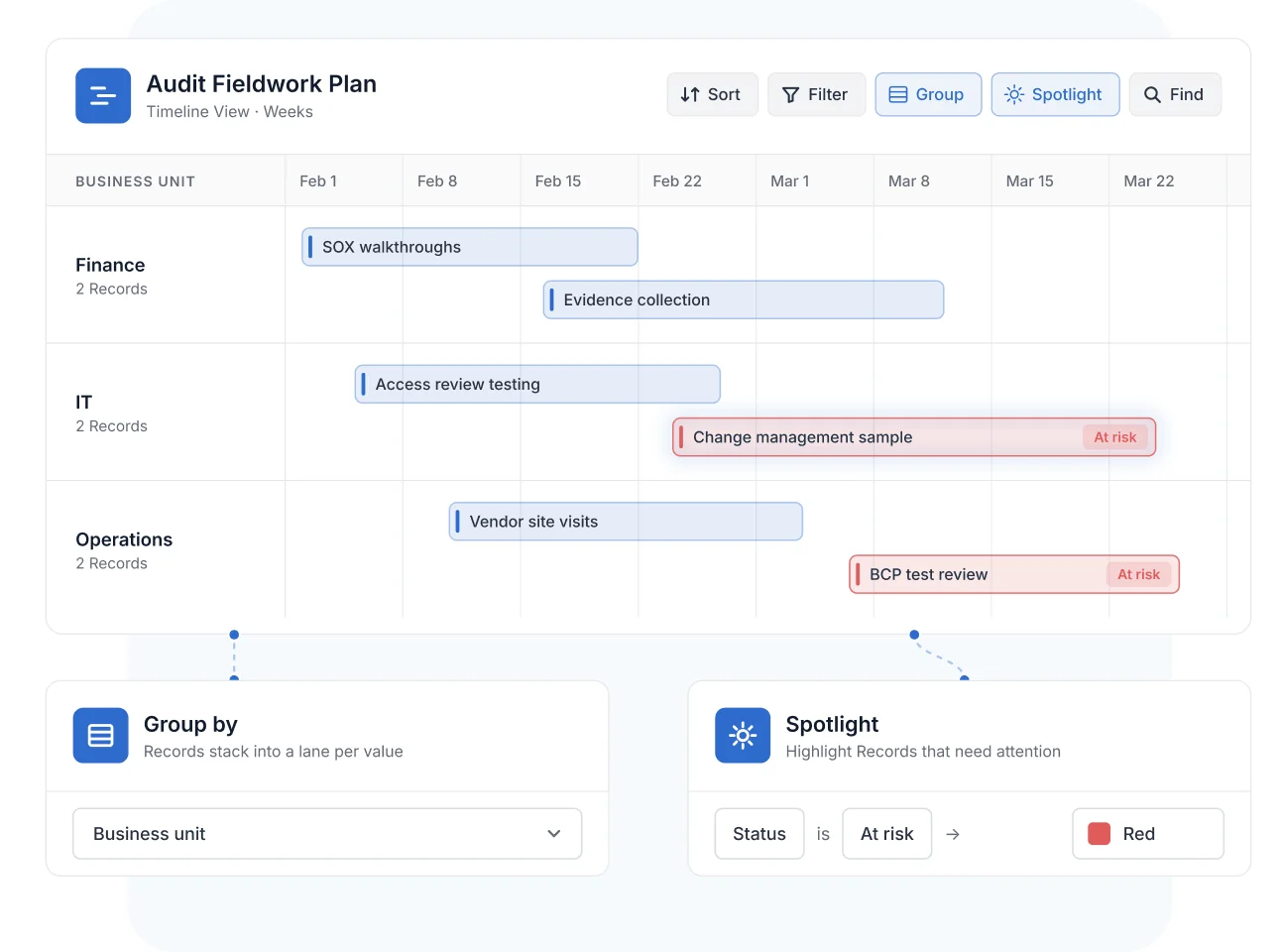
Group the timeline by any attribute—team, campaign, sprint—and Records stack into horizontal lanes under each value, producing a Gantt-style layout for reading parallel workstreams. Unlike Gantt Charts, Timeline View doesn't render dependency arrows or auto-schedule—it's the lighter-weight lens for schedules that don't need sequencing logic.
Spotlight color-coding and the full Report Toolbar—sort, filter, group, and find—shape what the timeline shows.
Timeline View
Whenever governed work has a start, an end, and neighbors competing for the same weeks—audits, reviews, remediation phases—Timeline View shows the whole picture as a schedule you can adjust in place.
Plot audit engagements and evidence-collection windows as bars grouped by business unit. Overlaps surface instantly, and dragging a window updates the engagement Record for every stakeholder.
Legal and due-diligence teams track contract review periods across a custom horizon, spotlighting agreements approaching expiry so renewals start on time.
Visualize policy publication and attestation windows grouped by department lanes. Zoom to weeks for the current rollout, out to months for the annual policy calendar.
Lay out remediation phases as sequential bars. When a phase slips, drag its boundary and the conversation with finding owners starts from accurate dates.
Start planning in Timeline View, then switch the same Table to Gantt Charts when tasks need dependency arrows, auto-scheduling, and critical-path highlighting—the Records carry over unchanged.
Timeline View is a SmartSuite View type that plots Records as horizontal bars across a zoomable time axis, driven by their date Fields. It's built for visualizing workstreams and schedules over a custom period, with drag-and-drop date editing.
Timeline View visualizes schedules without dependency logic—no connecting arrows, no auto-scheduling. Grouping by an attribute produces a Gantt-style lane layout, but when tasks need predecessor and successor relationships, Gantt Charts is the right View.
Date, Due Date, and Date Range Fields are all supported. A Date Range or Due Date Field supplies both the start and end of a bar; a simple Date Field can be paired with a second date Field to act as the end date.
Yes. Dragging a bar shifts the Record's schedule, and dragging its start or end boundary changes duration—both update the underlying date Fields automatically. Clicking a Record opens it for full editing.
Hours, Days, Weeks, and Months, with a jump back to today. The scale you choose is saved automatically with the View.
They stay in the Record Listing panel beside the timeline. Hovering an unplotted Record offers "Show in Timeline," and dragging it onto the axis assigns its dates.
Timeline View is available on every current SmartSuite plan—Team, Professional, and Enterprise—per the SmartSuite pricing page.
Replan in Minutes, Not Meetings
Put every workstream on one timeline, zoom to the horizon that matters, and drag the schedule into shape.