



Task Management — Turn Any Record Into Trackable, Assignable Work
Purpose-built Assigned To, Status, Due Date, and Checklist Fields combine on any Table to make Records behave like tasks—routed to the right person's My Work, tracked against deadlines, and visible in every planning view.
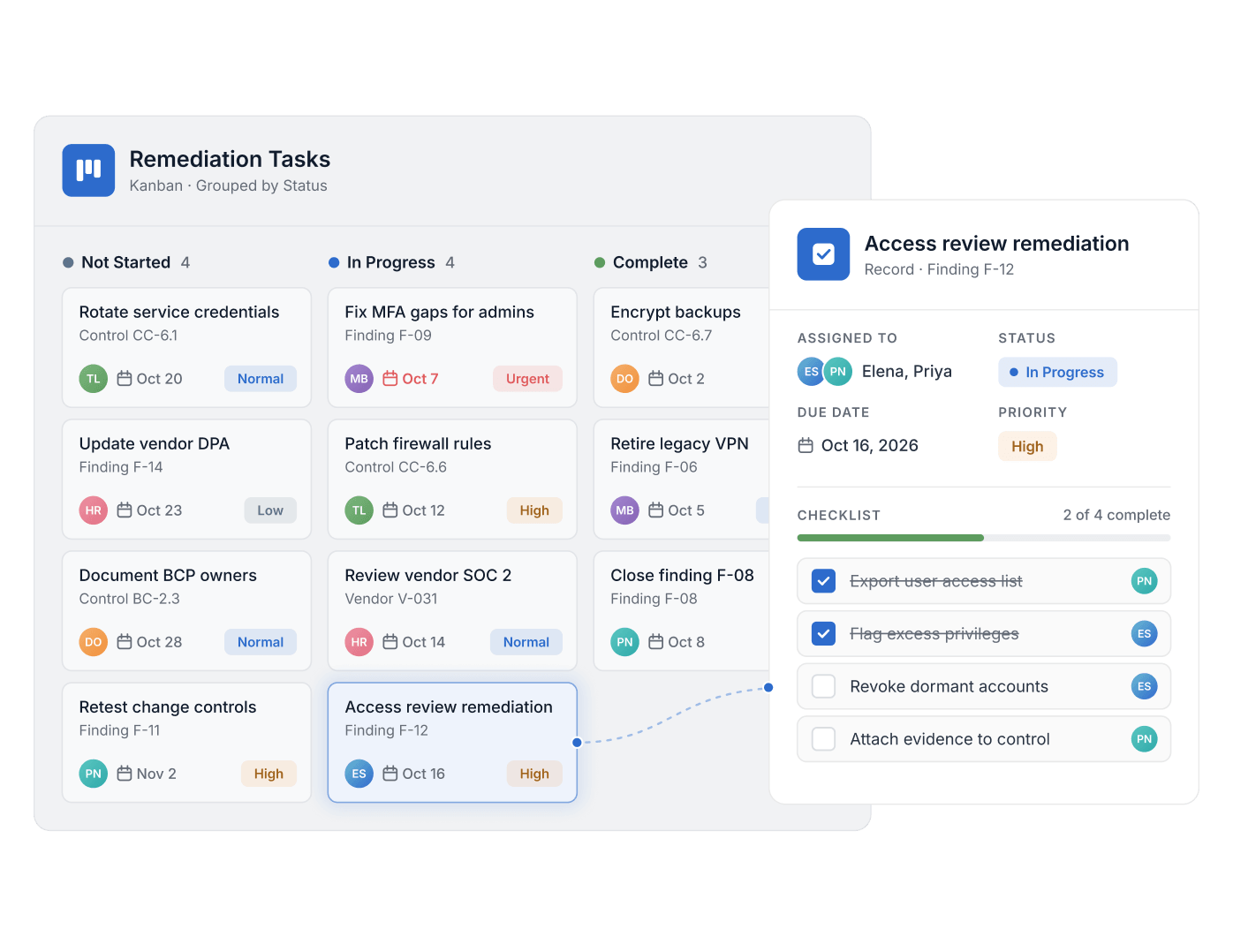
- There is no separate task object; a record becomes a task in My Work when its Assigned To field is linked to a Status field.
- A record can carry several Assigned To and Status pairs, each a separate task, and a Due Date field must be linked to a Status field.
- Repeating Tasks recur daily, weekly, monthly, yearly, a set number of days after completion, or on a custom interval.
- Checklist items can be assigned, given due dates and @mentioned; assigned items appear in the assignee's My Work.
- Repeating Tasks, Personal Tasks and Checklists are listed on every plan.
What Is Task Management?
Task Management is a SmartSuite capability built from purpose-built Field types—Assigned To, Status, Due Date, and Checklist—that turn ordinary Records into assignable, trackable tasks on any Table. It helps project, GRC, and IT teams route work to owners, monitor progress against deadlines, and break deliverables into accountable steps—feeding assignees' My Work hubs, notifications, and Automations along the way.
Purpose-Built Fields
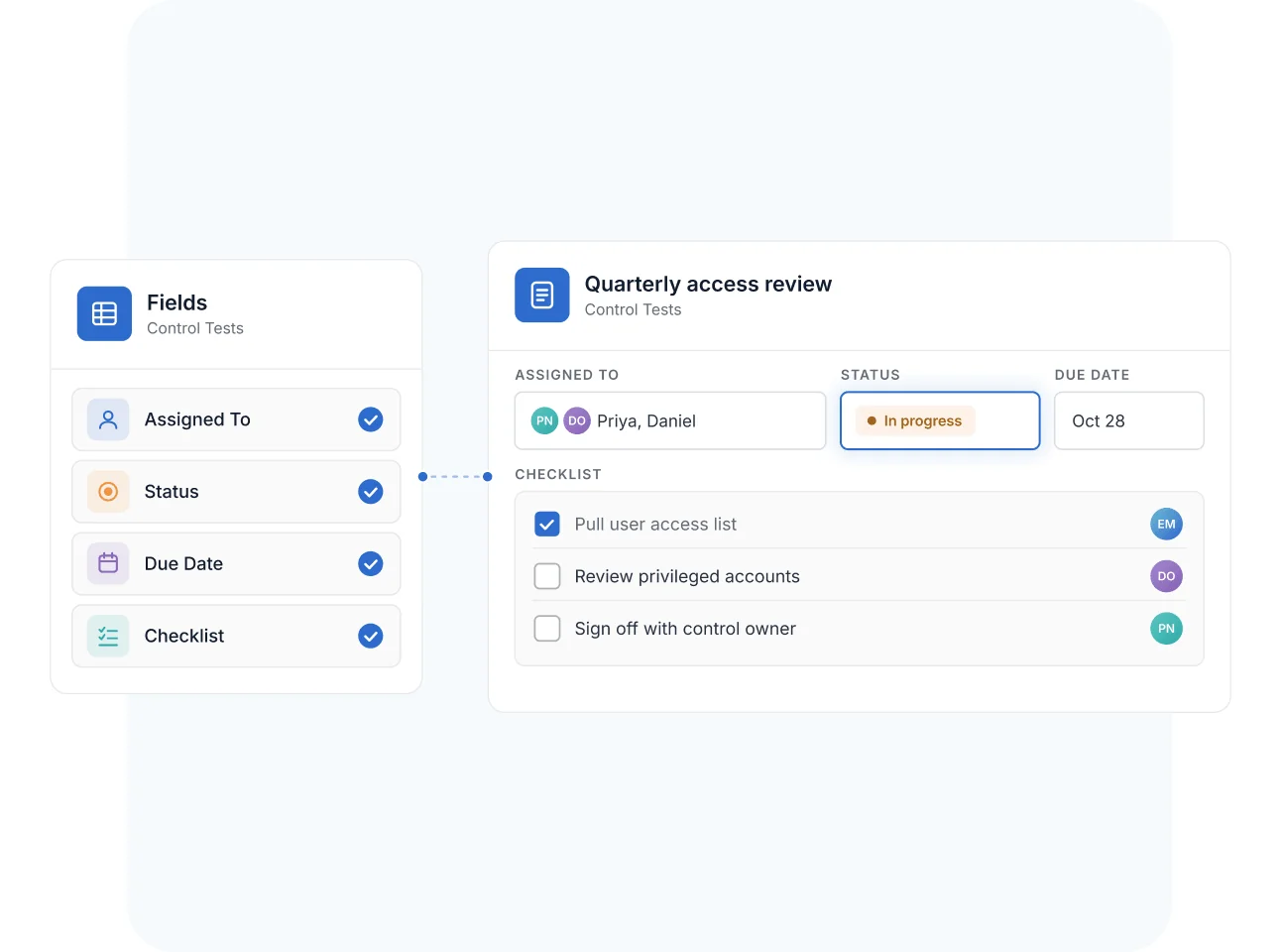
Build Task Management Into Any Table with Four Field Types
Add an Assigned To Field to name one or more owners, a Status Field to track state in real time, a Due Date Field to hold the deadline, and a Checklist Field for the steps in between. Because these are ordinary Fields, any Table becomes a task tracker—controls, incidents, deliverables, and requests keep their full context while gaining task behavior.
Assignment Routing
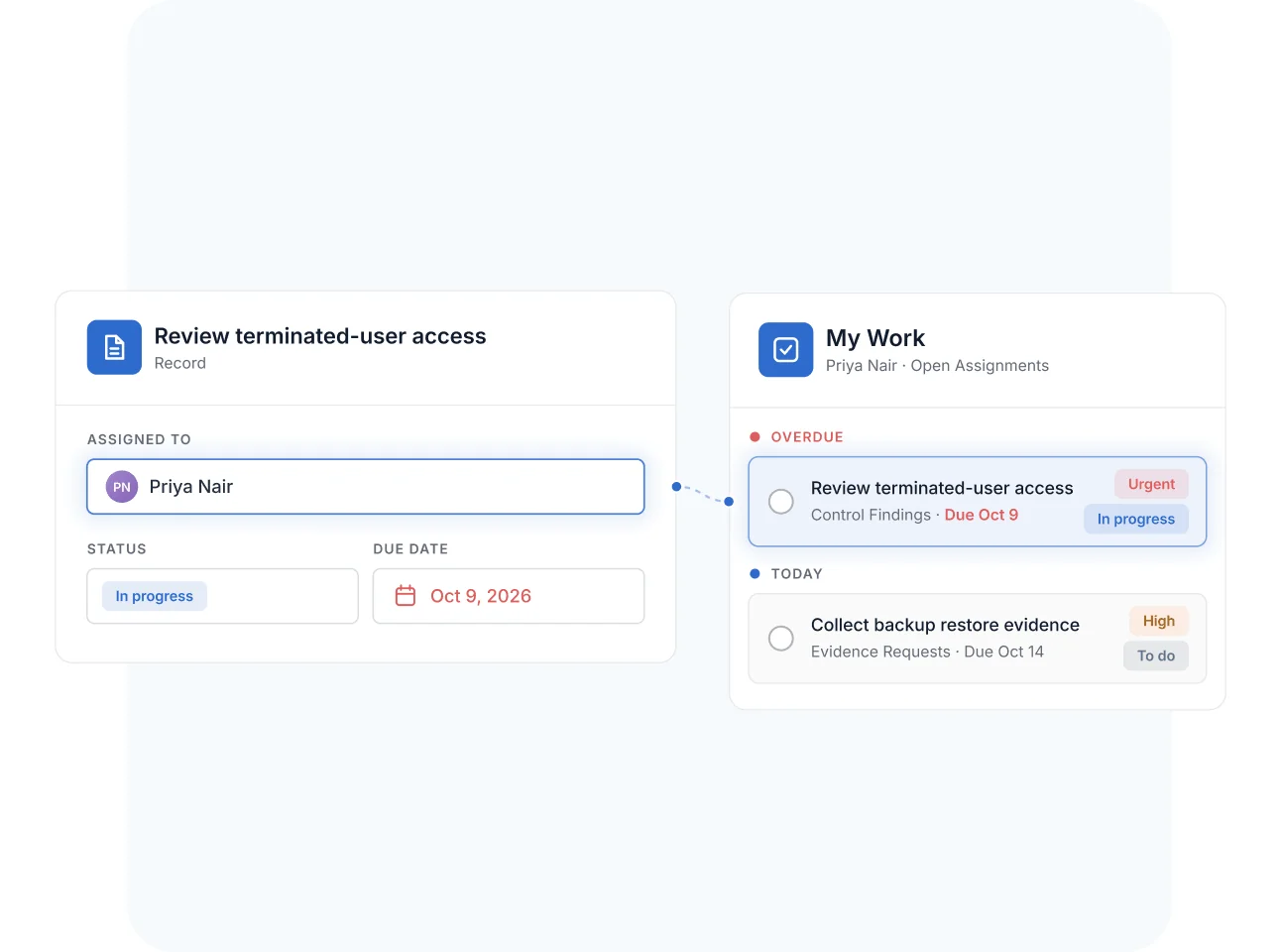
Route Every Task to the Right Owner's My Work
Pairing an Assigned To Field with a Status Field is what activates task behavior: assigned Records appear in each owner's My Work, trigger notifications, and can drive Automations and saved views. Every task carries a priority—Low, Normal, High, or Urgent—so assignees see not just what they own, but what to do first.
Due Date Fields highlight work that is behind schedule, keeping timeline visibility honest across the project.
Checklist Breakdown
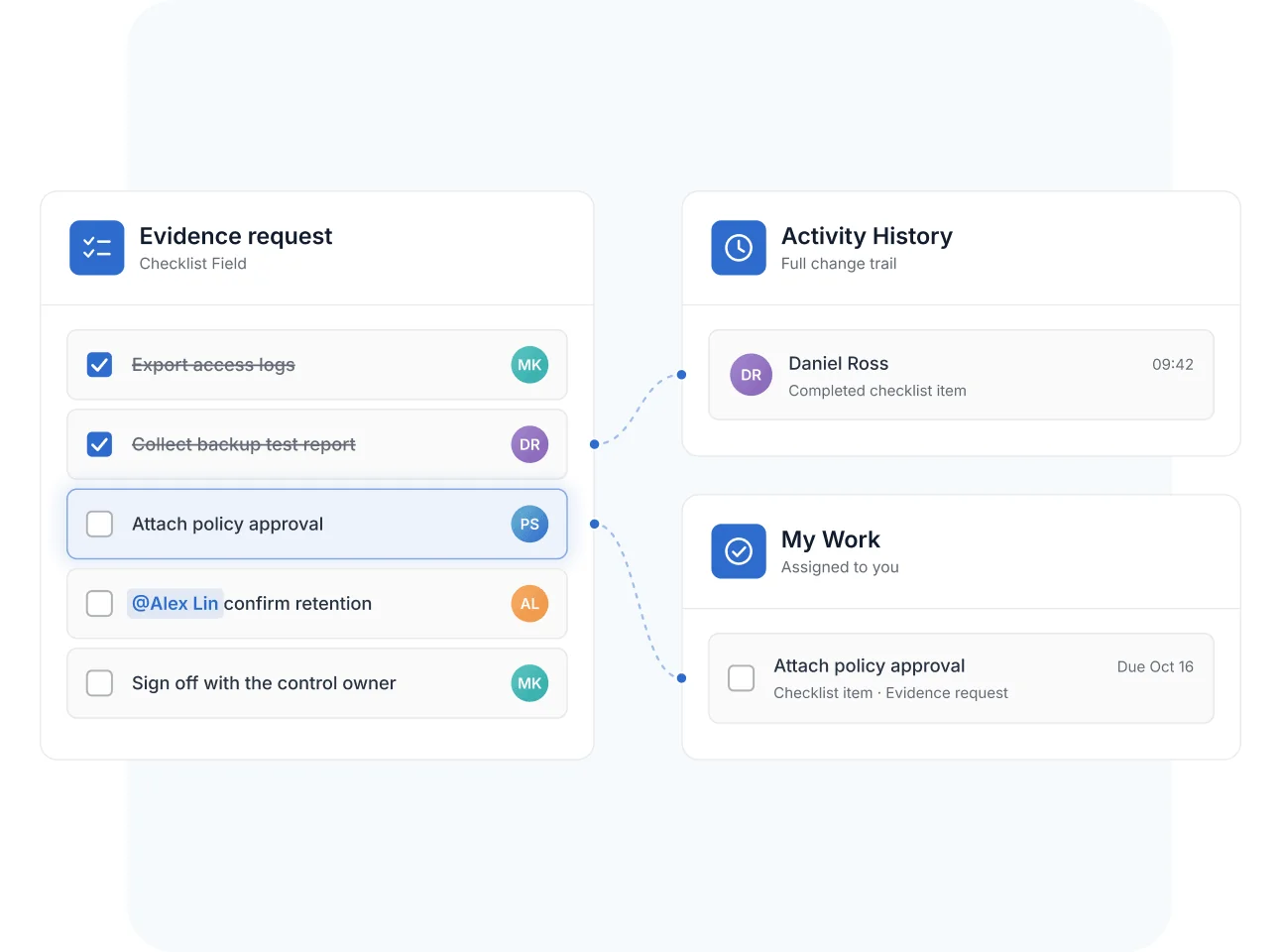
Break Deliverables Into Assignable Checklist Items
The Checklist Field turns a single Record into a collaborative to-do list: each item can be individually assigned and mentioned, so a large deliverable becomes a set of accountable steps without spawning a separate Table. Assigned checklist items surface in owners' My Work, and every completion and change is captured in Activity History.
Planning Views
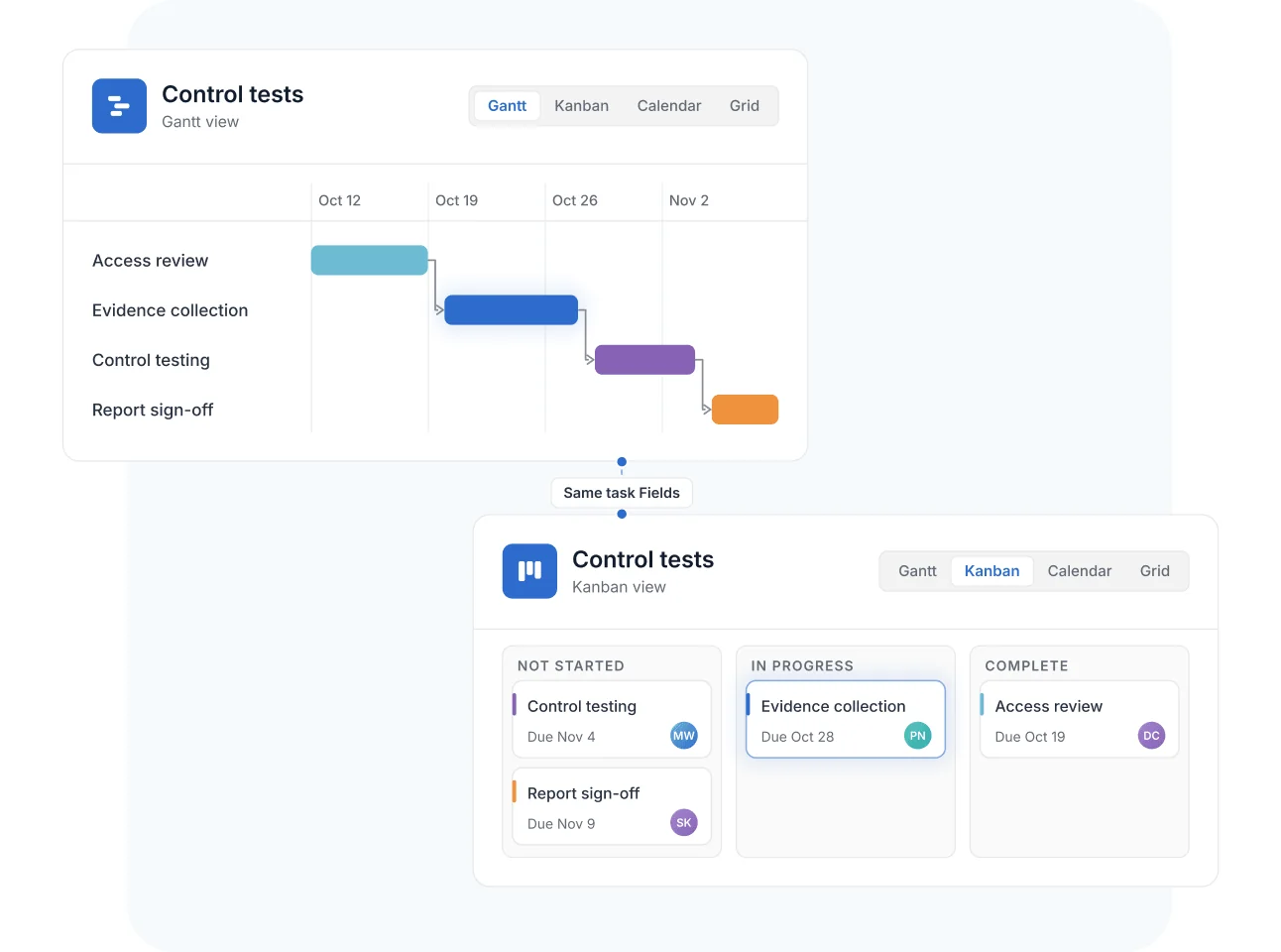
Visualize Tasks in Gantt, Kanban, Calendar, and Grid Views
The same task Fields power every planning lens: schedule work with dependencies in Gantt View, move tasks through stages in Kanban, plan around dates in Calendar, and manage in bulk from Grid. One set of task data, presented however each team plans—no duplicate boards to keep in sync.
Task Management
Governed work is task work—control tests have owners and deadlines, policies have review cycles, findings have remediation steps. Task Management gives all of it structure and accountability.
Findings from an assessment become Records with Assigned To, Status, and Due Date Fields—each remediation lands in its owner's My Work with a deadline, and overdue items surface automatically.
An evidence request is broken into a Checklist Field with items assigned to system owners. Each completion is tracked in Activity History, giving auditors a clear trail of who did what and when.
Each policy Record carries an owner, a review due date, and a Status Field moving from draft through review to approved. Owners see upcoming reviews in My Work, and policies past their review date stand out immediately.
When a regulation changes, impact-assessment and gap-analysis tasks are created with owners, priorities, and due dates. Progress is visible in every planning view, and nothing depends on someone remembering a spreadsheet row.
Pair Task Management with Automations: recurring control tests, attestation cycles, and policy reviews create and assign their own tasks on schedule—no one has to remember to open them.
Task Management in SmartSuite is native task tracking built from purpose-built Field types—Assigned To, Status, Due Date, and Checklist—that combine on any Table to turn Records into assignable, trackable tasks. Assigned tasks feed each owner's My Work, notifications, views, and Automations.
Add an Assigned To Field and connect it to a Status Field—that pairing is what activates task behavior, including My Work eligibility and notifications. Add a Due Date Field for deadline tracking and a Checklist Field for sub-steps.
Yes. Task entries carry a priority of Low, Normal, High, or Urgent, surfaced alongside status and due date in My Work so assignees know what to tackle first.
Yes. The Checklist Field creates a shared to-do list inside a Record, and each checklist item can be individually assigned and mentioned. Assigned items appear in their owners' My Work like any other task.
The same task Fields power Gantt, Kanban, Calendar, and Grid views, so you can schedule with dependencies, manage flow on a board, or plan around dates—without duplicating data across tools.
Yes. Assignments, status changes, checklist completions, and comments are captured in Activity History, giving GRC and IT teams a traceable record of who did what and when—which helps you stay audit-ready.
The core Field types—Assigned To, Status, Due Date, and Checklist—are available broadly and are not documented as gated at the field level. SmartSuite's pricing page highlights fuller task-management workflows on Professional and Enterprise plans.
Give Every Piece of Work an Owner, a Status, and a Deadline
Add four Fields to any Table and watch Records become accountable tasks—routed, tracked, and visible from day one.