



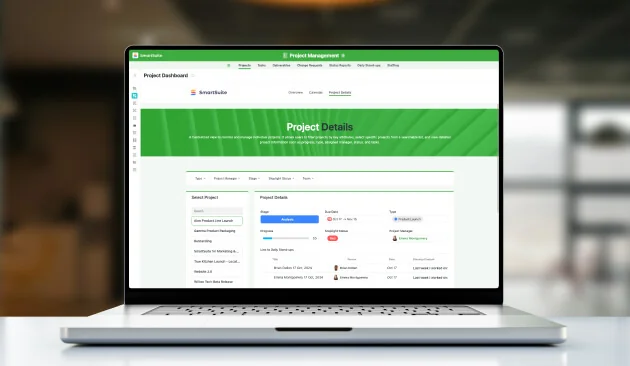
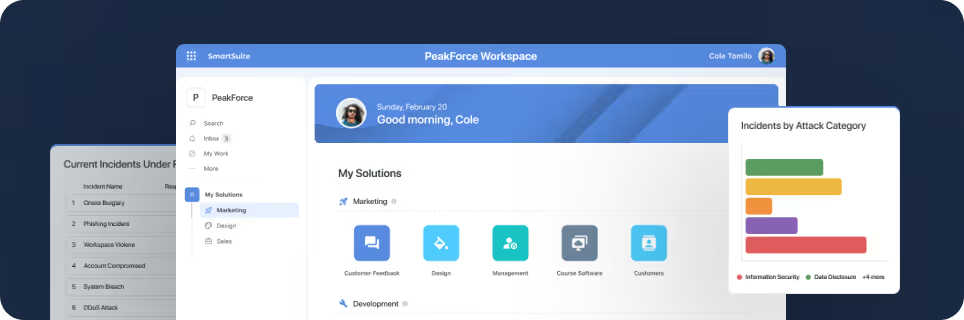
SmartSuite provides work platform for standardizing workflows in the following areas:
- Governance, Risk & Compliance
- IT & Service Ops
- Project / Portfolio Management
- Business Operations

In our latest SmartSuite Showcase episode, hosted by Nate Montgomery, we explore the essential documentation standards for crafting new solutions tailored to your team's needs. Departing from our usual use case examples, this comprehensive guide provides valuable insights into setting up solutions effectively, incorporating best practices gleaned from engaged customers. From naming conventions to configuring views, this video offers a thorough walkthrough to ensure your solutions are optimized for success.
How do you name a solution effectively?
A crucial first step in solution setup is naming. Opt for concise titles, typically under three words, accurately reflecting the solution's purpose or workflow. This ensures clarity, memorability, and alignment with your business objectives. When creating a new solution, you can customize its name, color, and icon to represent its function effectively.
What goes into a comprehensive solution guide?
A well-documented solution includes detailed guides outlining its purpose, tables, and workflow. Provide descriptions of each table, clarifying their roles and how records flow through them. Supplement with supporting resources such as instructional videos for enhanced usability. SmartSuite allows you to create and edit SmartDocs, which function like SmartDoc fields, enabling you to embed tables, links, checklists, and even instructional videos.
How do you configure tables strategically?
Tables should accurately represent tracked items and feature concise names, ideally under two words. Customize record terminology to ensure relevance and clarity. Maintain consistency and relevance to facilitate user understanding. You can easily rename tables and customize record terminology to improve clarity for users.
Tailored Views for Enhanced Usability
Configure six to ten views per table, catering to item characteristics. Choose descriptive names reflecting each view's configuration and purpose. Utilize view descriptions to provide context, enhancing user comprehension. SmartSuite offers nine unique views to help you best visualize your data.
Organized Record Views for Easy Navigation
Incorporate sections within record views to organize information effectively. Strategically group fields to guide users logically through the data. Customize page layouts based on field nature to present information efficiently.
Diverse View Types for Varied Insights
From Grid View for comprehensive overviews to Map View for geographical visualization, use diverse view types to meet specific needs. Tailor views to display relevant data accurately, ensuring users gain valuable insights.
How do you design forms for clean data collection?
Craft Forms with user-friendly names and clear instructions. Customize fields and appearance to suit external user needs. Enhance usability with help text and conditional logic, streamlining data collection processes.
Streamlined Dashboard Integration for Enhanced Visibility
Integrate Dashboards to centralize access to resources and monitor metrics effectively. Prioritize metric widgets for summarizing data and promoting comparisons. Utilize embedded Grid Views to provide detailed data insights within dashboards.
Conclusion
By adhering to these documentation standards and using SmartSuite's unique features, you can configure solutions that optimize operations and foster collaboration. Embrace these best practices to ensure your solutions are tailored for success. Thank you for reading, and stay tuned for more insights from SmartSuite.






Put these ideas to work
Start a free trial, or book a demo and see how it runs in SmartSuite.

